15 Stunning Long Hairstyles with Bangs You’ll Want to Pin Immediately
If you’ve spent the last hour scrolling Pinterest, saving long hairstyle after long hairstyle featuring bangs without learning a single useful thing about how to actually get one, this guide was written entirely for you. Most bang-related hairstyle boards are visually compelling but practically useless, showing finished results without explaining which bang style suits which face shape, how much daily maintenance each type demands, whether the cut works on your specific hair texture, or how the fringe behaves as it grows out between appointments. Those missing details matter enormously when you’re about to commit to a fringe that will frame your face every single day. This article fills every one of those gaps across fifteen long hairstyles with bangs explained with genuine, appointment-ready depth.
Bangs are one of the most transformative changes you can make to long hair without altering the overall length, instantly restructuring how the face is framed and dramatically shifting the entire personality of a hairstyle. Yet they’re also one of the most misunderstood haircut elements, frequently chosen based purely on how they look on someone else without considering how that specific fringe type will interact with an individual’s hair texture, natural growth direction, forehead shape, or daily routine. A blunt fringe that looks crisp and clean on fine straight hair can become a frizzy, uncooperative frustration on thick wavy hair. A curtain bang that blends effortlessly into wavy texture can fall flat and stiff on naturally straight strands unless styled daily. Understanding these distinctions before committing saves significant regret.
15 Beautiful Long Hairstyles with Bangs
Below, you’ll find fifteen long hairstyles with bangs broken down with the kind of depth that transforms Pinterest inspiration into a real, workable plan. Every style covers the bang type, the hair texture it suits most naturally, the face shape it flatters most effectively, the maintenance commitment involved, and the styling tips that keep the fringe looking intentional between salon visits. Save this guide, bring your favorites to your next appointment, and walk into that stylist’s chair knowing exactly what you want and why it will work for you.
1. Long Hair with Curtain Bangs
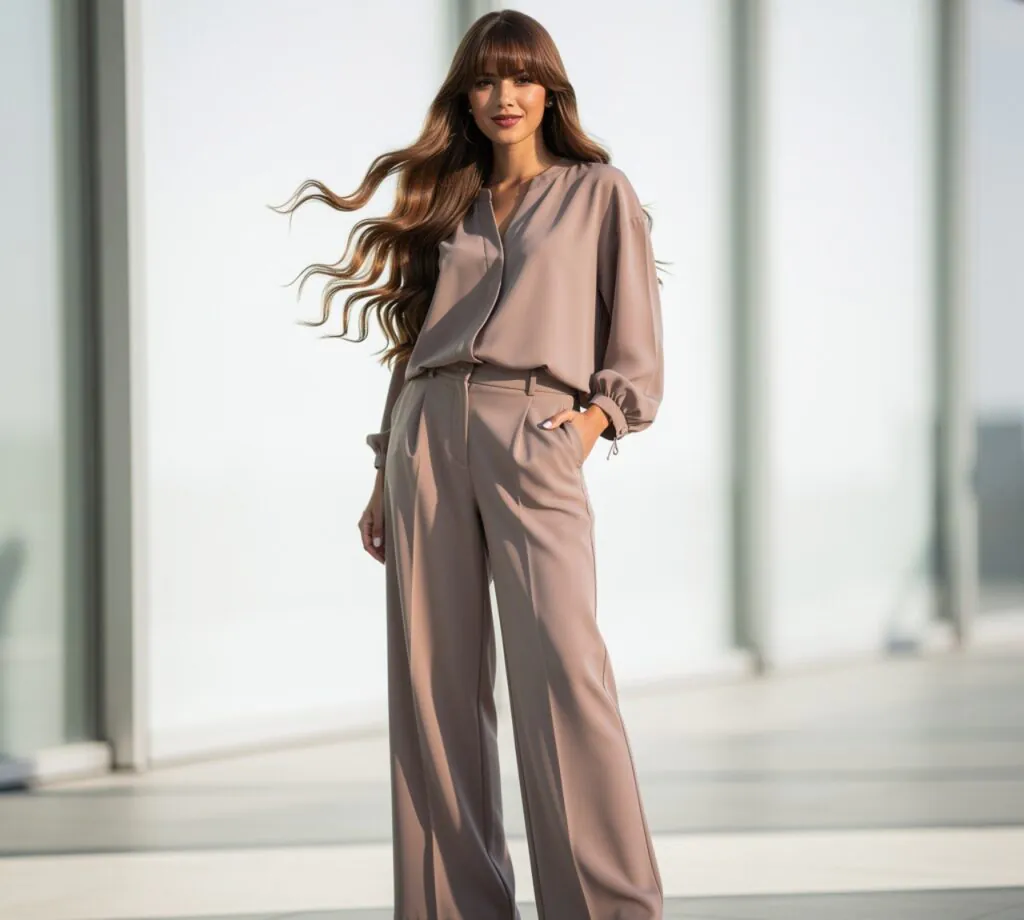
Curtain bangs have become one of the most universally requested fringe styles across every hair type and age group, and their popularity is entirely justified by how softly and naturally they frame the face without demanding the strict daily maintenance that other bang styles require. Parted gently at the center and swept to each side, these bangs open outward like curtains drawing apart, blending seamlessly into the surrounding long hair rather than sitting as a distinct, separately styled section. This style suits straight to wavy hair textures most naturally, since the sweeping direction holds without excessive heat styling. Oval, round, and square face shapes all benefit noticeably, with the bang softening stronger jawlines and adding gentle dimension near the forehead. Trims every four to six weeks maintain the swept shape as the fringe grows.
2. Long Layered Hair with Blunt Bangs
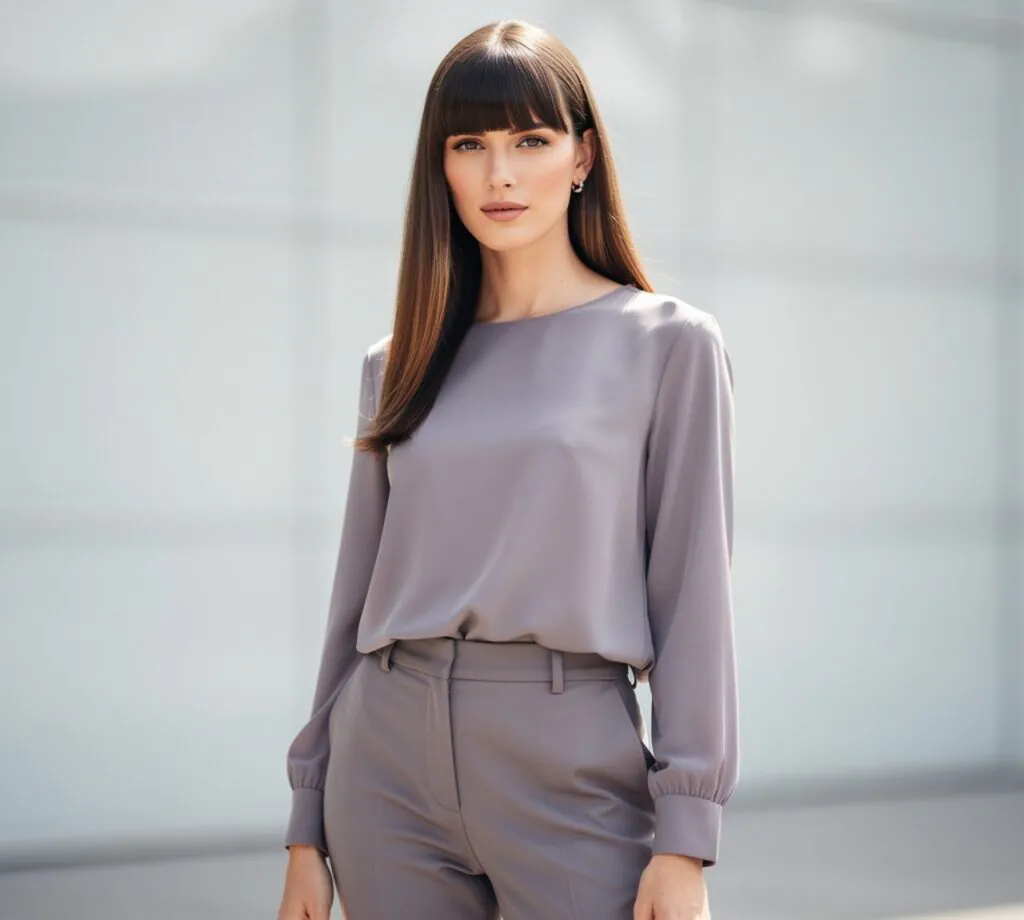
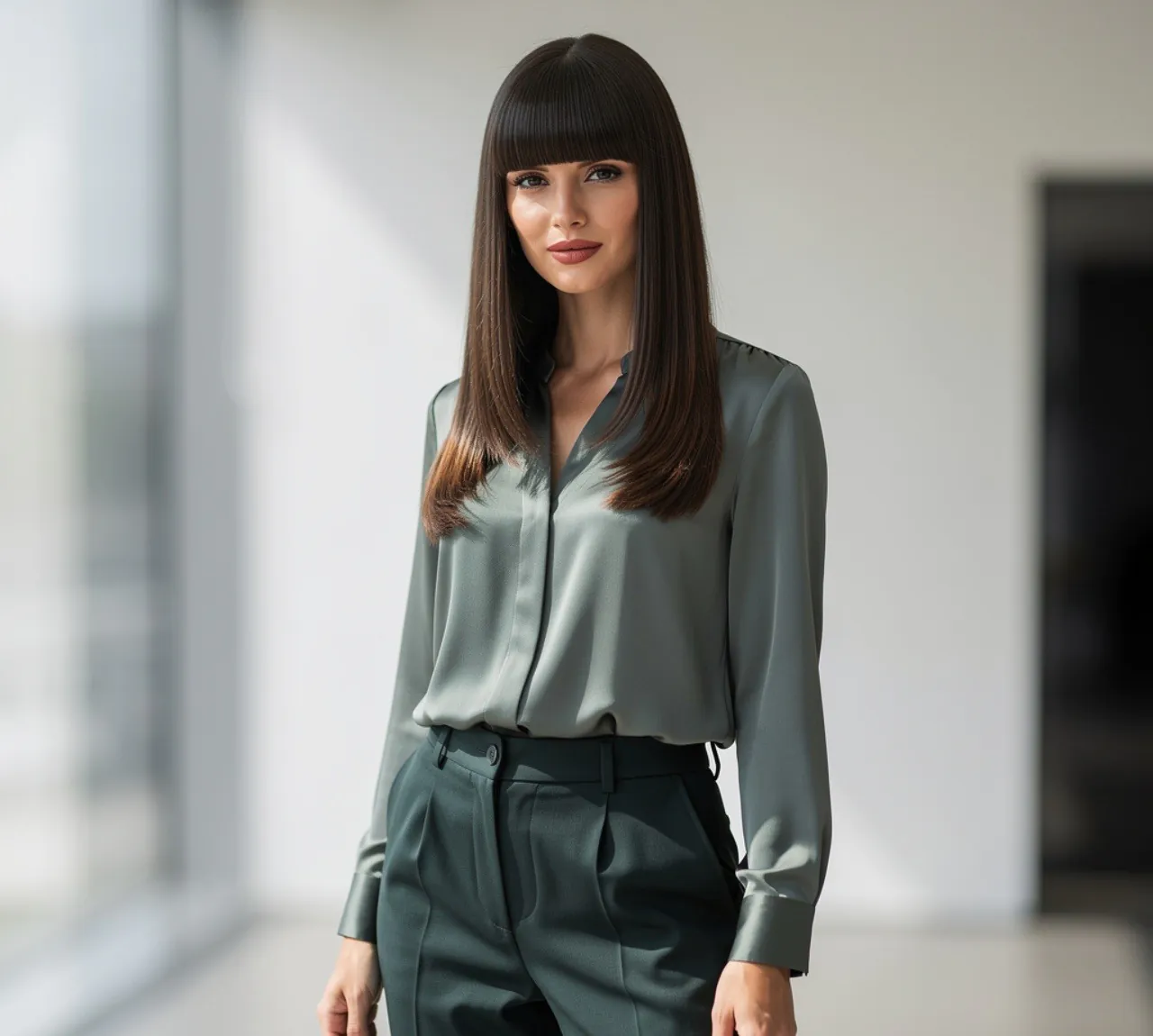
A full, blunt fringe cut straight across the forehead creates one of the most dramatically transformative changes achievable on long hair, immediately restructuring the entire framing of the face and shifting the hairstyle’s personality from undefined to decisively intentional. This bang works in visual harmony with long layered hair, since the layers create movement and lightness throughout the length that balances the graphic weight of the straight-across fringe above. It suits fine to medium straight hair most naturally, since these textures hold the fringe flat and even without curling or separating unevenly throughout the day. Oval and heart face shapes wear this combination most elegantly. Regular trims every three to four weeks keep the blunt line at its precise, intentional length before the fringe reaches the eyes.
3. Long Straight Hair with Side-Swept Bangs
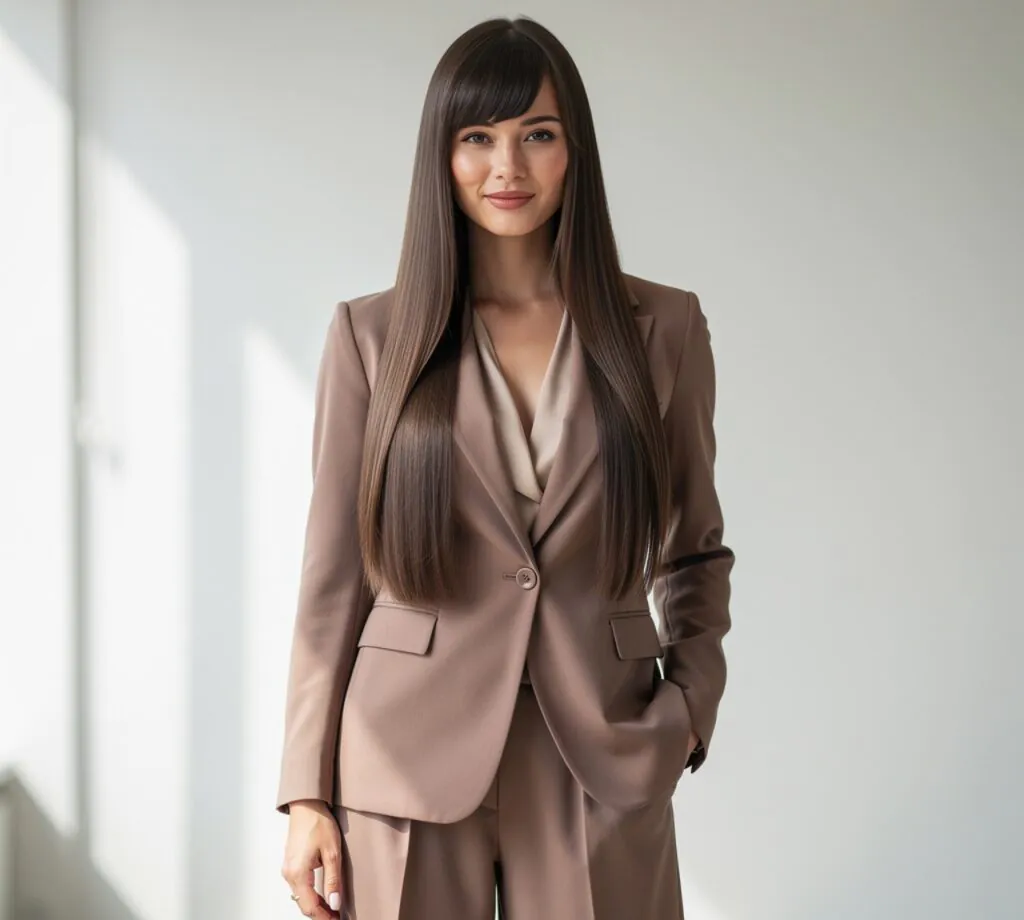
Side-swept bangs on long straight hair introduce asymmetry and visual movement to a silhouette that might otherwise feel flat or predictable, sweeping from a deep side part across the forehead before blending naturally into the rest of the length at the cheekbone. The sweep creates a dynamic, diagonal line across the face that draws the eye upward and inward toward the strongest features rather than allowing the gaze to travel straight downward along the hair’s length. This style suits fine to medium straight hair best, since straight textures hold the sweep direction naturally without requiring significant daily product. Round and square face shapes benefit most from the slimming, elongating illusion the angled sweep creates. A light-hold spray and a round brush maintain the sweep’s direction through an entire day without stiffness.
4. Long Wavy Hair with Curtain Bangs
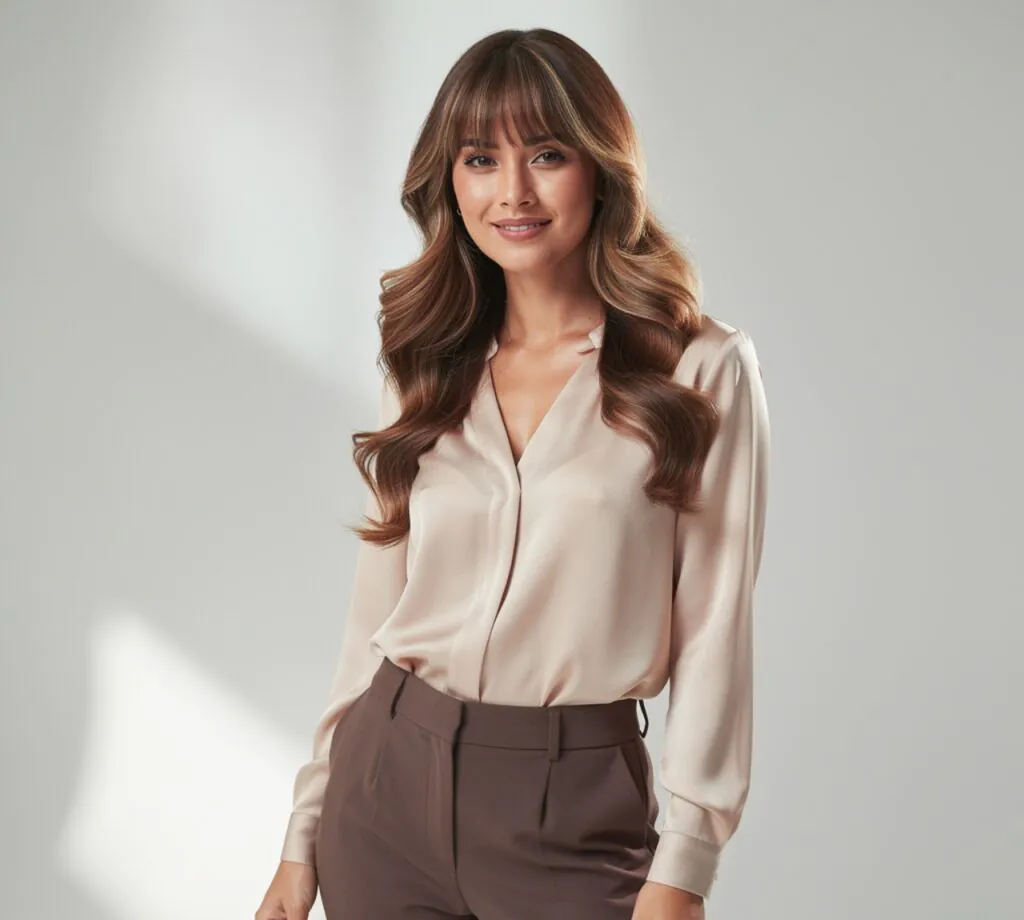
Wavy hair and curtain bangs form one of the most naturally complementary pairings in modern hairstyling, since the bang’s outward sweeping direction mirrors the natural movement that wavy hair already produces around the face without any deliberate styling effort. Unlike straight hair where curtain bangs occasionally need a round brush and a blow dryer to hold their swept shape, wavy hair carries the direction almost entirely on its own, making this one of the few bang styles that genuinely reduces rather than adds to a daily routine. The waves throughout the length blend organically with the fringe rather than creating a textural contrast between a styled section above and an unstyled section below. This style flatters oval, round, and heart face shapes most noticeably and suits medium to thick wavy density best for the most natural blending result.
To see more options for long hair braid hairstyles CLICK HERE
5. Long Curly Hair with a Soft Fringe
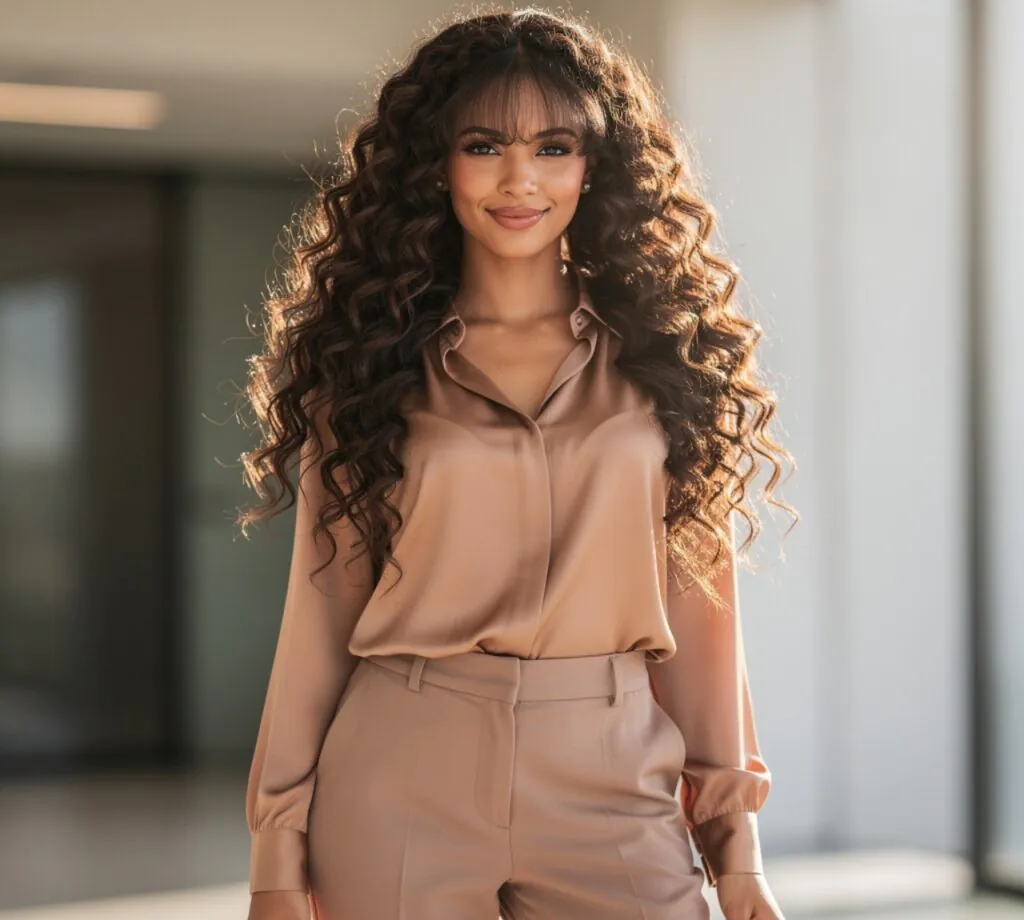
Getting bangs on naturally curly hair requires a stylist who understands curl behavior deeply, since the shrinkage that occurs as curls dry means a fringe cut to brow length when wet can spring up significantly shorter once it reaches its natural dried state. A soft, slightly longer fringe cut to account for shrinkage allows the curl pattern to define itself naturally within the bang section rather than fighting against a cut that assumes straight behavior. This style suits medium to thick curly hair most productively and flatters oval, heart, and round face shapes, since the soft fringe adds width near the forehead where curly hair’s natural volume makes it most visually effective. This look pairs beautifully with a long layered curly cut that allows the fringe to blend naturally into the surrounding curl pattern.
6. Long Hair with Wispy Bangs
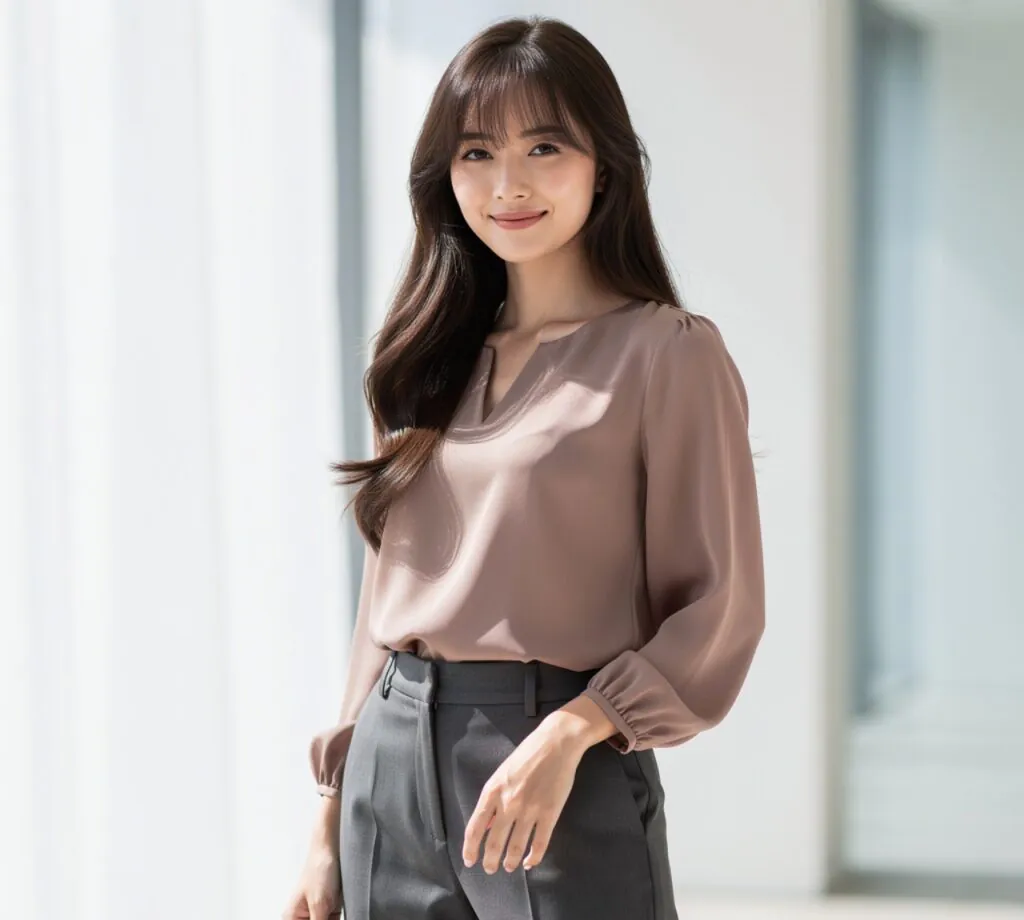
Wispy bangs represent a softer, more delicate interpretation of the blunt fringe, featuring point-cut or razor-textured ends that create a feathered, barely-there quality rather than a graphic, dense line across the forehead. This fringe type suits fine hair exceptionally well, since wispy ends prevent fine hair from appearing sparse or flat across the forehead and instead create an airy, deliberately light quality that heavier bang styles on finer strands sometimes fail to achieve. Oval, heart, and oblong face shapes all wear wispy bangs most naturally, since the lightness of the fringe avoids shortening taller foreheads or adding unwanted heaviness near the brow. This style requires minimal daily maintenance beyond a light brush and a quick pass of a flat iron to keep the wispy sections pointing in the right direction.
7. Long Hair with Micro Bangs
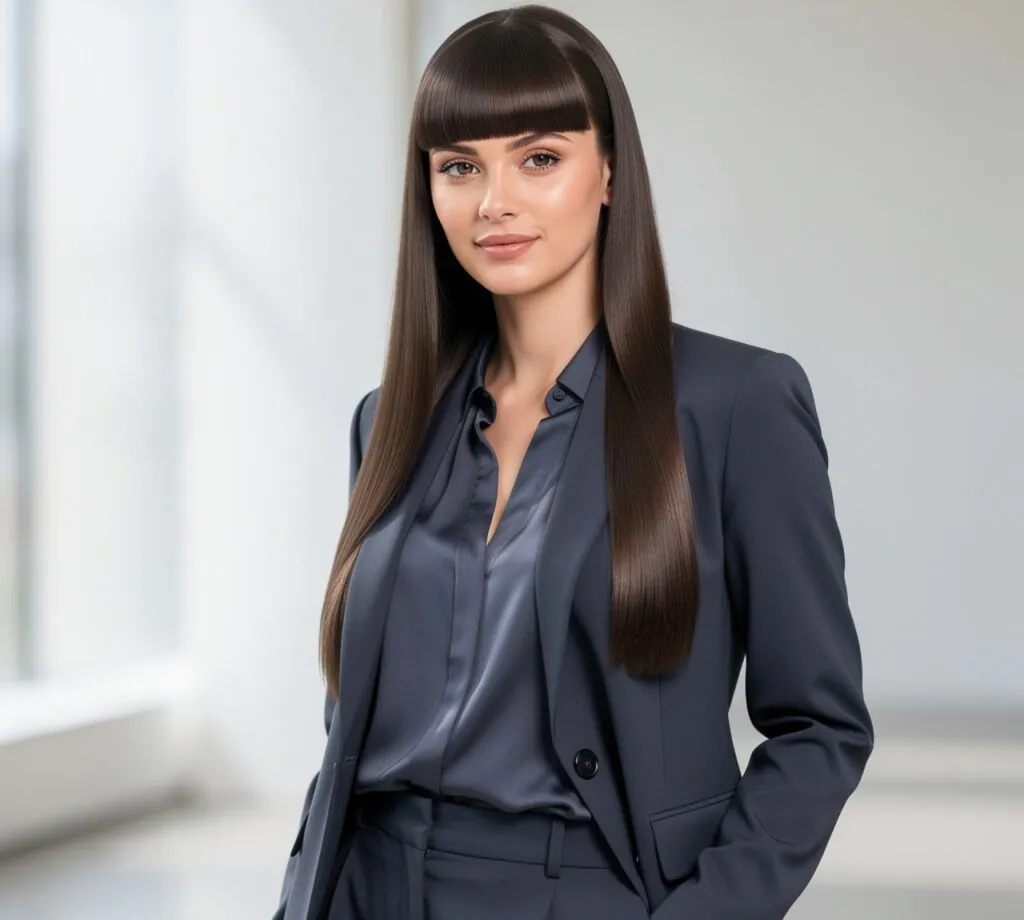
Micro bangs are cut significantly above the brow line, sitting at the upper forehead or even the hairline itself, creating an unexpectedly bold and thoroughly editorial statement that suits adventurous, fashion-forward styling sensibilities rather than conservative or low-profile aesthetics. On long hair specifically, the contrast between the very short fringe at the top and the full, flowing length below creates a visual drama that is unlike anything else on this list, functioning almost like a design element rather than simply a styling choice. This style suits straight to slightly wavy hair best, since the micro length requires a flat, even surface to look precise rather than disheveled. Oval and heart face shapes carry this look most naturally, and it requires frequent trims every two to three weeks to maintain the precision the style depends on.
8. Long Hair with Arched Bangs
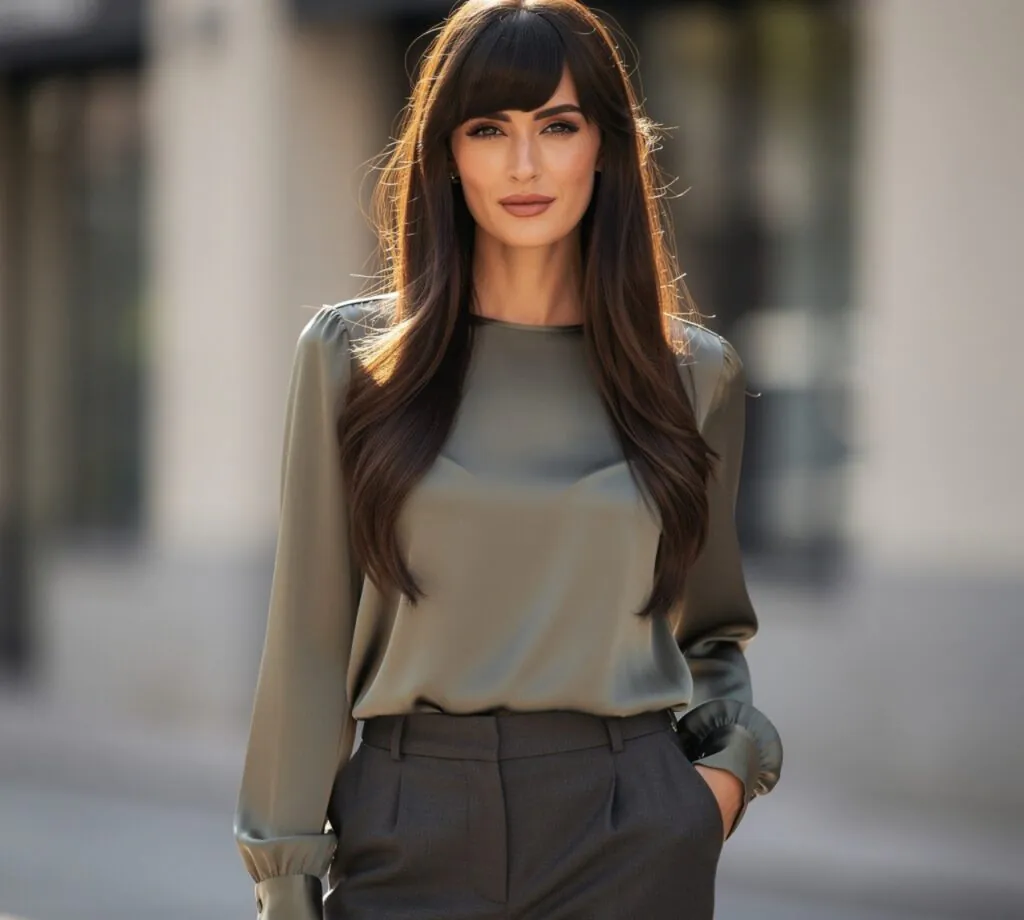
Arched bangs follow the natural curve of the brow rather than sitting in a straight horizontal line, creating a more feminine, face-flattering framing that softens angular features more effectively than a perfectly straight blunt fringe. The arch typically peaks above the highest point of each brow before tapering at the sides, creating a curved line that draws the eye toward the brow shape itself and frames the upper face with deliberate elegance. This style suits fine to medium straight hair most naturally, since the curved line requires consistent smoothness to maintain its shape throughout the day. Round and square face shapes benefit most from the softening, elongating effect of the arch, while oval faces can carry virtually any variation of this fringe. Trims every three to four weeks preserve the curve before it grows into a less defined shape.
9. Long Hair with Bottleneck Bangs
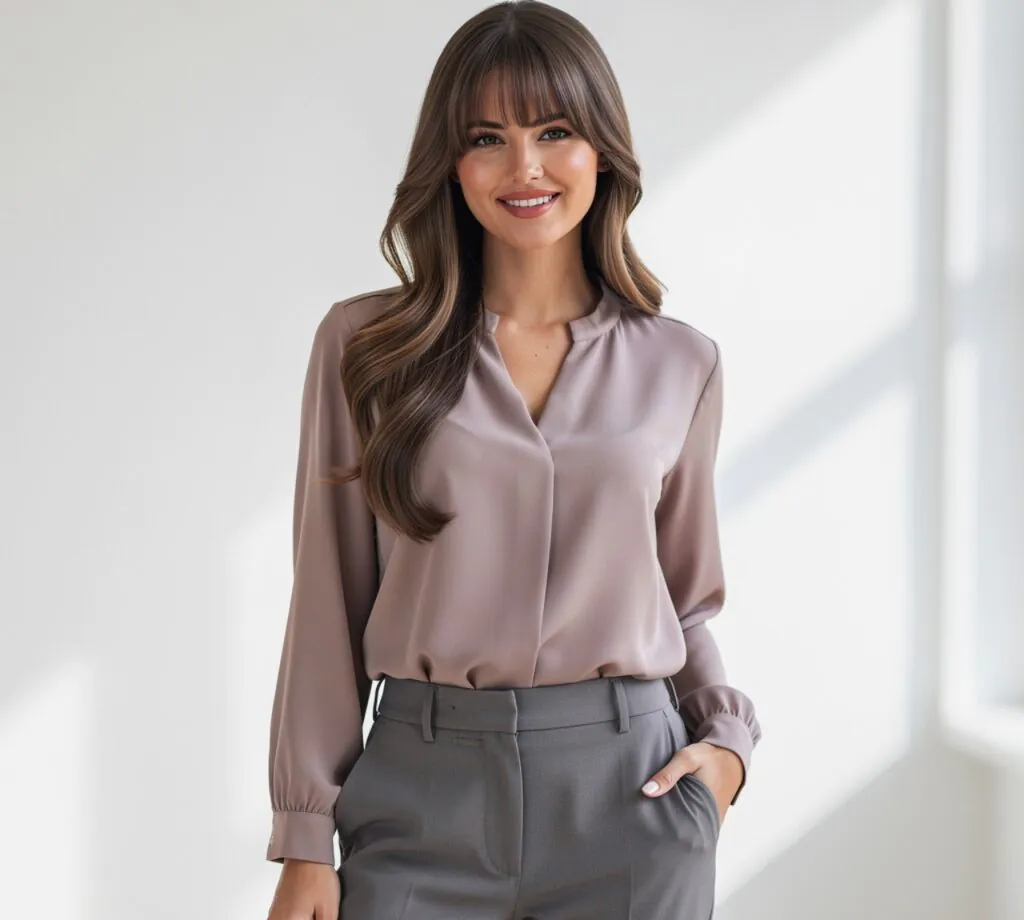
Bottleneck bangs represent a newer, increasingly popular fringe variation that combines elements of a curtain bang with elements of a traditional fringe, featuring a straight center section across the forehead that opens and widens as it sweeps toward the temples in a soft, rounded arc. The effect is a bang that sits more closed and defined at the center of the face while gradually transitioning into longer, face-framing pieces at the sides, creating a layered, dimensional quality that most single-style fringes cannot replicate. This style suits straight to wavy hair textures best and flatters oval, round, and heart face shapes most noticeably. It requires moderate daily maintenance to keep the center section smooth and the sides swept properly, but grows out more gracefully than a blunt fringe due to its inherent layering.
10. Long Hair with Textured Choppy Bangs
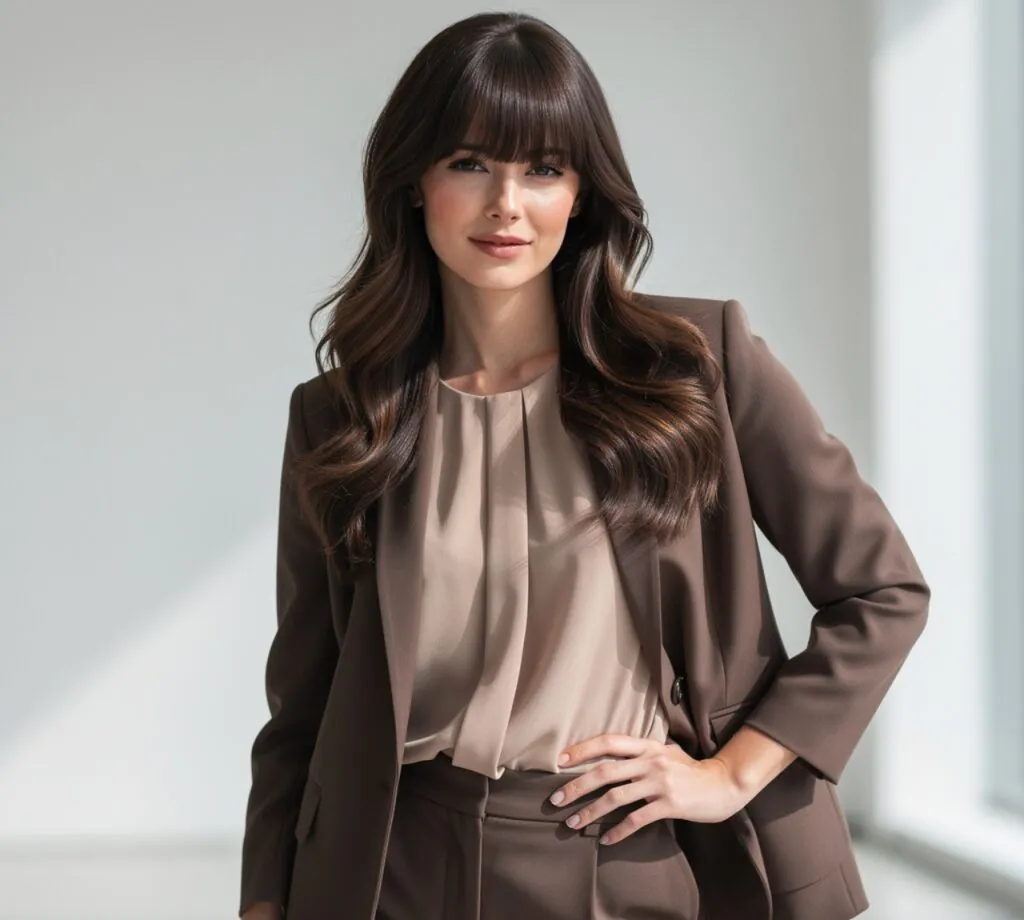
Textured, choppy bangs introduce deliberate irregularity and movement into the fringe section, using point-cutting or razor techniques to create ends that differ in length by small but visually significant amounts, producing a casual, effortlessly cool quality that smooth, blunt fringes deliberately avoid. This style suits medium to thick hair textures most productively, since the choppy technique requires enough density for the variation between sections to read clearly rather than disappearing into thinness. It flatters oval, heart, and oblong face shapes most naturally and pairs beautifully with layered long hair cuts that carry the same textured, lived-in quality throughout the length. Daily styling is minimal, since the choppy ends look best when allowed to fall naturally rather than being smoothed or controlled with heavy product.
11. Long Boho Hair with Piece-y Bangs
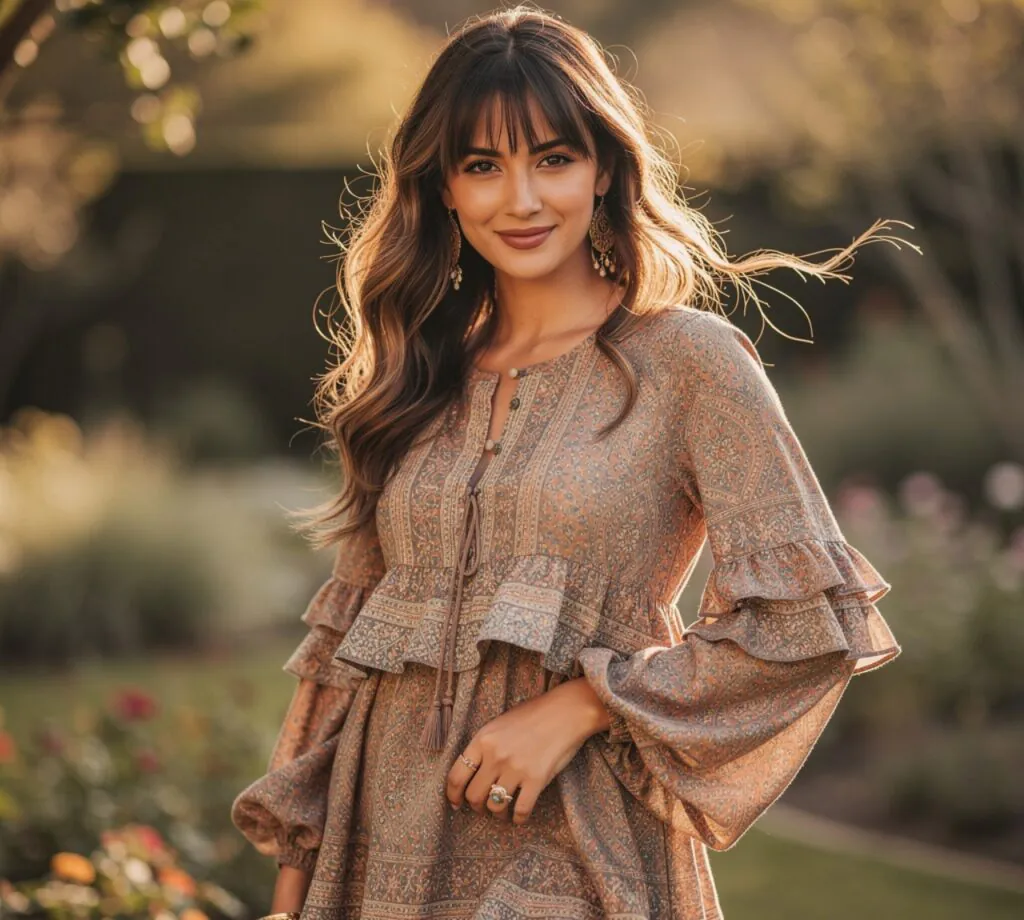
Piece-y bangs separate into distinct, slightly irregular sections rather than forming one unified, solid fringe, creating a relaxed, bohemian quality that suits free-spirited, low-maintenance styling aesthetics more naturally than polished or formal environments. Individual sections of the fringe are separated with a small amount of texturizing balm or light pomade, allowing each piece to define itself independently and creating a deliberately undone quality that suits beach waves, effortless braids, and natural, air-dried long hair beautifully. This style suits fine to medium hair density most naturally, since thicker fringe sections can be difficult to separate into convincingly piece-y divisions without appearing clumped. Oval, heart, and long face shapes carry this relaxed fringe most gracefully, and it pairs beautifully with bohemian, festival, and casual outdoor aesthetics.
12. Long Hair with Baby Bangs Blended into Layers
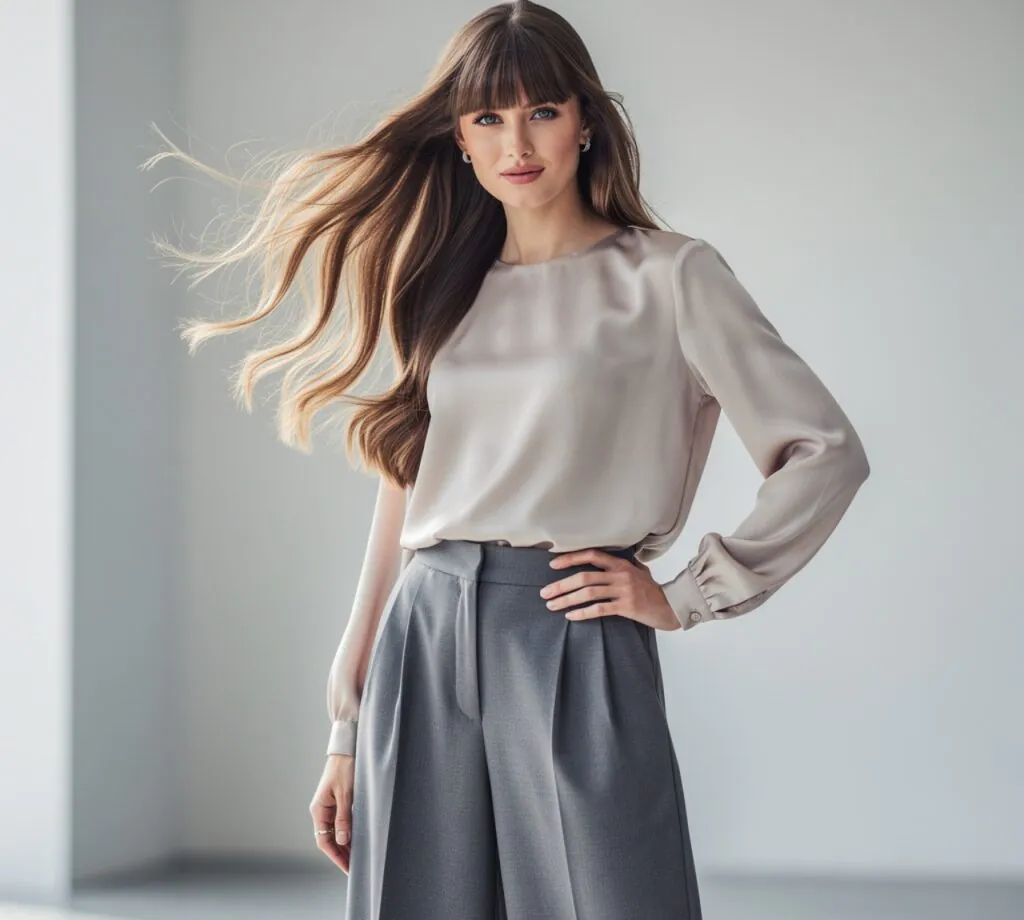
Baby bangs cut significantly shorter than traditional fringes but longer than micro bangs create a distinctive, vintage-inspired look that sits somewhere between a statement fringe and a deliberate styling choice, landing at the mid-forehead and blending gradually into face-framing layers on either side. The blending into layers rather than ending abruptly at the temples prevents the short fringe from appearing disconnected from the rest of the long hair, creating a cohesive silhouette that suits the style’s retro, fashion-conscious energy. This style suits fine to medium straight hair best and flatters oval and heart face shapes most naturally. It requires trims every three to four weeks to maintain the short length before the fringe begins blending into the face-framing sections and losing its defining character.
13. Long Hair with Brow-Grazing Bangs
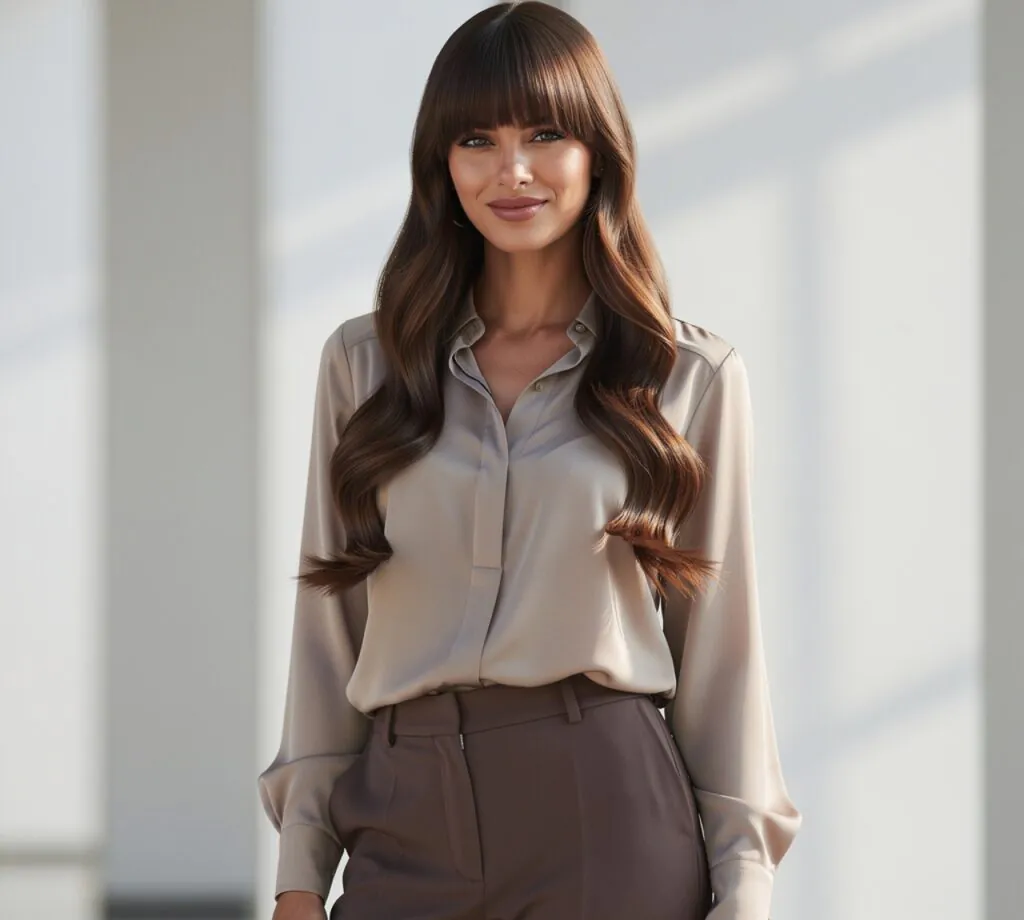
Brow-grazing bangs are cut to sit precisely at brow level, creating a fringe length that most people find universally flattering since it covers the forehead without shortening the face significantly or sitting so high that the forehead is fully exposed. This length suits virtually every face shape, making it one of the most accessible bang options for anyone wanting a fringe without committing to a more extreme length variation like micro or baby bangs. It works across every hair texture from straight through wavy, though the styling method changes depending on texture. Straight hair benefits from a flat iron pass to keep the fringe even, while wavy hair can carry the length with minimal daily effort. Trims every four to five weeks maintain the precise brow-grazing length before the fringe grows into the eyes.
14. Long Hair with Parted Fringe Bangs
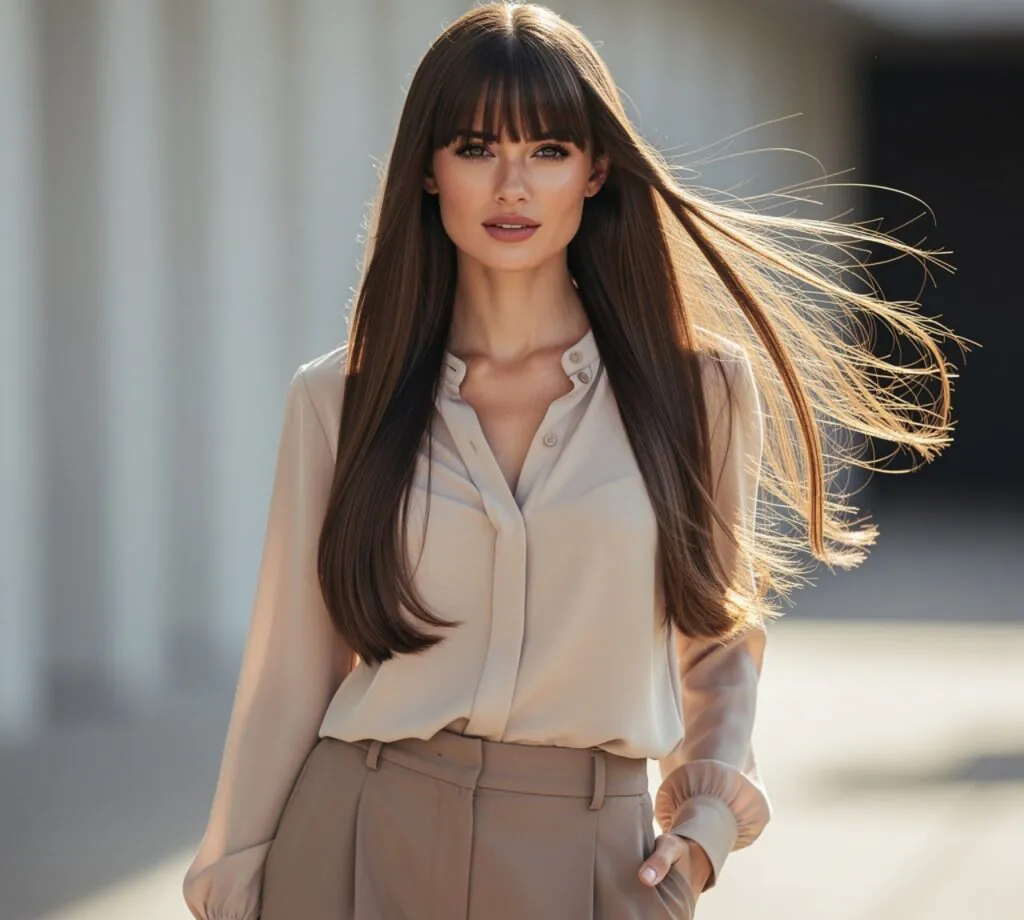
Parted fringe bangs divide the fringe section completely down the center, creating two distinct swept sections that frame each side of the face rather than covering the forehead as a unified whole. This style sits closest to curtain bangs in overall appearance but features a more defined, deliberate parting that creates a cleaner, more structured division between the two sides. It suits straight to wavy hair best and flatters oval, round, and heart face shapes most noticeably, since the parted fringe draws the eye to the center of the face while the swept sides create a lengthening, widening effect near the temples. Daily styling involves simply brushing each side in its designated direction and applying a light-hold spray, making this one of the most genuinely low-maintenance bang options available.
15. Long Hair with Shaggy Bangs
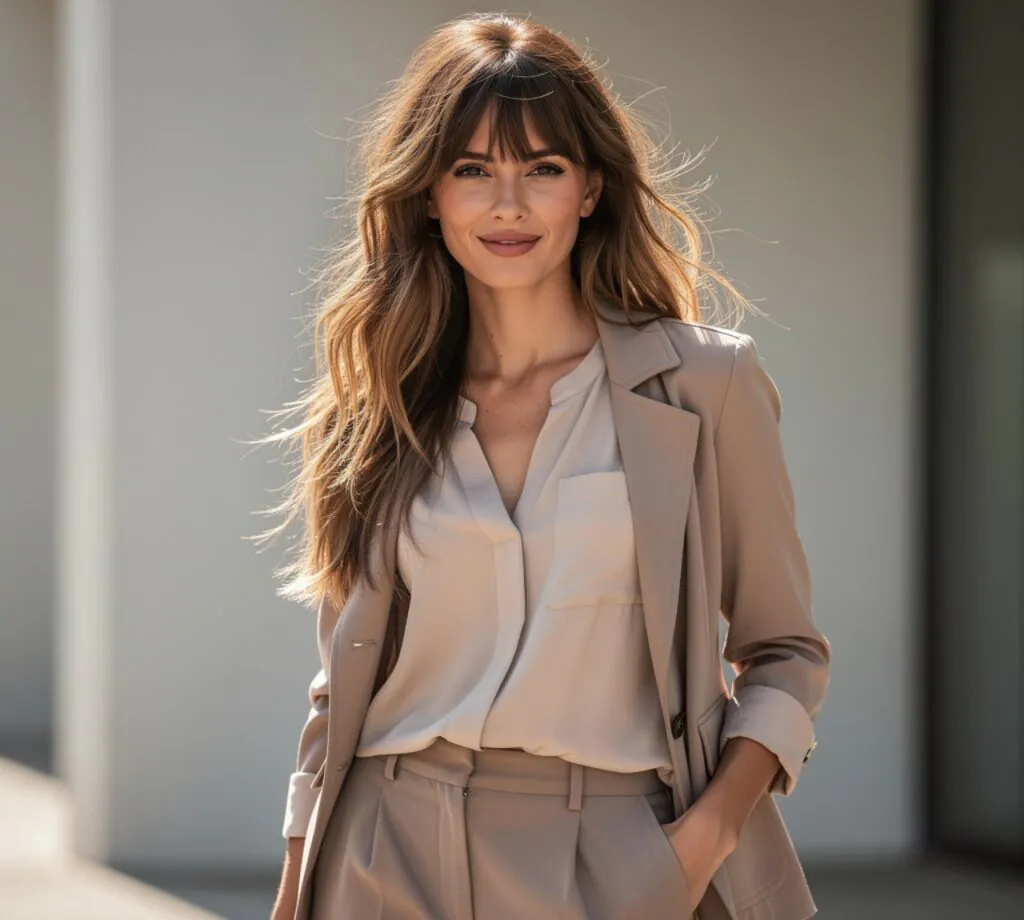
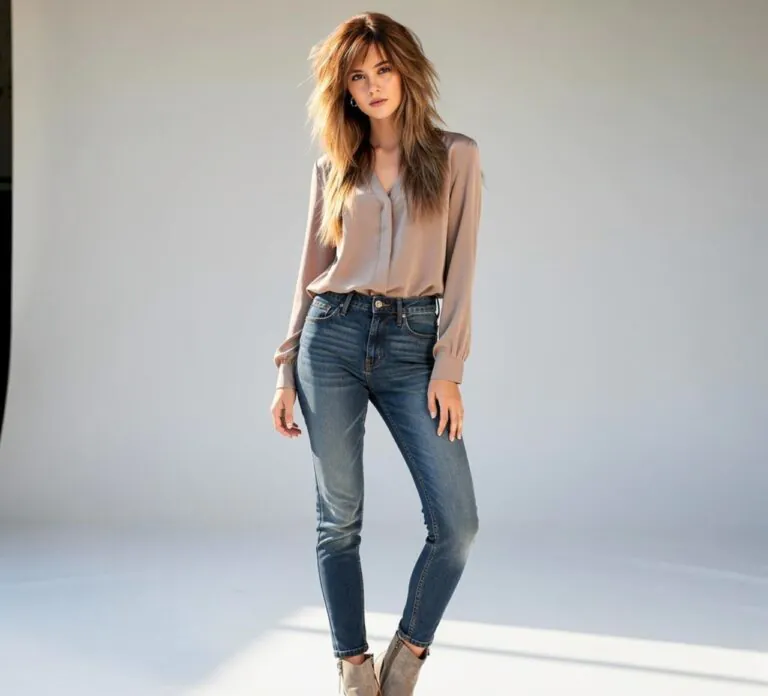
Shaggy bangs form an integral part of the modern shag haircut, sitting as a heavily layered, textured fringe that blends directly into the choppy, movement-rich layers throughout the rest of the long hair rather than sitting as a distinct, separately styled section. Unlike traditional fringes that end at the forehead, shaggy bangs taper into longer face-framing sections at the temples, creating a gradual, seamless transition that suits the shag cut’s overall organic, lived-in aesthetic. This style suits fine to medium density hair best and flatters oval, heart, and oblong face shapes most noticeably. Minimal daily maintenance involving a light mousse and air-drying or diffusing activates the shaggy texture naturally, and the cut grows out gradually rather than reaching an awkward phase, since the layering throughout the rest of the hair evolves at the same rate as the fringe.
How to Choose the Right Bang Style for Long Hair
Choosing among these fifteen options begins with an honest assessment of your daily styling routine and maintenance tolerance, since bangs require more consistent upkeep than any other aspect of a long hairstyle. A blunt fringe needs a trim every three to four weeks and a flat iron pass most mornings, while curtain or parted bangs can go five to six weeks between appointments and often require only a brush and a light spray each day. Your hair’s natural texture matters enormously as well, since certain bang styles rely on smoothness to look intentional while others thrive on texture and movement. Face shape should guide the choice between a fringe that adds width, such as a blunt or brow-grazing bang, and one that adds length, such as a side-swept or curtain style, depending on which adjustment your features genuinely benefit from most.
Best Hair Types and Face Shapes for Long Hairstyles with Bangs
Fine straight hair carries blunt, wispy, arched, and brow-grazing bangs most effectively, since smooth, lightweight strands hold fringe shapes cleanly without the bulk or unpredictability that thicker textures can introduce. Thick or coarse hair suits textured, choppy, shaggy, and curtain bang styles most naturally, since these techniques account for the volume and natural movement that dense hair produces without requiring constant smoothing or product to stay in place. Wavy and curly textures work best with curtain bangs, soft fringes, and parted styles that allow the bang section to participate in the hair’s natural texture rather than fighting against it. Round and square face shapes benefit most from side-swept, curtain, and arched bangs that introduce diagonal lines and vertical height, while oval face shapes carry virtually every bang style listed above with equal success.
Styling and Maintenance Tips for Long Hair with Bangs
Trimming bangs more frequently than the rest of the long hair is an unavoidable reality of wearing a fringe, since the short length means visible growth happens faster and more disruptively than anywhere else on the head. Most bang styles require attention every three to six weeks depending on the type, and many people learn to do minor fringe trims at home between professional appointments to maintain precision without a full salon visit every month. Blow-drying the fringe immediately after washing with a round brush before allowing it to air-dry in any direction is the single most effective technique for keeping most bang styles looking polished, since bangs that dry without direction often set in an unpredictable, difficult-to-correct pattern. A light-hold finishing spray or pomade applied to the fringe as a final step locks the styled shape for most of the day.
How to Ask Your Hairstylist for This Bang Style
Communicating precisely about bang styles requires more detail than most haircut conversations, since the word “bangs” covers an extraordinarily wide range of lengths, shapes, and textures that can look completely different from one another. Reference the exact bang type name from this guide, describe your forehead size and the face shape you’re working with, and be honest about how much daily styling effort you’re realistically willing to invest each morning before leaving the house. Bring photos showing the fringe from both a front-facing angle and a three-quarter profile, since the side view reveals how the bang transitions into the rest of the long hair, which matters enormously for styles like bottleneck bangs, shaggy bangs, and curtain bangs where the blending is as important as the fringe itself. Ask your stylist to cut the bangs slightly longer than your desired final length on the first appointment, since you can always trim more but cannot replace removed length.
Frequently Asked Questions
What is the most low-maintenance bang style for long hair?
Curtain bangs and parted fringe styles require the least daily effort and the most forgiving growth pattern, since their swept, open shape naturally accommodates a few weeks of growth without losing their essential character between appointments.
Do bangs suit every face shape?
Yes, though the specific bang type should be matched to individual features. Round and square face shapes benefit from side-swept or curtain styles that introduce diagonal lines and vertical height, while oval faces carry virtually every bang variation naturally.
How often do bangs need to be trimmed?
Blunt, micro, and arched bangs typically need attention every three to four weeks, while curtain, wispy, and shaggy styles can comfortably go five to six weeks between trims before the growth becomes disruptive to the style’s overall shape.
Can thick hair wear bangs without them looking too heavy?
Absolutely. Textured, choppy, shaggy, and curtain bang styles are specifically designed to work with rather than against thick hair’s natural density, distributing weight through layering and texture rather than attempting to force thick strands into a flat, smooth fringe shape.
Will bangs suit my long face shape?
Yes. Brow-grazing, blunt, and arched bangs all add horizontal width near the forehead that visually shortens and balances longer face shapes, making them excellent choices specifically for oblong and long face shapes.
What is the best bang style for wavy hair?
Curtain bangs suit wavy hair most naturally since the bang’s sweeping direction mirrors the wave’s outward movement, requiring minimal daily styling and blending seamlessly into the surrounding wavy length without creating a textural contrast.
Final Thoughts
Bangs are genuinely one of the most powerful tools available for transforming long hair, capable of completely reshaping how the face is framed without altering a single inch of overall length. The fifteen styles above represent the full spectrum of what a fringe can achieve on long hair, from barely-there wispy ends and relaxed piece-y sections through bold micro lengths and precise blunt lines, meaning there is a genuinely perfect bang style for every hair texture, face shape, and lifestyle on this list. Use this guide to identify the fringe that makes the most sense for your individual hair and daily routine, save your favorites, and walk into your next appointment ready to have the kind of clear, specific conversation that actually results in the hairstyle you wanted rather than a compromise you simply learn to live with.