Hairstyles for Long Straight Hair: 13 Chic and Easy Everyday Looks
If you’ve spent the last hour scrolling Pinterest, saving hairstyle after hairstyle for long straight hair without learning a single useful detail about any of them, this guide was written specifically for you. Most straight hair boards are visually stunning but practically empty, showing finished results without explaining the cut, the technique, the maintenance commitment, or whether the look will even work on your particular hair density. That gap matters enormously when you’re about to sit in a stylist’s chair and make a decision that affects the next several months of your life. This article bridges that gap completely, giving you fifteen hairstyles for long straight hair explained with the kind of depth that actually helps.
15 Stunning Hairstyles for Long Straight Hair
Read through each one carefully, consider your face shape and density, and save this guide before your next appointment. By the time you reach the end, you’ll have a clear, confident plan rather than just another saved photo.
1. Sleek Blunt Cut
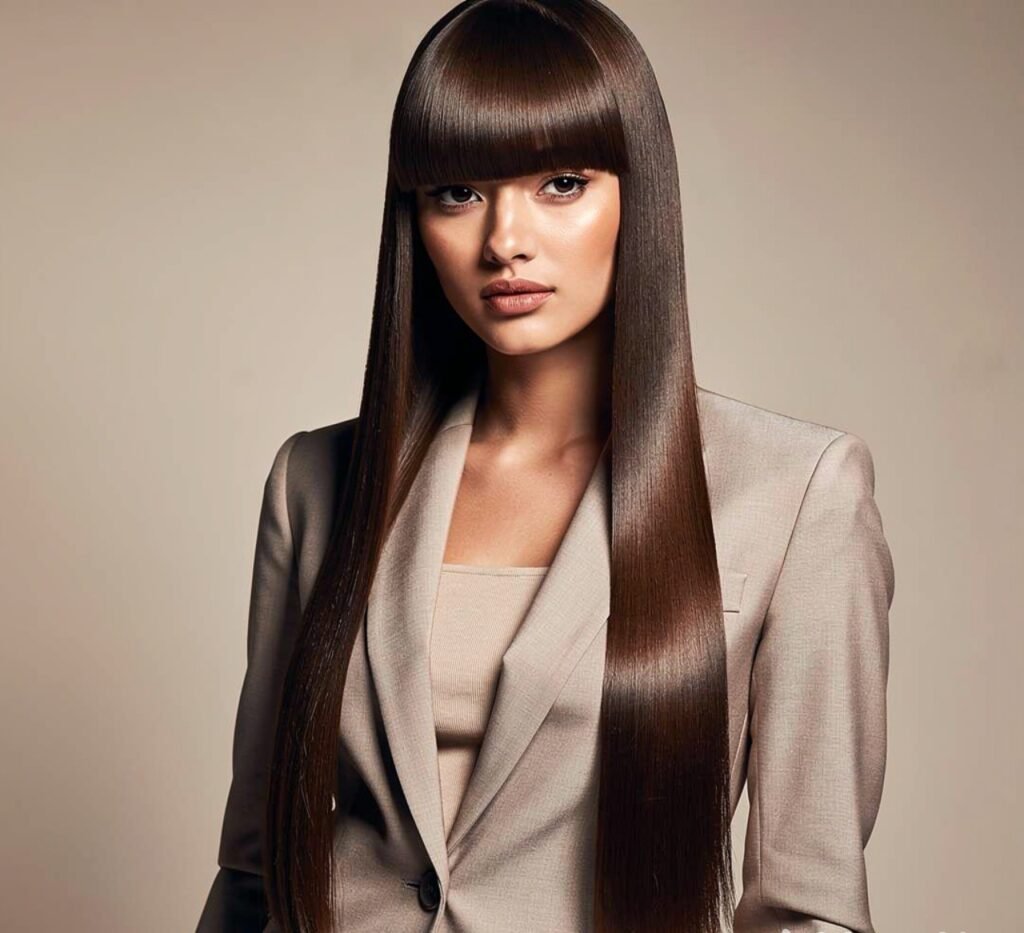
A sleek, perfectly blunt cut on long straight hair communicates precision and intention in a way that no other cut quite matches, creating a strong, graphic silhouette that draws the eye immediately. All the length is cut to a single uniform line, preserving maximum density and creating a bold, statement-making finish that photographs beautifully from every angle. This style suits thick to medium hair density most naturally, since finer hair can sometimes look limp when cut bluntly without internal layers adding body. Square and oval face shapes look particularly commanding with this directness. Regular trims every six to eight weeks keep the blunt line sharp and prevent the split ends that show most obviously on straight, uninterrupted length.
2. Long Straight Hair with Curtain Bangs
Curtain bangs are arguably the single most flattering addition to long straight hair, framing the face with a soft, swept-open fringe that draws attention directly toward the eyes and cheekbones. Parted naturally down the middle and swept gently to each side, these bangs blend seamlessly into the surrounding straight length without creating a harsh division between fringe and hair. This style suits straight hair exceptionally well since the bang’s sweeping direction holds naturally without curling or flipping inward throughout the day. It flatters oval, round, and square face shapes most noticeably, softening stronger jawlines and adding gentle dimension near the forehead. Expect light daily maintenance brushing the bangs into shape each morning.
3. Straight Hair with Face-Framing Layers
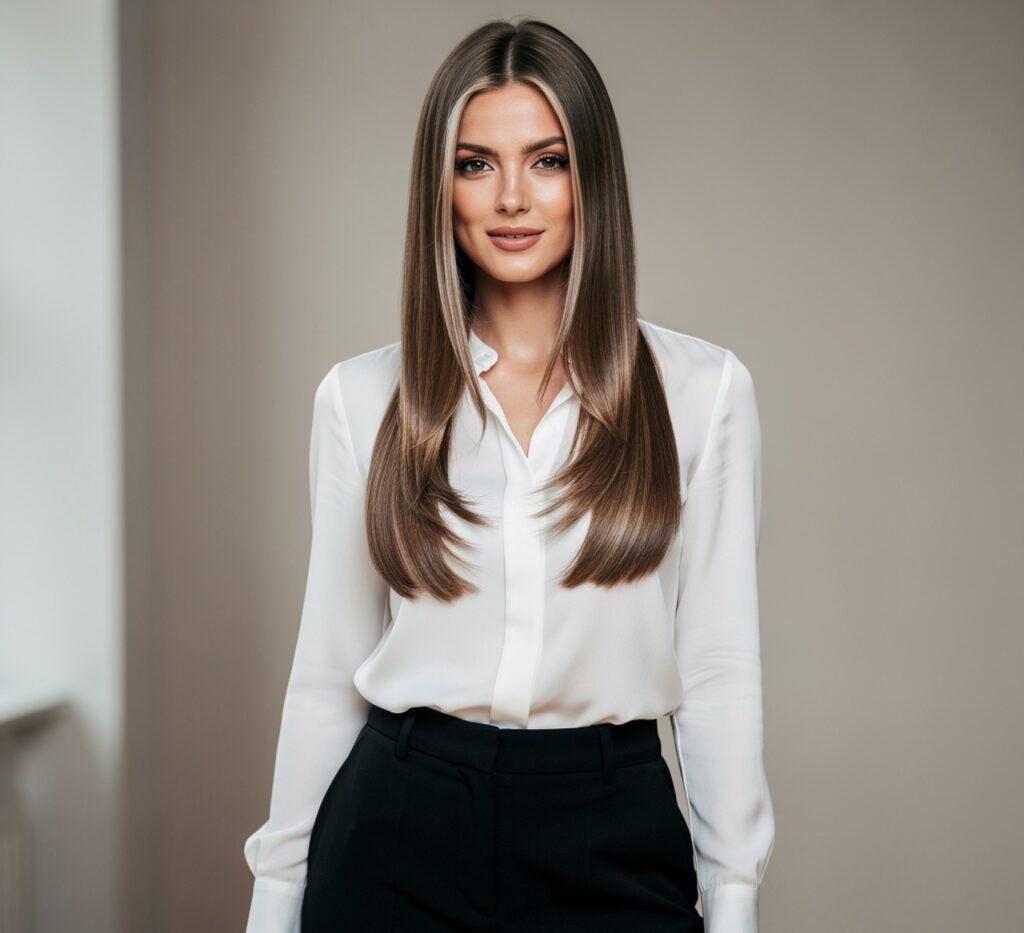
Face-framing layers target only the sections closest to the face, cutting shorter pieces that fall near the cheeks and jaw while leaving the remaining length untouched underneath. This approach gives straight hair movement exactly where it matters most for flattering individual features, without the overall weight reduction that full layering creates. It suits fine to medium density best, since the targeted layers add dimension near the face without reducing thickness throughout the rest of the length. Heart, diamond, and oval face shapes benefit most from this technique. Face-framing layers also reduce drying time and morning styling effort, making this an excellent choice for busy lifestyles.
4. Balayage on Long Straight Hair
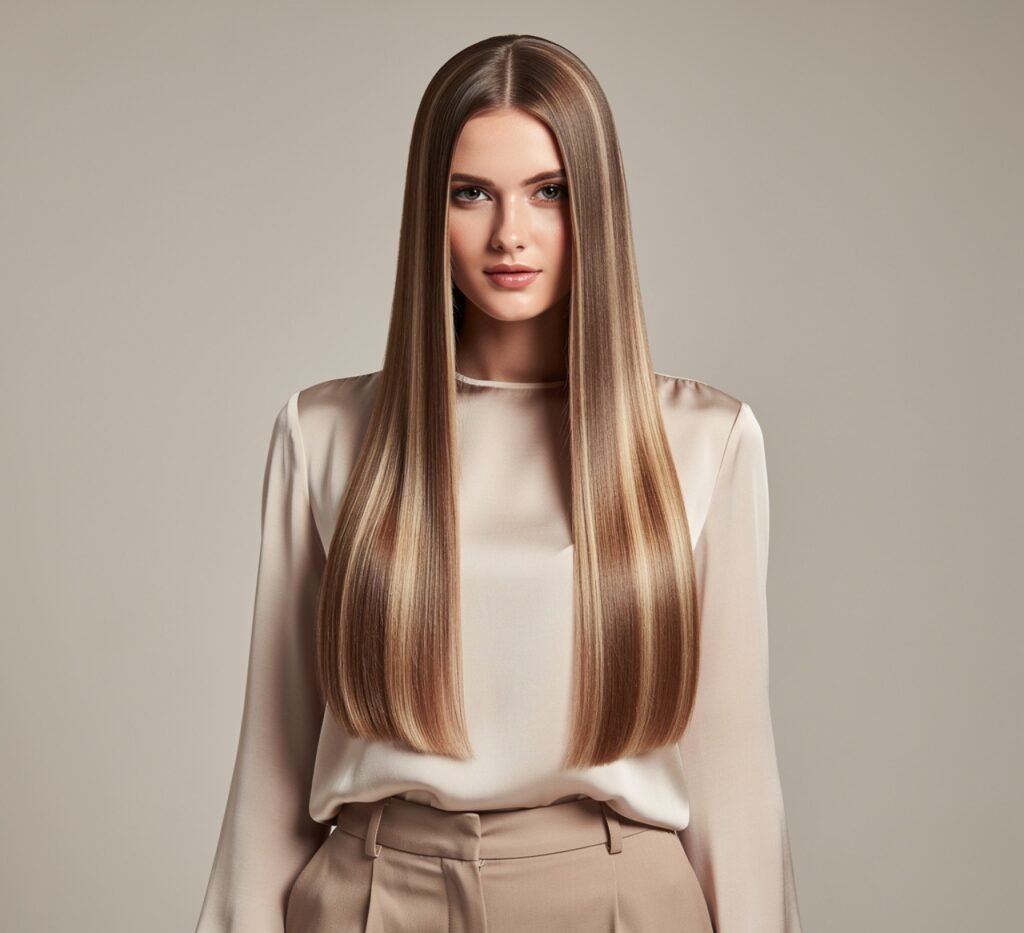
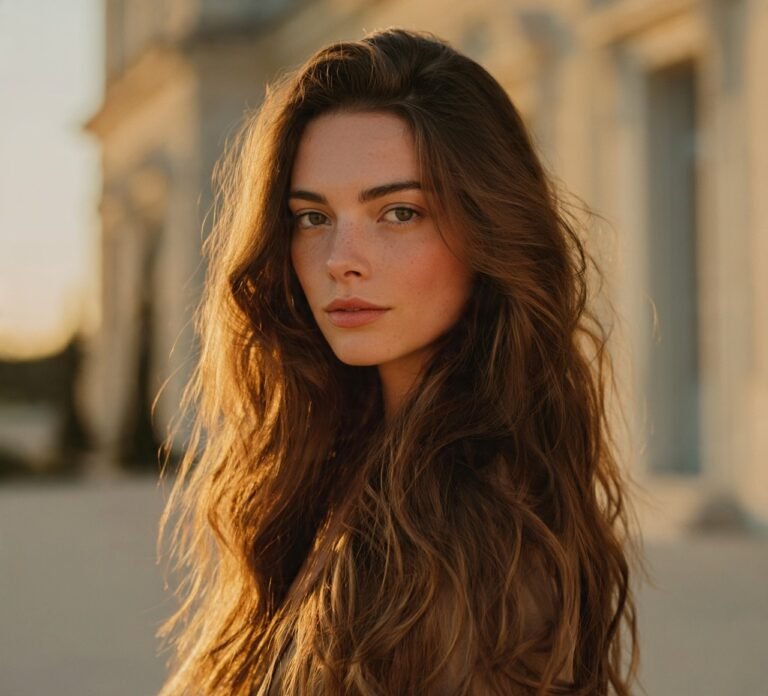
Balayage on straight hair delivers some of its most breathtaking results precisely because the hand-painted highlights travel the full, uninterrupted length of each strand without curl or wave breaking the gradient. The transition from darker roots through mid-lengths into lighter ends appears gradual, sun-kissed, and entirely natural, catching the light differently with every movement. This technique suits virtually every base color, from deep brunette through natural blonde, and works on all densities of straight hair. Warm skin tones typically gravitate toward caramel and honey tones, while cooler complexions favor ash and champagne shades. Touch-ups every three to four months make this one of the most lifestyle-friendly color techniques available for straight hair.
5. Long Straight Hair with Side-Swept Bangs
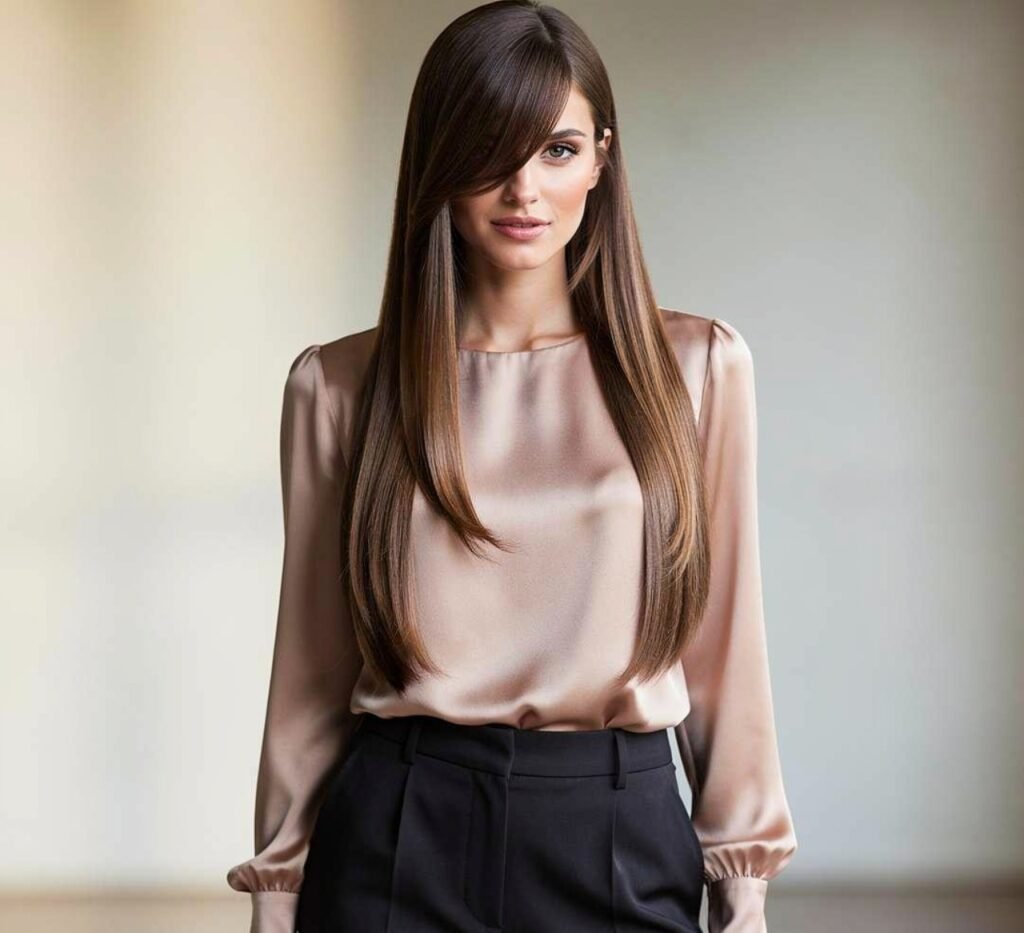
Side-swept bangs on long straight hair create an asymmetry that immediately adds visual interest and personality to a silhouette that might otherwise feel flat or predictable. The bang sweeps from a deep side part across the forehead, blending into the rest of the straight length rather than ending abruptly at the cheek. This style suits fine to medium hair types best, since straight strands hold the sweep’s direction naturally without requiring excessive product. Round and square face shapes benefit most significantly from the slimming, elongating illusion a deep side part creates across the forehead. Styling takes only a moment with a round brush or flat iron pass each morning.
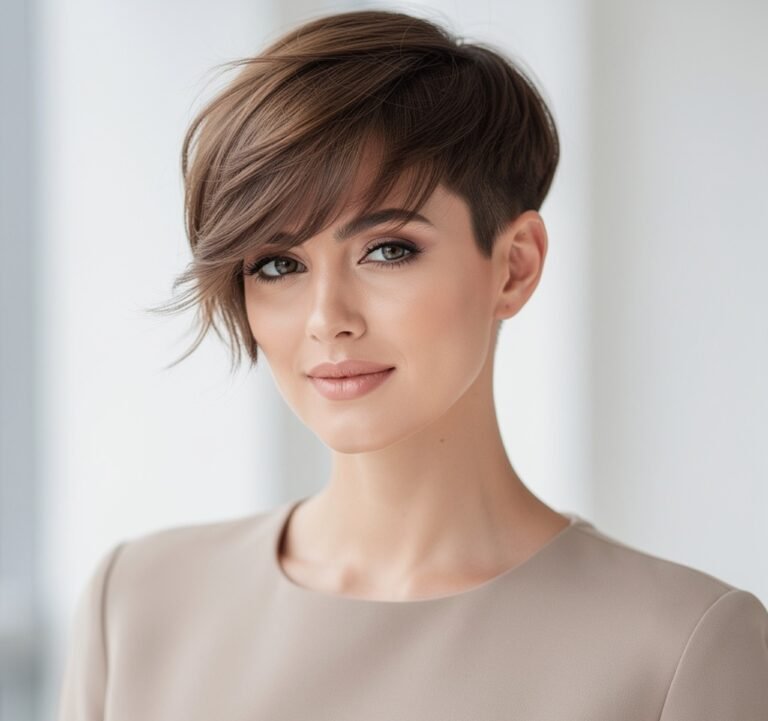
To see more options for pixie hairstyles for long hairs CLICK HERE
6. Straight Hair with Money Piece Highlights
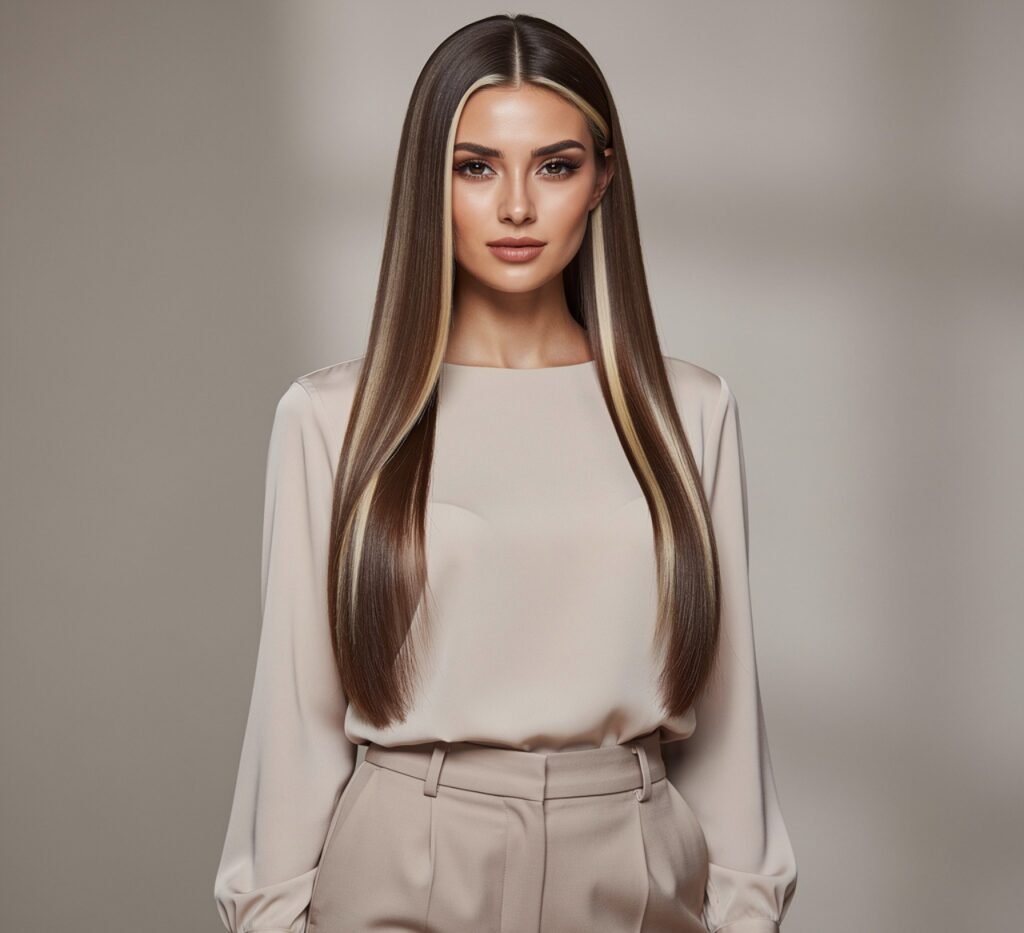
Money piece highlighting places bright, face-framing sections directly at the front of long straight hair, creating an immediate brightening effect that lifts the complexion without requiring an entire head of color. On straight hair specifically, the contrast between the brightened front sections and the darker base behind them appears sharply defined and visually striking, especially in photographs. This technique suits every face shape since the placement sits naturally where light hits the face. Straight hair’s smooth surface allows the highlighted sections to reflect light particularly cleanly, making the contrast appear even more dimensional than on textured styles. Regrowth blends naturally, keeping maintenance infrequent and lifestyle-friendly.
7. Middle Part Long Straight Hair
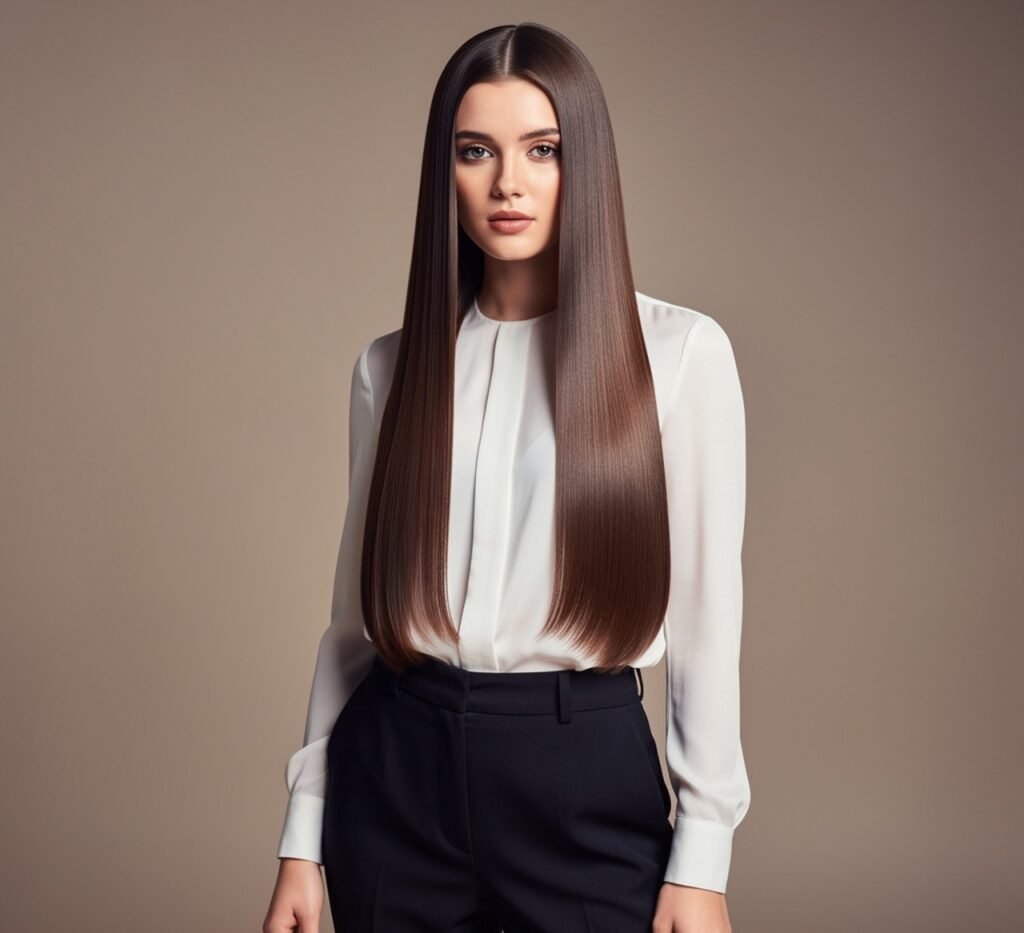
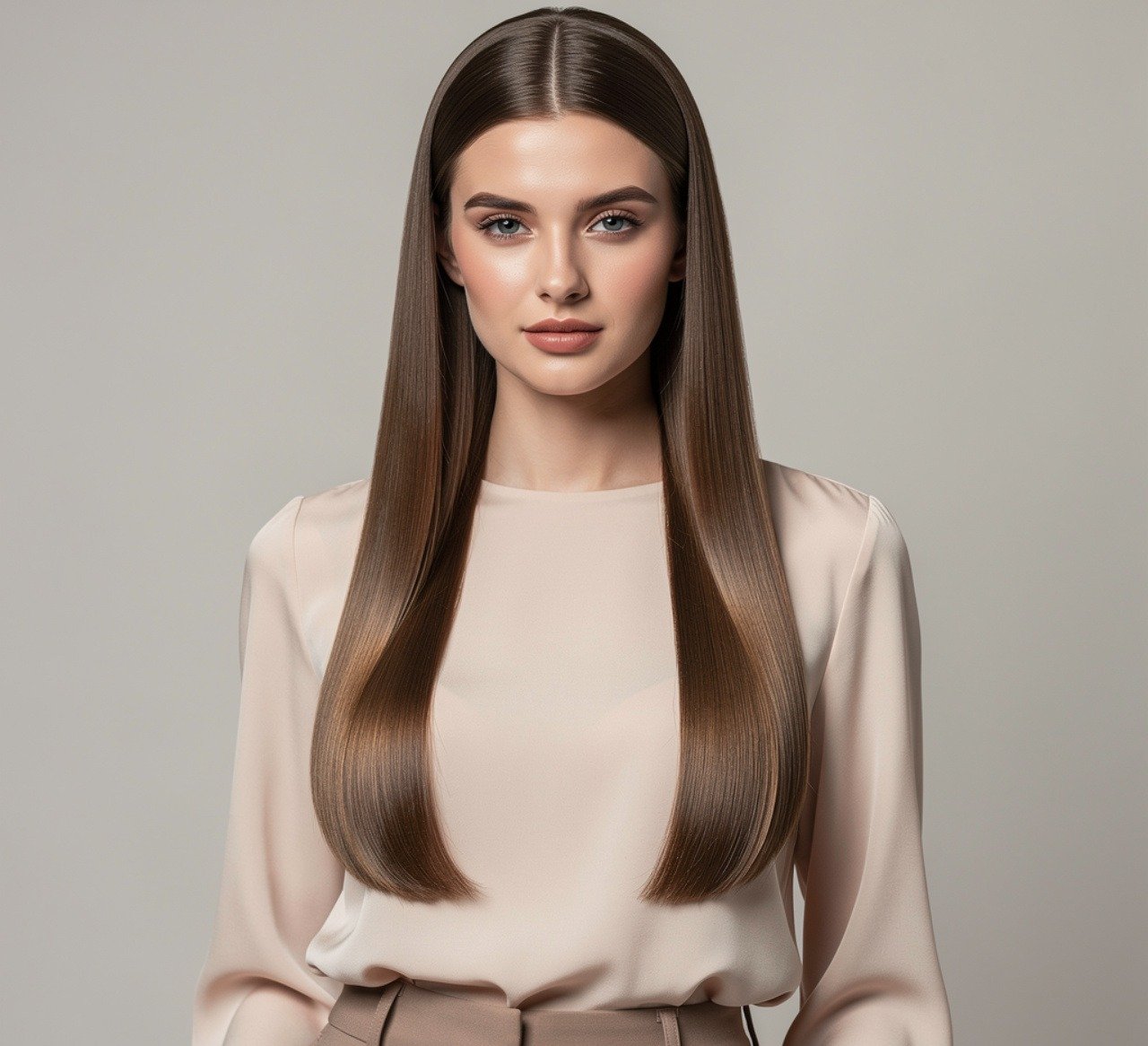
A classic middle part on long straight hair creates a symmetrical, beautifully balanced framing that has moved through decades of fashion without ever feeling dated or exhausted. Hair falls in two equal curtains on either side of the face, hanging with the glass-like smoothness that straight hair produces more naturally than any other texture. This style suits oval and oblong face shapes most naturally, since the symmetrical division balances proportions that are already well-structured. It relies entirely on hair health and condition, since straight hair worn simply and parted evenly has nowhere to hide damage or unevenness. A weekly glossing treatment and consistent heat protection maintain the mirror-like finish this style demands.
8. Long Straight Ponytail with Volume
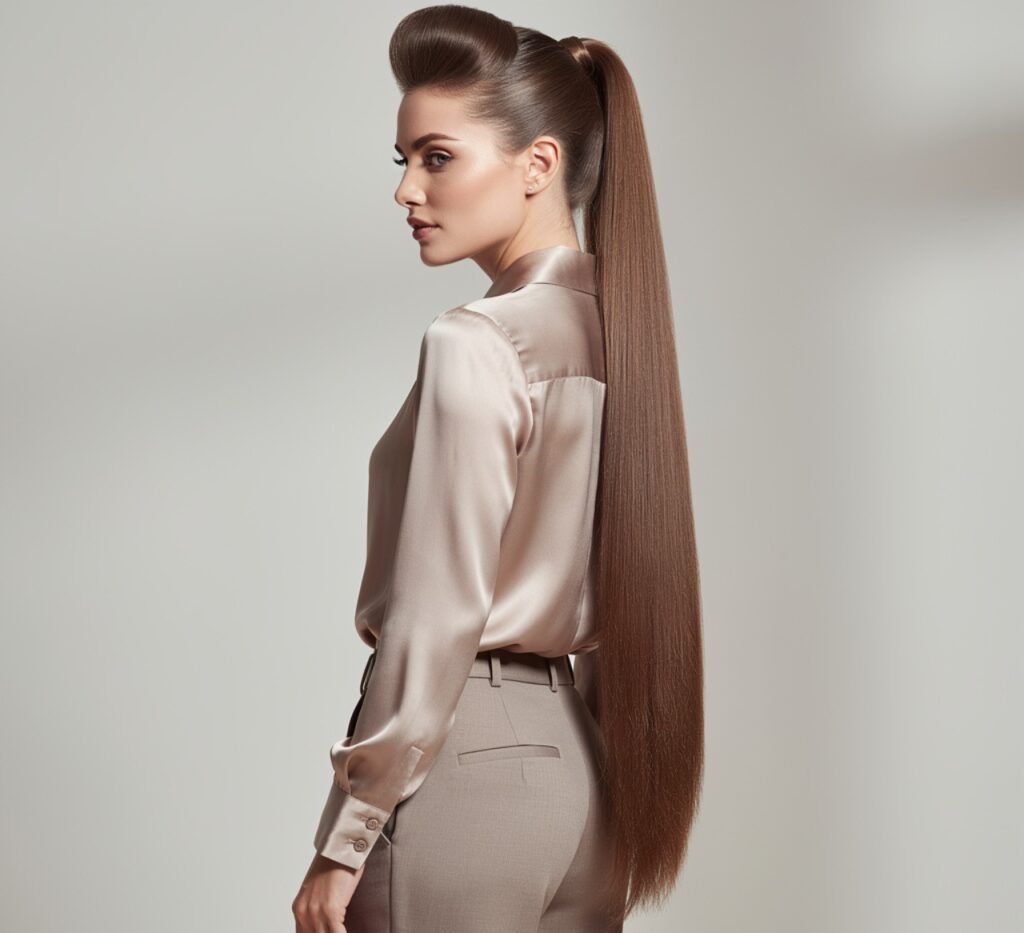
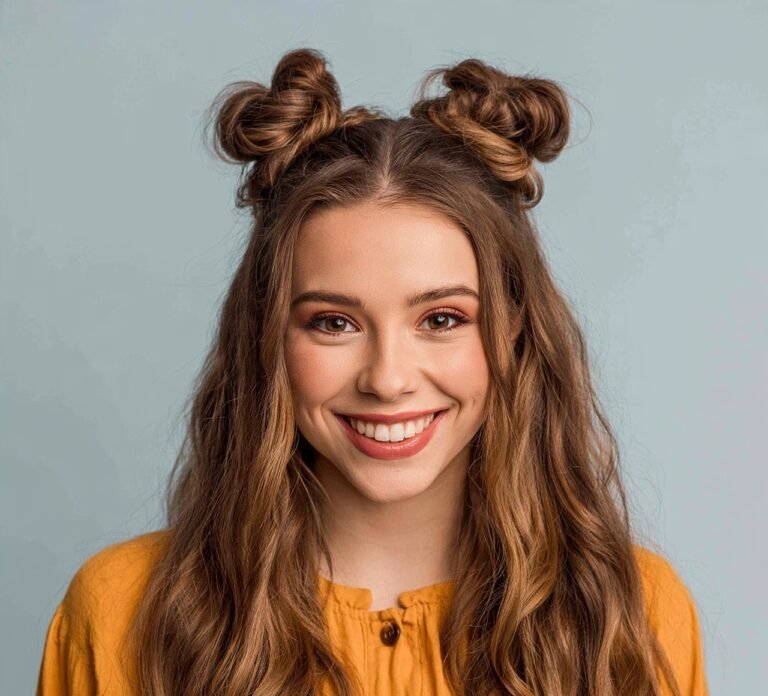
A high, voluminous ponytail on straight hair delivers instant polish and height, transforming an everyday style into something elevated and intentional with surprisingly little effort. The crown is teased gently with a fine-tooth comb before being smoothed over and gathered, creating lift that prevents the ponytail from lying flat against the head as straight hair naturally tends to do. A small wrapped section of hair hides the elastic for a finished, deliberate appearance. This style suits fine to medium hair types particularly well and flatters oval and heart face shapes most gracefully. It’s equally suited to professional environments, workouts, and casual social occasions.
9. Straight Hair Shag with Layers
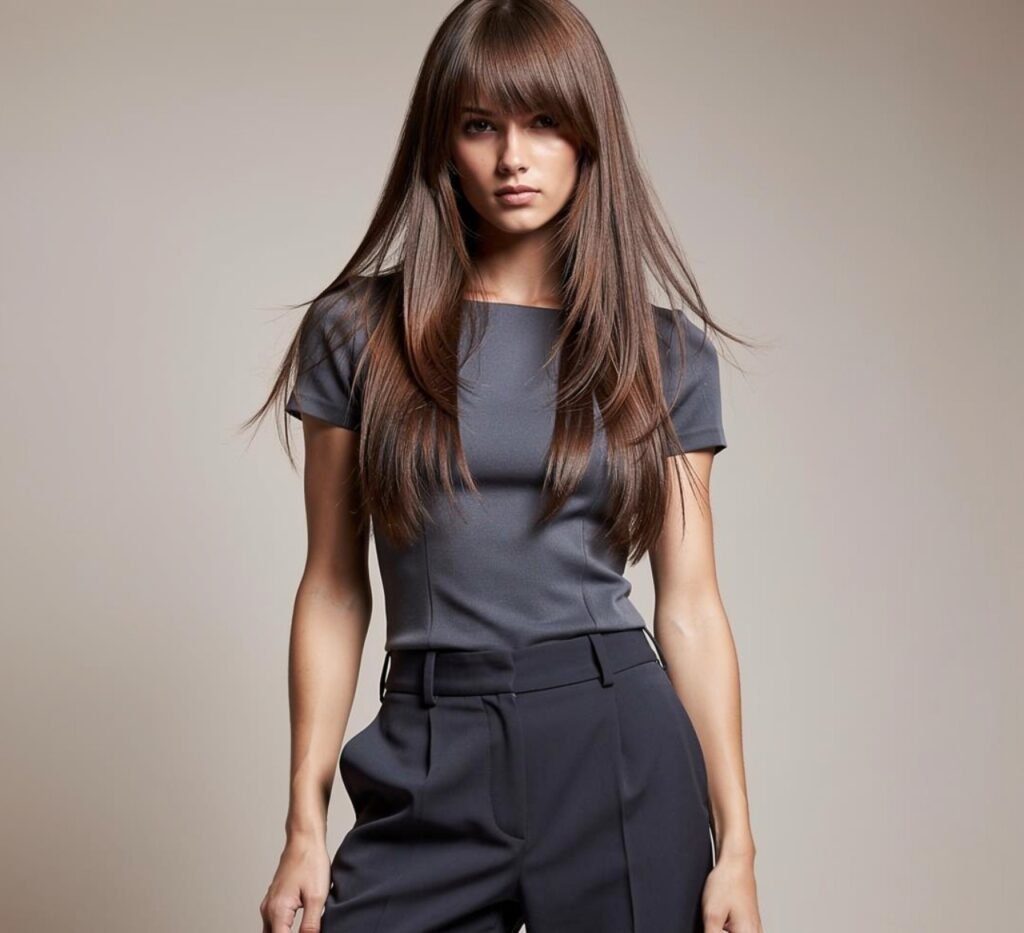
The modern shag translates unexpectedly well onto straight hair, using heavy layering throughout the length combined with a textured, curtain-style fringe to create movement and personality that straight hair rarely achieves without deliberate cutting. Unlike wavy or curly hair where the shag enhances existing texture, on straight hair this cut creates texture through the layering itself, giving each section a different weight and fall direction. This style suits fine to medium density best and flatters oval, heart, and oblong face shapes most noticeably. Texturizing spray and a quick tousle are the only styling steps needed each morning to activate the cut’s intentional dishevelment.
10. Long Straight Hair with Subtle Ombre
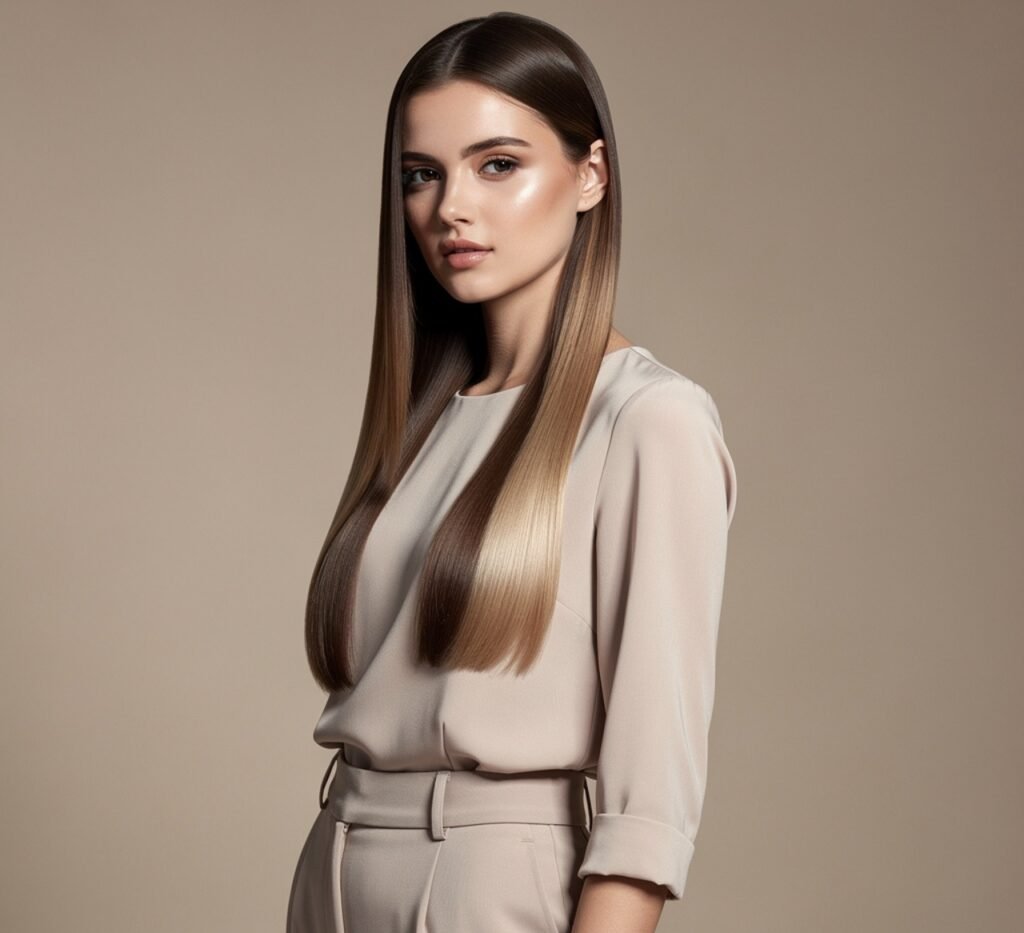
Ombre on straight hair creates a clean, gradient color transition that travels from a darker root tone through progressively lighter ends, with the straight surface of each strand allowing the shift to appear smooth and almost architectural. Unlike balayage, which is hand-painted throughout the mid-lengths, ombre concentrates the transition at a specific horizontal point, creating a more deliberate, defined shift between tones. This suits every density of straight hair and works beautifully on all base colors. Warm brunettes transitioning into caramel or copper ends photograph particularly strikingly. This color technique grows out gracefully, requiring only occasional refreshes to keep the ends looking vibrant and intentional.
11. Half-Up Half-Down on Straight Hair
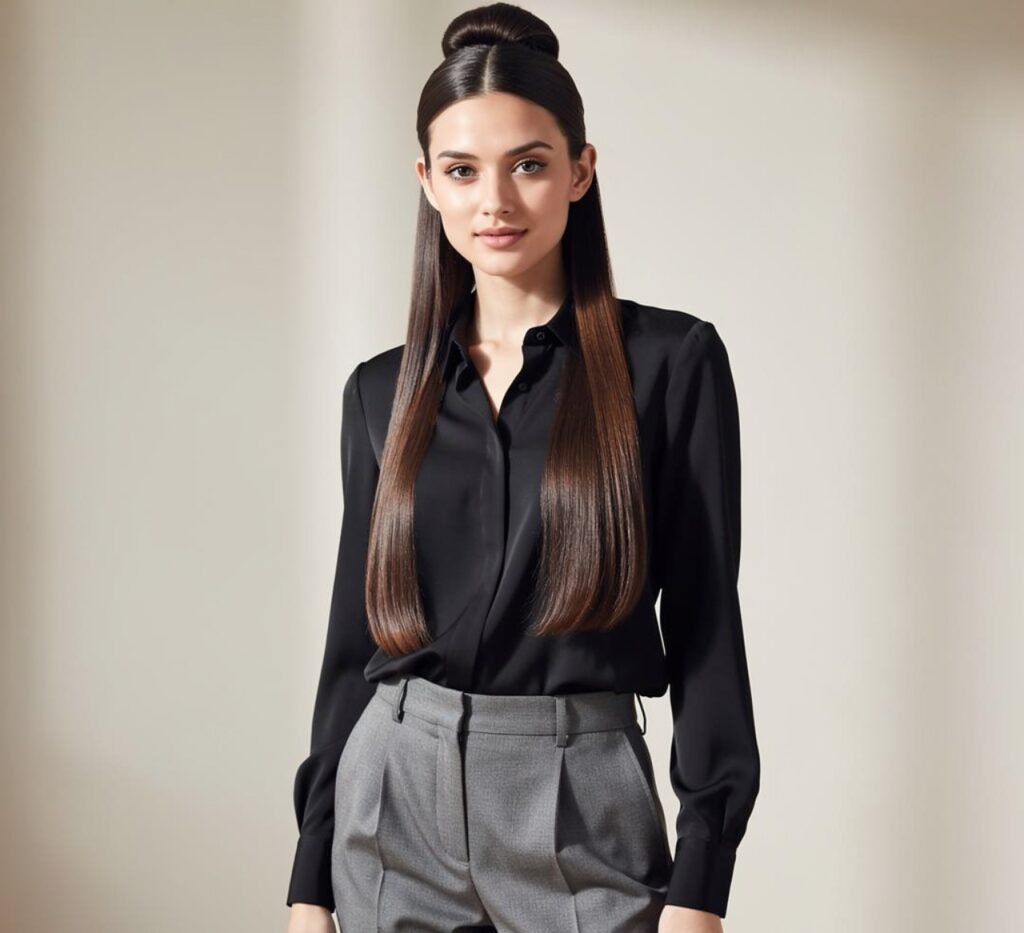
A half-up half-down style on long straight hair offers versatility and effortless elegance, keeping hair away from the face for photographs and practical purposes while still showcasing the length and sleekness that straight hair displays so beautifully. The top section is gathered and secured with a clip, pin, or small clear elastic, while the remaining length hangs below in its natural straight fall. This style suits all densities of straight hair and flatters every face shape, since the gathered crown section can be positioned to add or reduce height depending on what individual features require. It suits casual and smart-casual occasions equally, requiring almost no daily effort.
12. Long Straight Hair with Lowlights
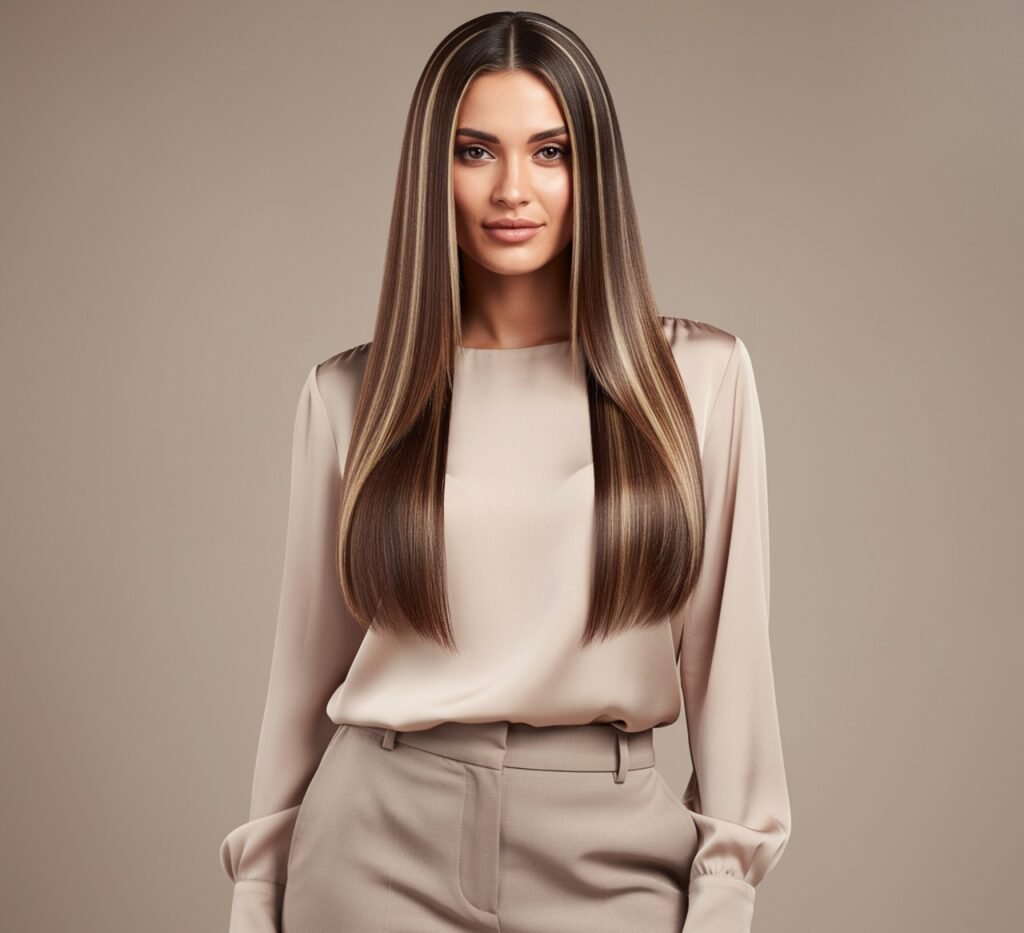
Lowlights add depth and dimension to long straight hair in a way that pure, uniform color simply cannot replicate, weaving slightly darker tones throughout the base to create shadow and movement even when the hair itself stays completely straight and still. Unlike highlights that brighten upward, lowlights create the appearance of thickness and richness that particularly benefits fine straight hair, making it appear denser and more voluminous in photographs. This technique suits every skin tone and base color, with the specific shade of lowlight customized to complement the existing hair color. It requires touch-ups every three to four months and pairs beautifully with both casual and formal styling.
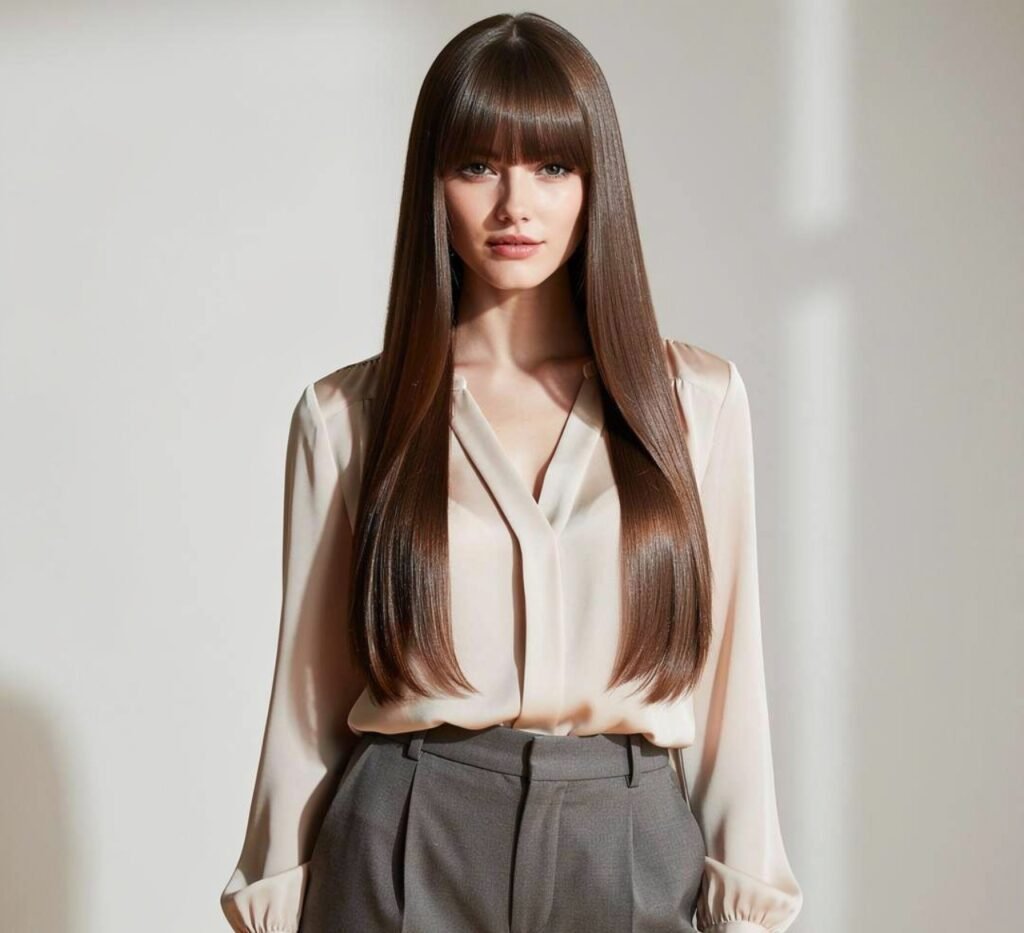
13. Long Straight Hair with a Blunt Fringe
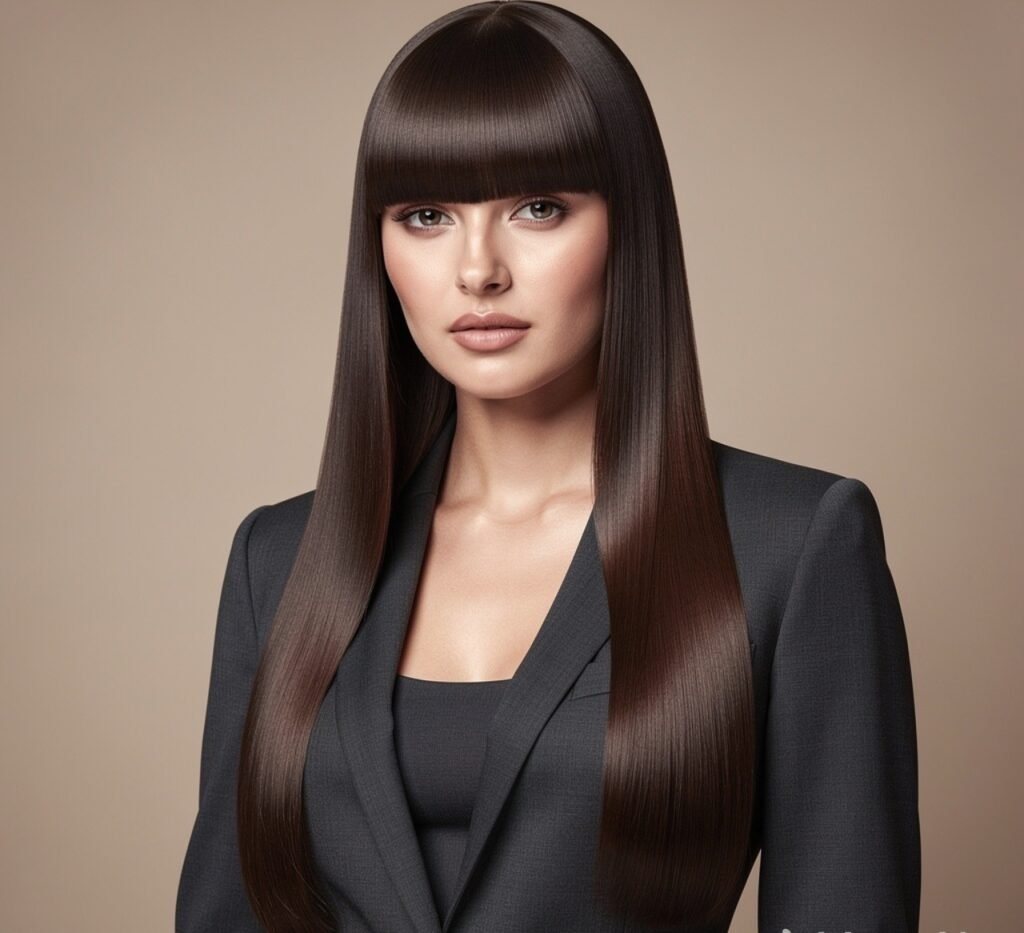
A full blunt fringe on long straight hair creates one of the most dramatically transformative changes achievable without altering length, instantly restructuring the entire framing of the face. Cut straight across the forehead at brow or slightly above brow level, this bang works in perfect visual harmony with straight hair’s natural geometry, since both the fringe and the length share the same clean, uninterrupted line. This style suits fine to medium straight hair best, since straight strands hold the bang flat without curling or separating unevenly throughout the day. Oval and heart face shapes wear this combination most elegantly, and regular trims every three to four weeks keep the fringe at its precise, intentional length.
How to Choose the Right Hairstyle for Long Straight Hair
Choosing among these fifteen options begins with an honest assessment of your hair’s density, since fine straight hair behaves very differently from thick straight hair and benefits from entirely different cutting strategies. Consider your face shape carefully, since certain cuts like the blunt fringe and curtain bangs genuinely flatter specific features in ways that other styles don’t, and understanding your face shape takes the guesswork out of choosing. Think realistically about your daily styling routine and how much time you want to spend each morning, since styles like the sleek blunt cut and middle part require less effort than a high ponytail or styled shag. Finally, factor in your color maintenance comfort, since techniques like balayage and money piece highlights offer very different upkeep schedules.
Best Hair Types and Face Shapes for Long Straight Hairstyles
Fine straight hair benefits most from styles that create the illusion of volume and density, such as long layers, face-framing sections, and teased ponytails, since heavier blunt cuts can emphasize flatness without internal structure providing lift. Thick straight hair carries blunt cuts, shags, and full fringes most naturally, since the density provides all the visual weight these styles need without additional technique. Medium density sits comfortably across nearly every style on this list. Oval and heart face shapes have the most flexibility, suiting almost every cut. Round and square face shapes look most refined with deep side parts, curtain bangs, or side-swept fringes that introduce asymmetry and a lengthening visual effect.
Styling and Maintenance Tips for Long Straight Hair
Heat protection is non-negotiable for straight hair, since the smooth, flat surface of each strand shows heat damage more visibly than textured hair does, with split ends and mid-shaft breakage appearing quickly against a backdrop of sleek, unbroken length. A weekly deep conditioning or bond-building treatment keeps straight hair looking glossy and healthy rather than dull and dry, particularly important for color-treated styles like balayage and ombre. Washing every two to three days rather than daily prevents the oil buildup that straight hair is particularly prone to showing at the roots. A fine-tooth comb or boar bristle brush distributes natural oils from root to mid-length, enhancing shine without product. Trims every six to eight weeks preserve both cut shape and overall hair health.
How to Ask Your Hairstylist for This Look
Walking into a salon with precise, descriptive language about what you want transforms the entire appointment from a guessing game into a collaborative creative process. Reference the specific style name from this guide, mention your hair’s natural density and texture, and describe how much daily styling effort you realistically want to invest, since this shapes every recommendation your stylist makes. Bring two or three photos showing the style from multiple angles, particularly the back and profile, since these views carry as much importance as the front-facing shot for long straight styles. Be transparent about any previous color treatments or chemical processing, since these affect how your hair will absorb new color techniques or respond to layering.
Frequently Asked Questions
What is the best low-maintenance hairstyle for long straight hair?
Long layers with a natural middle or side part require the least daily effort, since the cut itself creates movement and the parting needs no daily restyling, making this combination ideal for busy mornings.
Does straight hair suit a blunt cut or layers better?
Both work beautifully but for different reasons. Blunt cuts suit thick, dense straight hair that already has natural body, while layers suit finer straight hair that needs internal structure to avoid looking flat.
How often should long straight hair be trimmed?
Every six to eight weeks keeps both blunt ends and layered cuts looking precise and prevents split ends from traveling further up each strand, even when maintaining maximum length is the priority.
What color technique looks best on long straight hair?
Balayage consistently delivers some of its most striking results on straight hair because the smooth, uninterrupted surface of each strand allows the gradient to appear clean, vibrant, and dimensional in a way that textured hair can’t fully replicate.
Can fine straight hair look voluminous?
Yes. Strategic layering, subtle lowlights for depth, and a volumizing mousse applied at the roots before blow-drying create noticeable fullness even in the finest straight hair densities.
What face shapes suit curtain bangs on long straight hair?
Curtain bangs suit oval, round, and square face shapes particularly well, softening stronger jawlines and adding gentle dimension near the forehead without requiring significant daily maintenance.
Final Thoughts
Long straight hair offers a smooth, light-reflective canvas that makes every cut, color, and styling choice appear clean, deliberate, and beautifully precise. The key to truly loving your straight hair lies in choosing a style that complements your specific density, face shape, and daily routine rather than borrowing a look designed for an entirely different texture. Use this guide as your starting point, save the styles that genuinely excite you, and walk into your next appointment with clarity, confidence, and a real plan in hand.