14 Gym Hairstyles for Long Hair That Survive Every Workout
Scrolling through Pinterest before a morning gym session, searching “gym hairstyles for long hair,” hoping to find something that won’t fall apart during your first set of burpees or end up a sweaty tangle by the time you hit the treadmill? You’re definitely not alone in that search. Most hairstyle sites show polished studio photos with zero mention of whether the style actually holds through real sweat, intense movement, or a ninety-minute spin class. This article takes a completely different approach. You’ll get honest explanations behind each style, clear guidance on which workouts each suits best, and practical tips so you walk into every gym session with hair that stays secure, comfortable, and out of your face from warm-up to cool-down.
14 Gym Hairstyles for Long Hair
The fourteen styles below cover a wide range of workout intensities, hair textures, and personal preferences, so whether you’re lifting weights, running outdoors, or flowing through a yoga sequence, you’ll find several worth trying before your next session.
1. High Ponytail
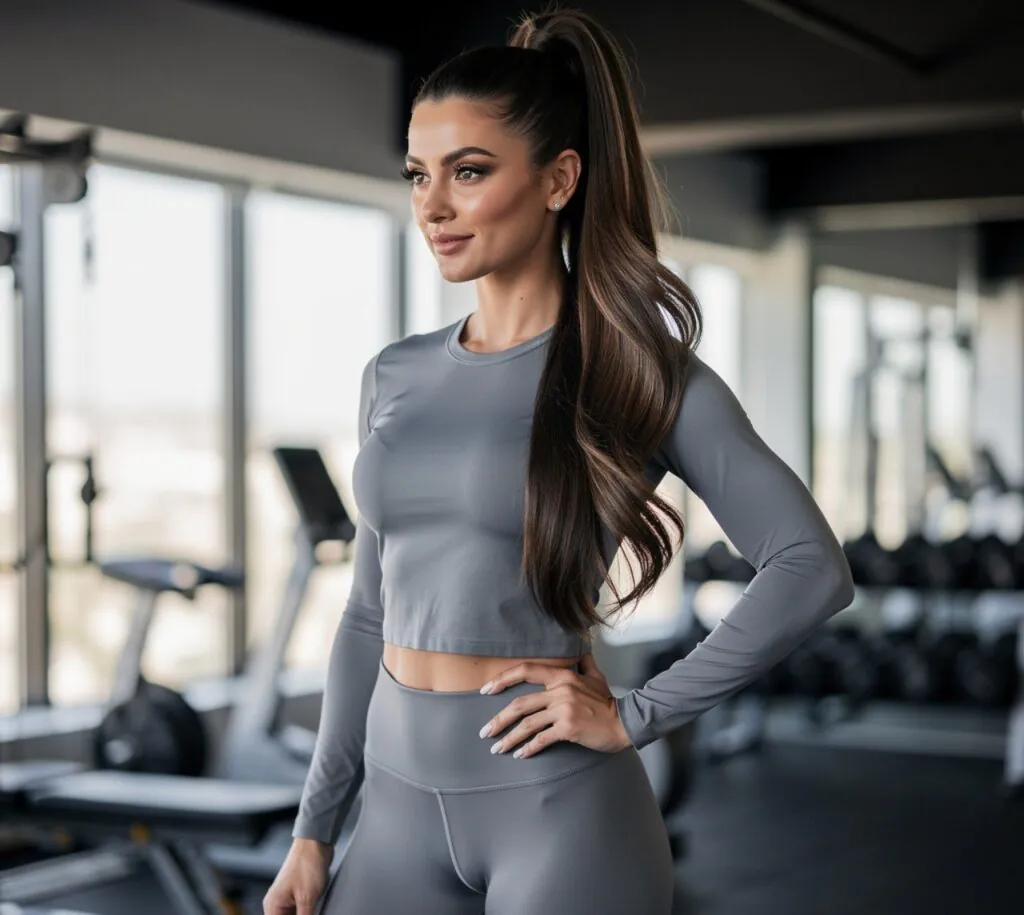
The high ponytail remains the most universally chosen gym hairstyle for genuinely good reasons beyond pure habit. Gathering all length tightly at the crown keeps hair completely off the neck, where heat and sweat build up fastest during cardio and strength sessions alike. This style suits every hair type and every workout intensity, from gentle pilates to full-speed interval training. Fine hair benefits from a small amount of dry shampoo at the roots before tying, adding grip that prevents the elastic from sliding downward mid-workout. Securing with a strong, snag-free elastic, then wrapping a second one an inch below the first, creates a double-anchor system that holds through the most intense movement.
2. High Messy Bun
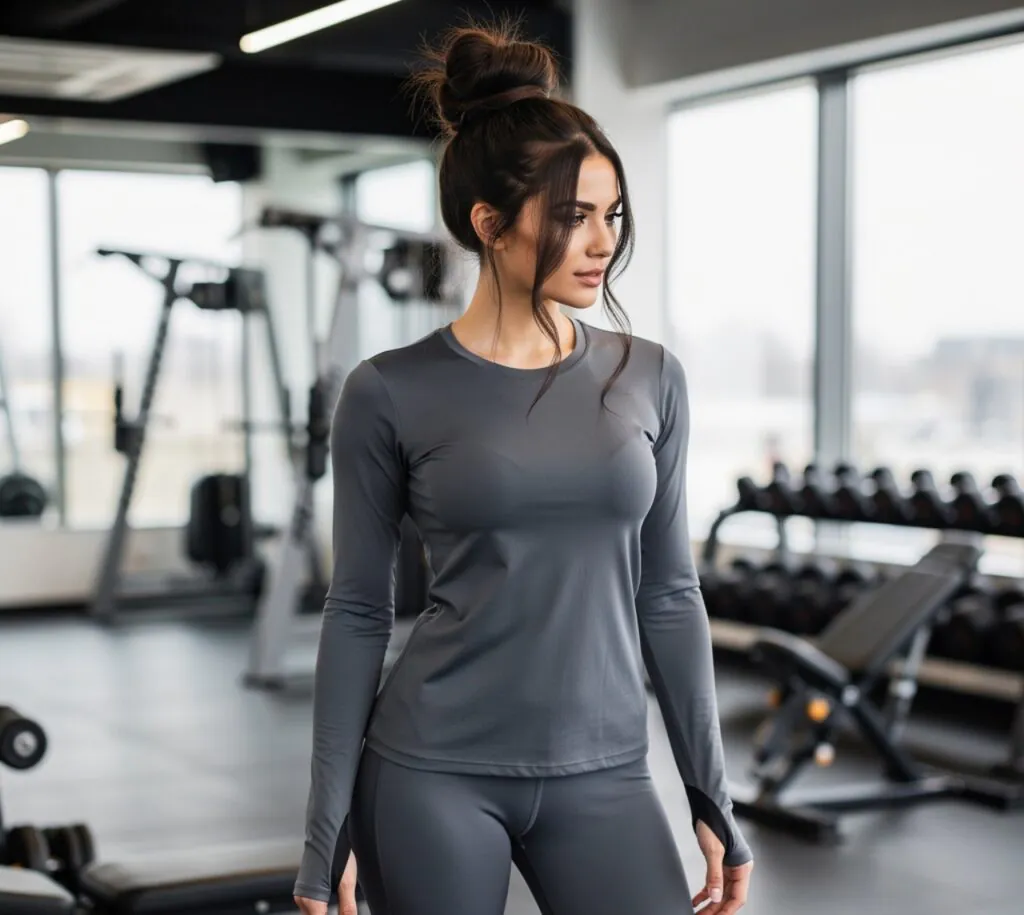
The high messy bun takes the ponytail one step further by looping and pinning all that gathered length into a compact, secured knot that eliminates the swinging tail entirely. This style suits medium to thick hair most securely, since thinner hair may need extra bobby pins to keep the bun from unraveling during jumping or high-impact movements. Every workout type, from HIIT to boxing, suits this style well because nothing hangs free to bounce, tangle, or hit your face. Securing the bun with a second elastic looped through the base, then crossing two or three bobby pins through it, holds everything reliably through ninety-minute sessions without constant adjustment.
3. Low Bun at the Nape
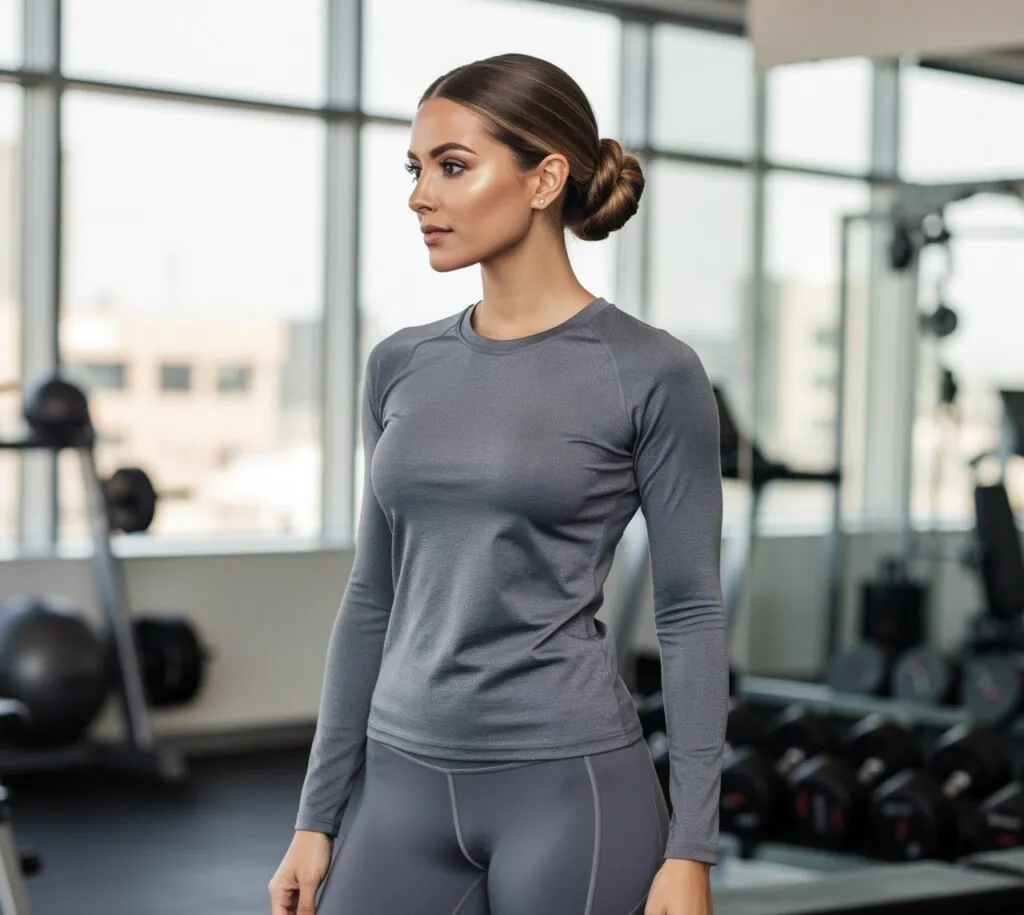
For workouts involving lying down, mats, or floor-based exercises like yoga, pilates, or stretching, a high bun becomes uncomfortable against hard surfaces. A low bun gathered at the nape sits flat enough to allow comfortable position changes between standing, lying, and inverted poses without a protruding knot pressing into the skull. This style suits straight to wavy hair most easily, though every texture can achieve it. Yogis and pilates practitioners consistently choose this placement for exactly this practical reason. Twisting hair tightly before wrapping creates a compact, low-profile bun that stays neat through even the deepest stretches and most sustained inversions.
4. Dutch Braid
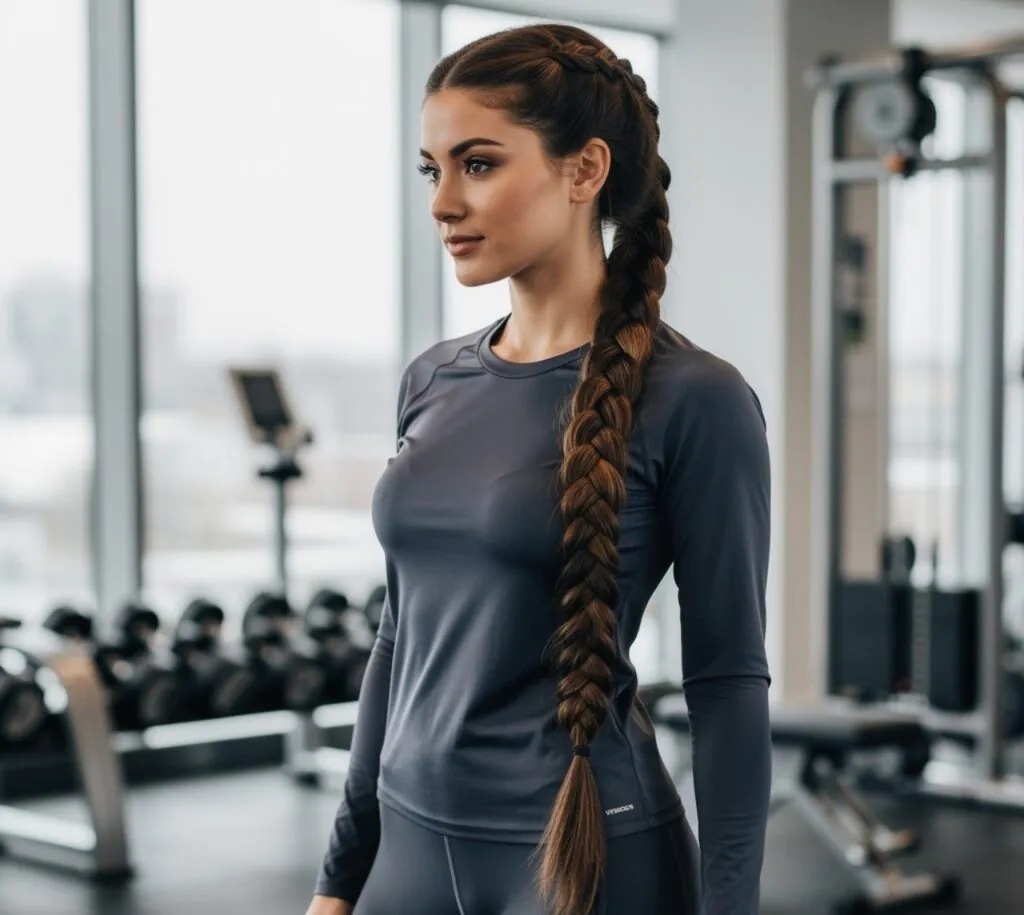
A Dutch braid, worked from the crown downward with sections pulled underneath rather than over, creates a close, flat, incredibly secure plait that holds even through swimming, cycling, and contact sports. This style suits every hair type, though thicker textures create especially sturdy braids that resist loosening even without finishing spray. Round and oval face shapes suit this style particularly well, since the braid sits centered and symmetrical rather than framing one side. Athletes in high-sweat, high-impact disciplines consistently choose Dutch braids for their superior hold. Finishing the braid’s tail with a tight elastic, then tucking the end up and securing it, eliminates even the loose end from bouncing during movement.
To see more options for long hairstyles with layers CLICK HERE
5. Double Dutch Braids
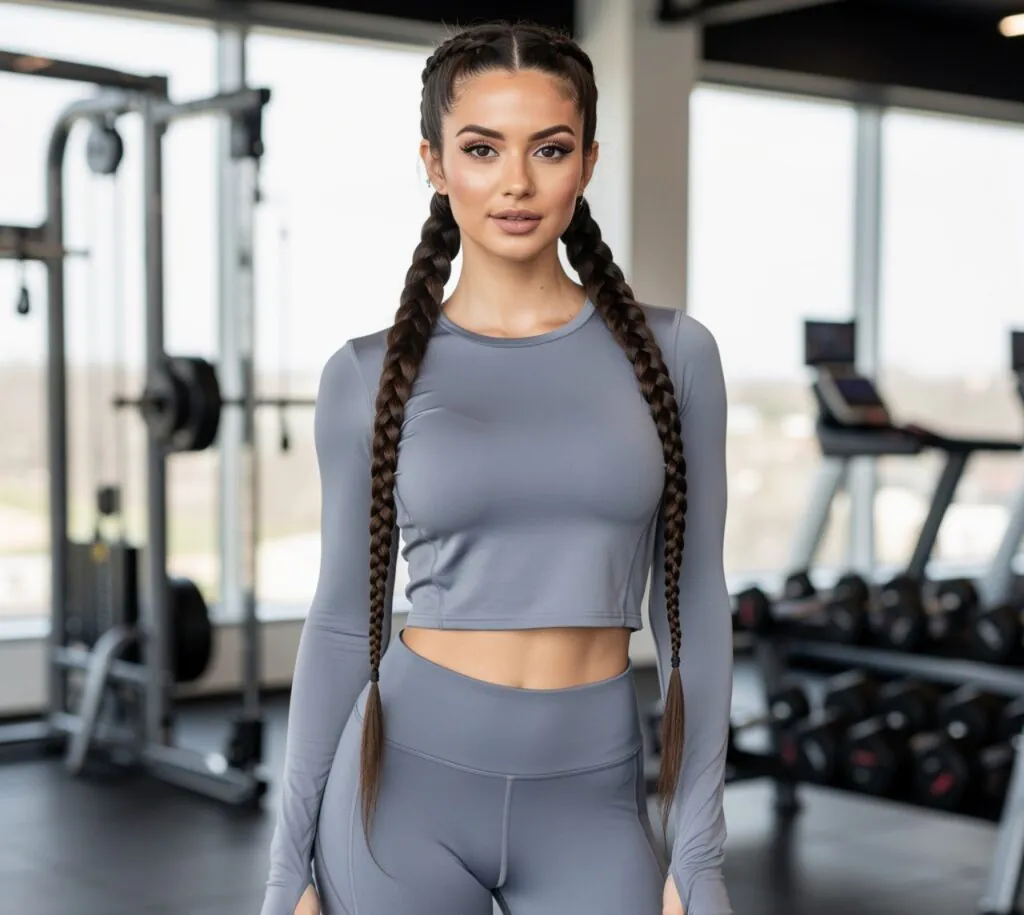
Dividing hair evenly and braiding two Dutch braids, one on each side, distributes weight symmetrically across the head, preventing the neck fatigue a single heavy braid can cause during long training sessions. This style suits every hair type and holds particularly well through swimming, competitive sports, and high-intensity interval training. Heart and square face shapes suit double braids especially well, since the two braids frame facial proportions without adding asymmetrical weight. Runners and cyclists particularly favor double Dutch braids because nothing swings or bounces on either side during sustained forward movement. Securing each braid with a matching elastic and tucking tails in eliminates every loose end completely.
6. French Braid
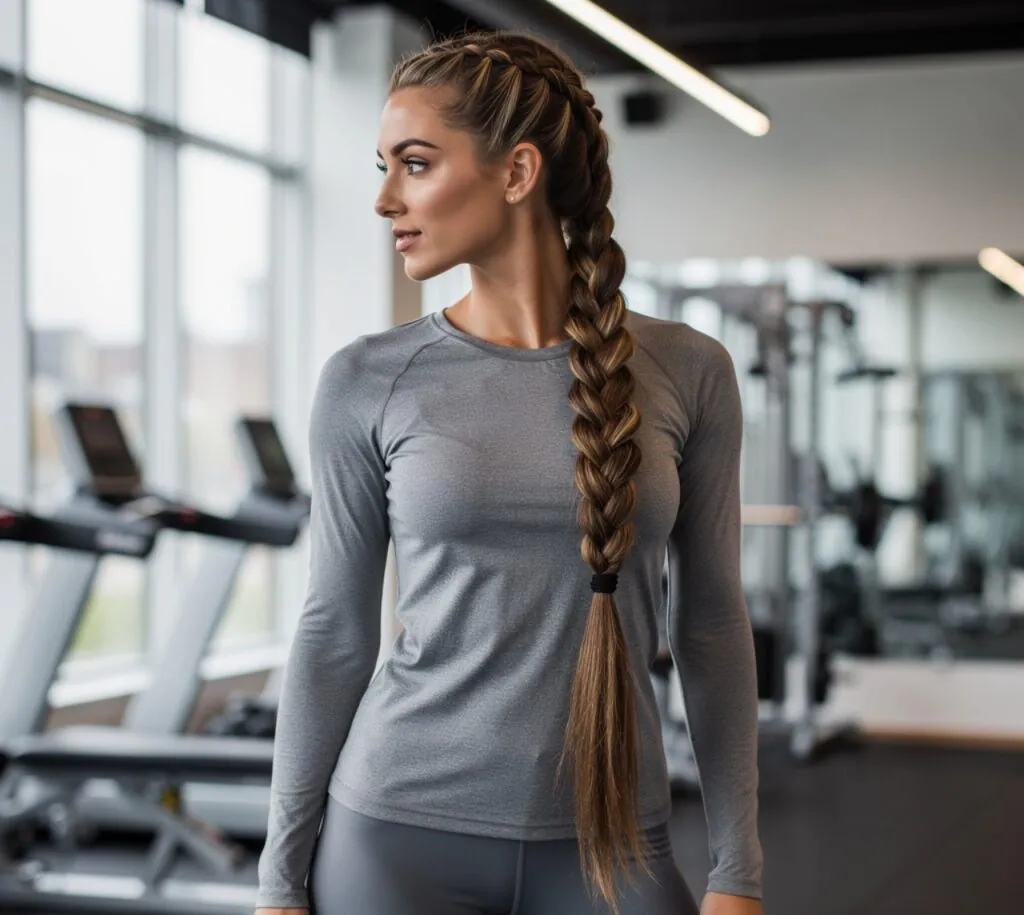
The French braid incorporates hair gradually from the sides as it travels downward, creating a wider, more structured plait compared to a standard three-strand braid. This style suits straight to wavy hair most easily for braiding, though every texture can achieve it with practice. Diamond and oval face shapes suit this centered, symmetrical style beautifully. Runners particularly favor French braids because the incorporated sides prevent any hair from escaping around the temples during a long run, keeping the face completely clear. Practicing on slightly damp or product-coated hair makes the incorporating motion considerably easier and keeps smaller sections from slipping free during the workout itself.
7. Braided Ponytail
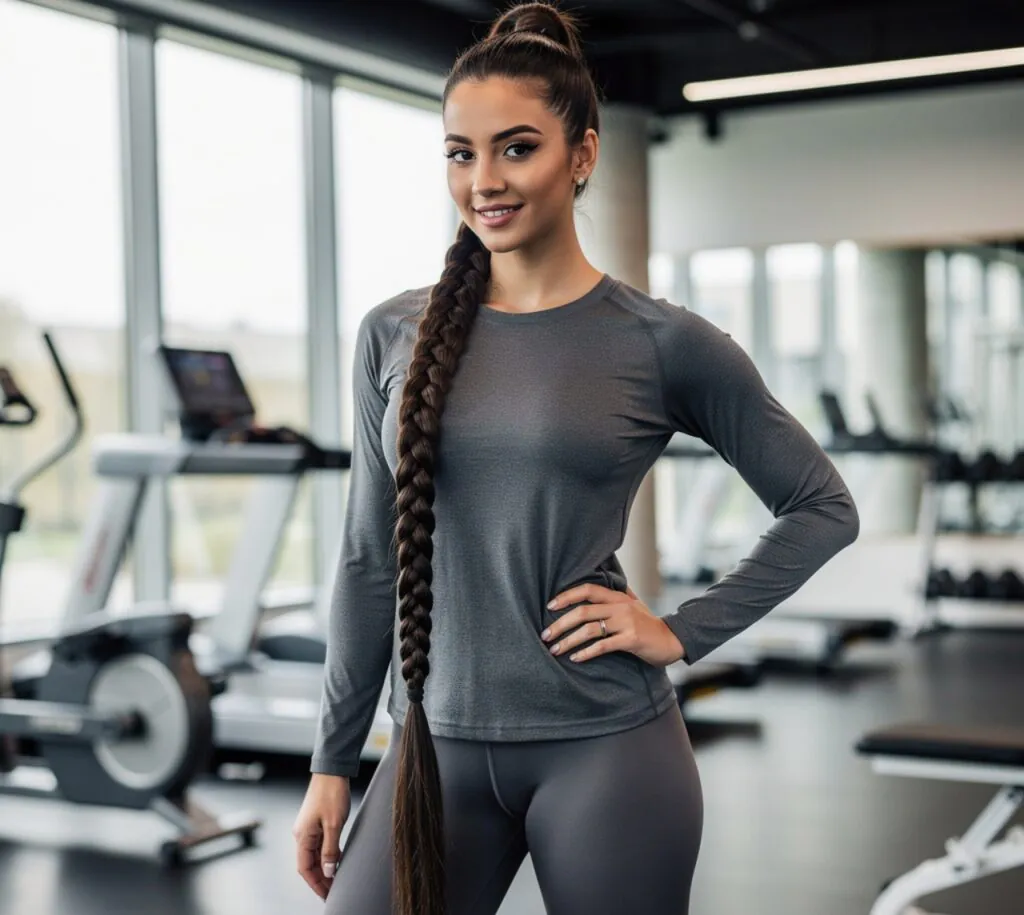
Combining a ponytail with a braid through the tail section gives all the face-clearing height of a ponytail while eliminating the bouncing, whipping tail that annoys many athletes during running or jumping exercises. This style suits straight to wavy hair most naturally, since the braid section stays neat and defined without frizzing during activity. Every face shape suits this combination, making it a universally practical option. Long-distance runners and rope-jump athletes particularly love this variation because the braided tail stays controlled and weighted rather than flying freely. A tight elastic at the very end of the braid, combined with a small amount of edge-smoothing gel, prevents any unraveling during extended sessions.
8. Space Buns
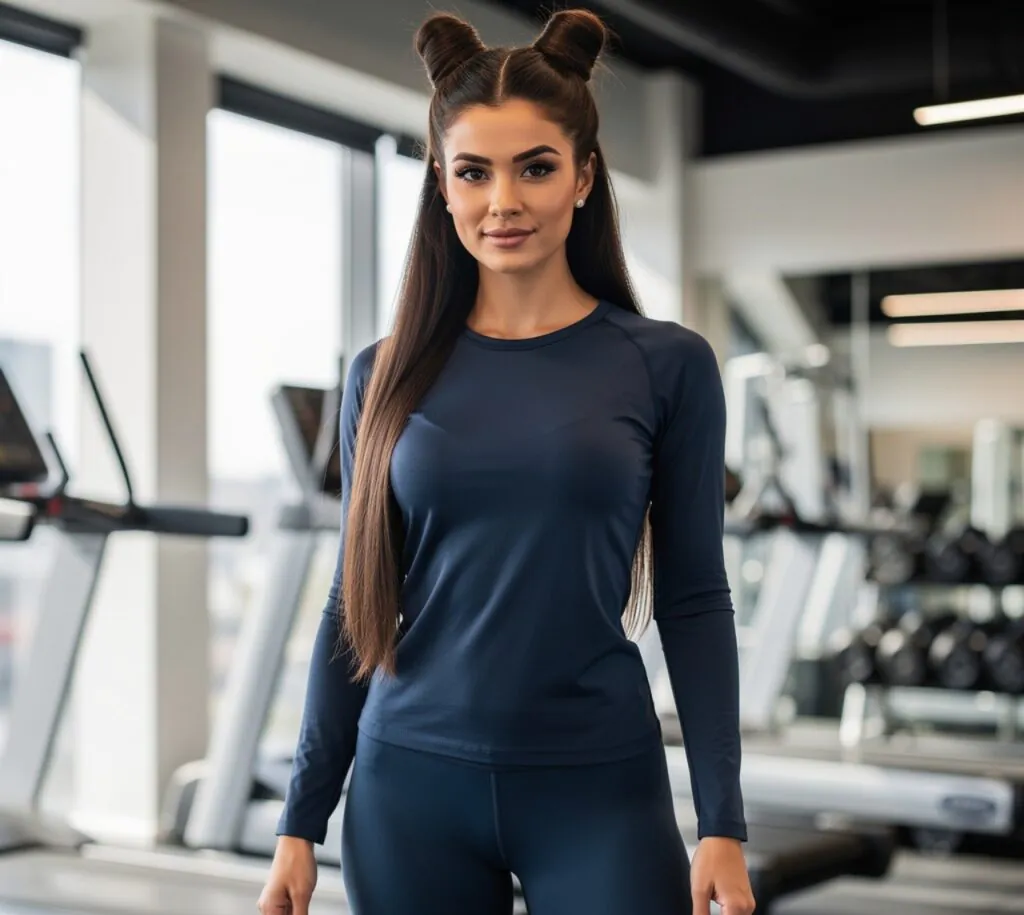
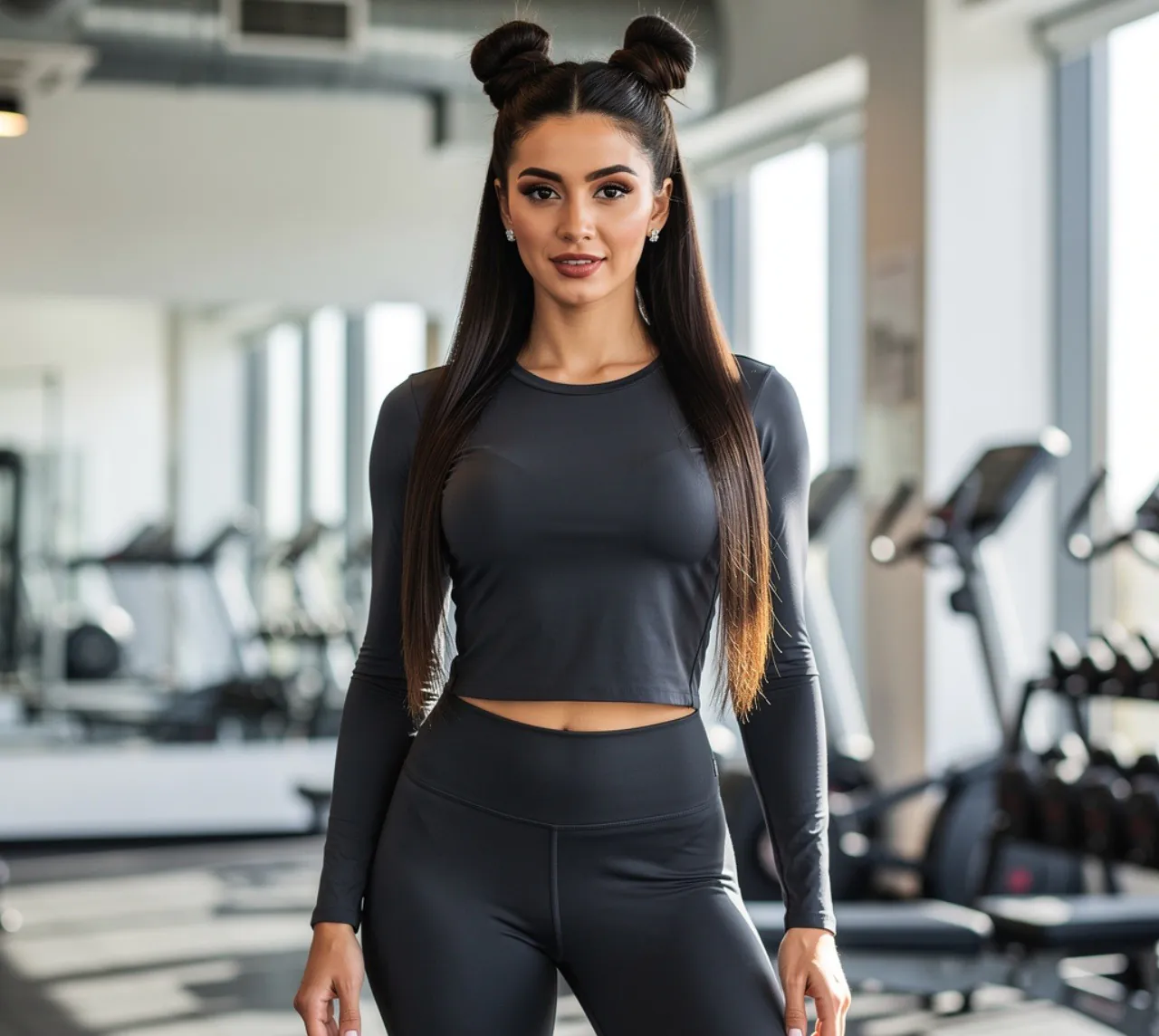
Two small, high buns positioned at the upper sides of the head distribute weight evenly, keep heat off the neck, and eliminate bouncing completely, making space buns far more practical during workouts than their playful appearance might suggest. This style suits medium to thick hair most securely, since each individual bun needs enough density to stay in place through vigorous movement. Round and heart face shapes suit this placement especially well. Dancers, gymnasts, and HIIT athletes favor space buns for their secure hold and comfortable weight distribution across long, varied training sessions. Securing each bun with a small elastic plus two crisscrossed bobby pins keeps both knots compact and tangle-free through sweat.
9. Sleek Low Ponytail
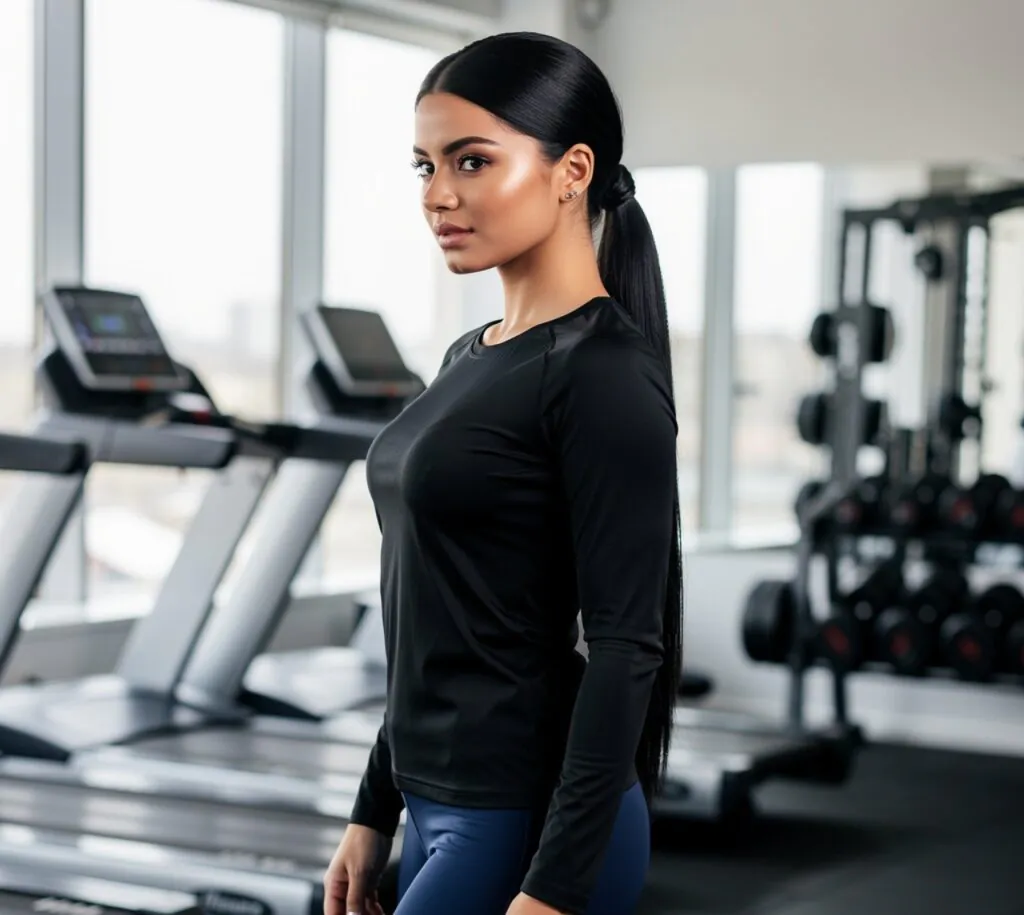
For lower-intensity workouts like walking, yoga, or light stretching, a sleek low ponytail gathered at the nape offers a cleaner, more polished alternative to the high styles that suit intense cardio. This style suits straight to wavy hair most naturally, since smoother strands wrap cleanly around the elastic without excess bulk. Oblong and oval face shapes particularly suit this placement. People attending gym sessions immediately before or after work often prefer this style for how easily it transitions into a professional setting with minor adjustments. A smoothing serum applied before gathering, combined with a strong elastic, keeps the ponytail sleek and controlled through moderate-intensity movement.
10. Twisted Half-Up Style
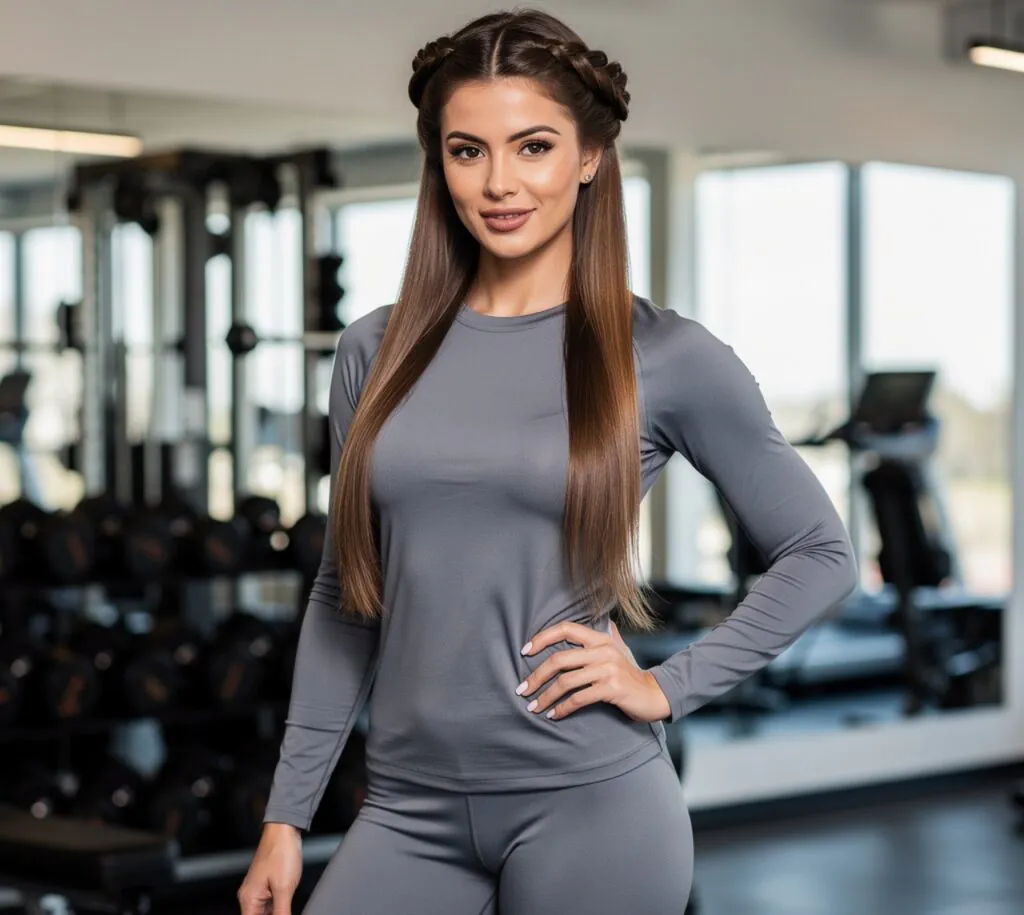
For low-impact workouts like yoga flows, barre classes, or walking, a twisted half-up style keeps the front sections away from the face while leaving the rest of the length down and comfortable without requiring a full updo. Straight and wavy hair types handle the twisting technique most easily, though curlier textures can achieve it with slightly more practice. Heart and diamond face shapes benefit from the gentle width the twists add near the temples. Barre and yoga practitioners particularly favor this hybrid option for its balance between comfort and the security of having the face completely clear during forward bends and inversions.
11. Knotted Ponytail
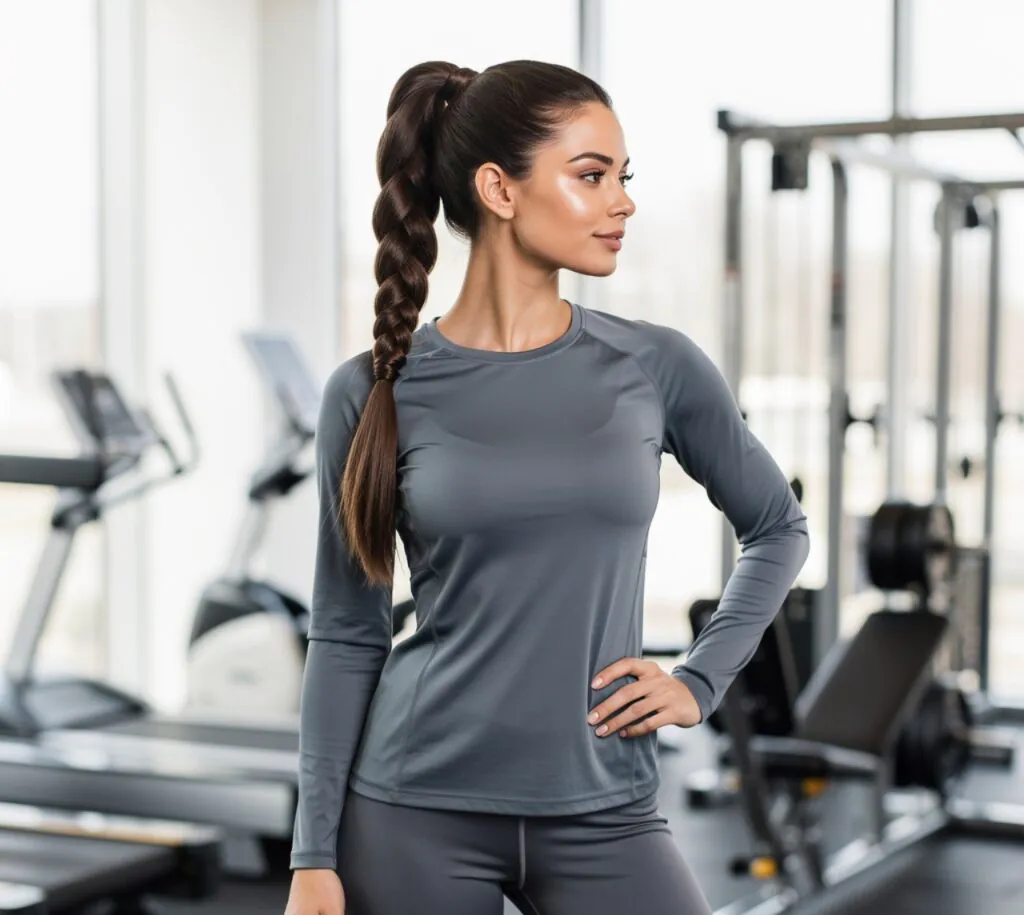
A knotted ponytail ties the gathered tail into a loose, overhand knot before securing the end with an elastic, creating a more compact, controlled finish than a standard ponytail tail that swings freely. This style suits medium to thick hair most naturally, since the knot needs enough density to stay defined through movement. Every face shape suits this practical variation. Athletes who find a standard ponytail tail distracting during jumping rope, kickboxing, or rowing often switch to this knotted variation specifically because the compacted tail eliminates all swinging sensation. Tucking the end of the knot through a second elastic creates an even more secure, self-contained finish.
12. High Puff with Headband
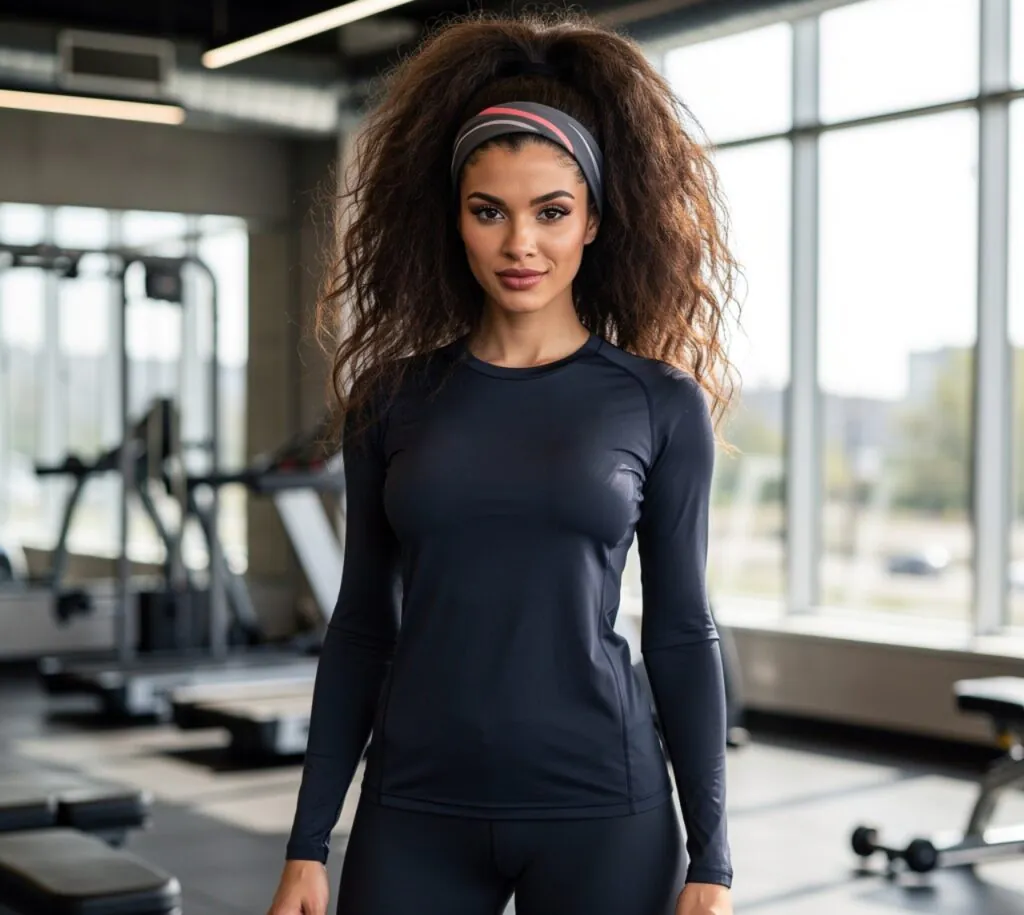
For naturally curly or coily hair, gathering length into a high puff secured with a soft, wide headband creates the most protective, comfortable workout style specifically suited to natural textures. This style preserves curl pattern better than buns or braids, which can disturb defined curls through compression or friction. Round and oval face shapes suit the circular fullness of a high puff especially well. Curly-haired gym-goers consistently choose this style for its balance between security and curl preservation. A satin-lined headband prevents the friction and frizz that standard elastic or cotton headbands create against natural curl patterns during sweaty, high-movement workouts.
13. Pull-Through Braid
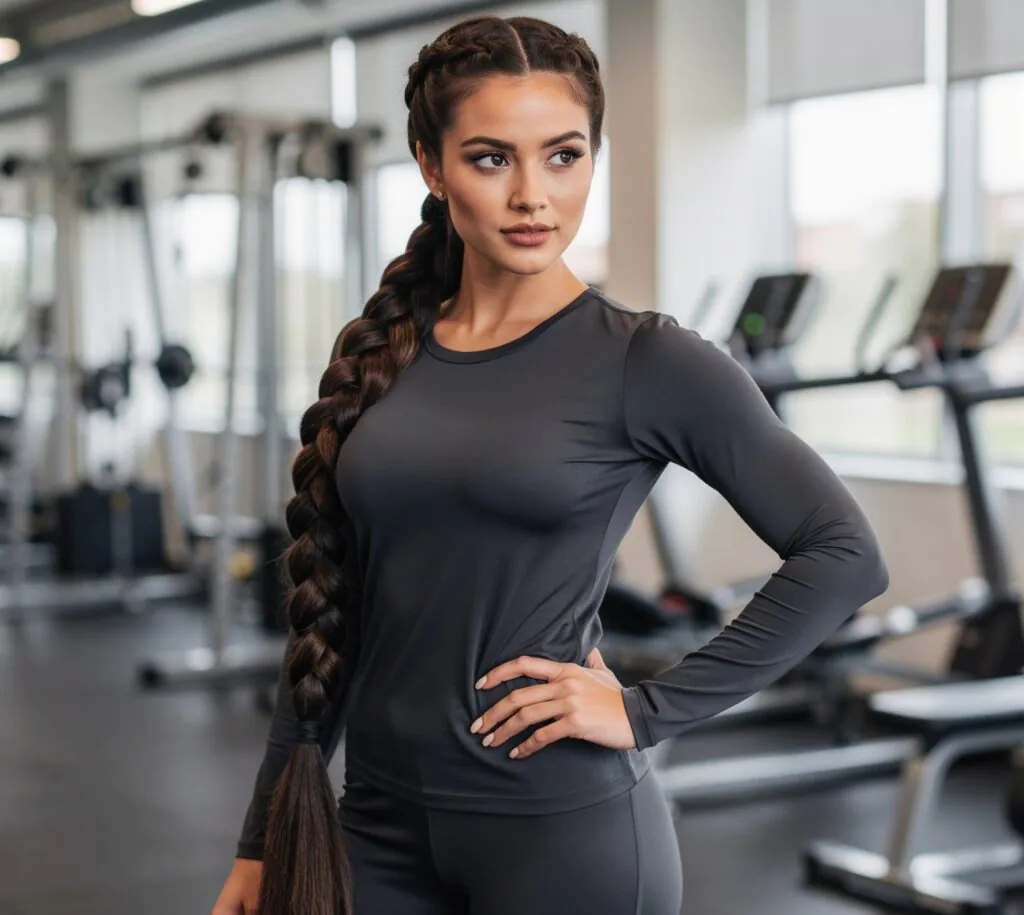
The pull-through braid creates the appearance of a complex, multi-section braid using a simple technique of layered ponytails pulled through each other, resulting in a voluminous, secure style that stays put through most workout types. This style suits medium to thick hair most impressively, since the layered sections create significant visual fullness. Heart and oval face shapes suit this centered, symmetrical style particularly well. People wanting a gym hairstyle that still looks genuinely impressive during outdoor runs or gym mirror selfies consistently choose this variation. Securing each section with small, matching elastics before pulling through keeps the structure intact through movement and sweat.
14. Wrapped Bun with Headband
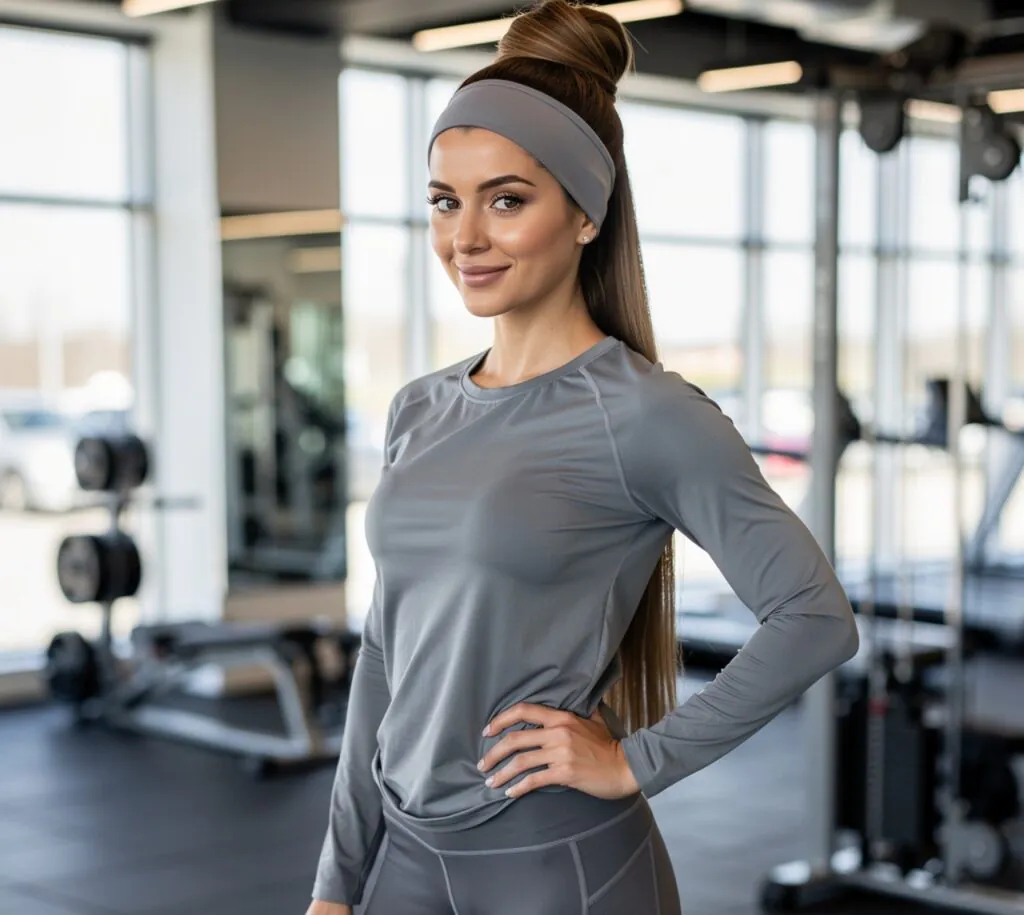
Combining a wrapped, secured bun with a thick, non-slip headband creates a double-security system that prevents both the bun from unraveling and any smaller pieces around the hairline from falling forward during intense exercise. This style suits every hair type and every workout intensity, from gentle morning yoga to peak cardio sessions. Every face shape suits this combination, making it one of the most universally reliable gym hairstyles on this list. People returning to the gym after breaks, or new exercisers building a consistent routine, often start with this style because the headband catches any baby hairs or face-framing pieces the bun leaves loose.
How to Choose the Right Gym Hairstyle
Choosing the right gym hairstyle starts with honestly assessing your workout type and intensity, since these factors determine how much security and heat management your hair actually needs. High-impact cardio sessions like running, HIIT, or jump rope demand tight, compact styles like Dutch braids or high messy buns that eliminate all movement and minimize sweat absorption. Lower-intensity sessions like yoga, pilates, or walking tolerate looser options like a twisted half-up or low ponytail without the style falling apart during movement. Matching security level to workout intensity prevents both distraction and hair damage from unnecessary friction or breakage.
Your hair’s natural texture determines which styles hold most reliably without constant adjustment. Fine, slippery hair benefits from texturizing spray or dry shampoo before styling, since these add grip that prevents elastics from sliding. Thick hair holds braids and buns most securely, though very dense textures may need extra pins to keep buns compact. Curly and coily textures hold braids particularly well due to natural grip, but benefit most from styles that preserve curl definition rather than compressing or rubbing curls into frizz.
Best Hair Types and Workout Styles for Each Gym Look
Fine hair suits high ponytails and messy buns best when prep products add grip, since without them, elastics tend to slide and buns loosen quickly. Thick hair handles Dutch braids, double braids, and wrapped buns most securely, since the density creates naturally tight, hold-resistant styles. Curly and coily textures suit high puffs, loose buns, and braids most comfortably, since these styles work with natural texture rather than flattening or distorting curl patterns through compression.
High-impact workouts demand the highest-security options, including Dutch braids, double braids, and high messy buns with multiple pins. Moderate workouts suit braided ponytails, high ponytails, and space buns well. Low-impact sessions like yoga and pilates tolerate low buns, twisted half-up styles, and sleek low ponytails without compromising security. Matching the style’s hold level to the workout’s intensity prevents both mid-session frustration and unnecessary post-workout detangling.
Styling and Maintenance Tips for Gym Hair
Long hair exposed to frequent sweat, friction, and constant tying needs consistent care to stay healthy through a regular training schedule. Washing hair every one to two workout days, rather than after every single session, prevents the dryness and breakage that daily washing and daily heat styling combined can cause over time. A dry shampoo applied at the roots between washes absorbs sweat and adds grip for the next session’s styling without requiring a full wash and dry cycle.
Using snag-free, fabric-covered elastics rather than basic rubber bands dramatically reduces the breakage that daily hair tying causes, particularly at the mid-shaft where elastics grip most tightly. Alternating the ponytail height between sessions prevents repetitive stress breakage at the same point. Applying a lightweight leave-in conditioner or hair oil to the ends before braiding provides a friction barrier that reduces split ends caused by repeated movement during workouts. A weekly deep conditioning treatment replenishes moisture lost through frequent sweat and washing.
How to Ask Your Hairstylist for This Look
While most gym hairstyles are designed entirely for at-home execution before a workout, a conversation with your stylist can still significantly improve how well these styles hold and how quickly they come together. Save a few reference photos from this article or your Pinterest board, since showing your stylist the specific gym style you rely on helps them cut layers or face-framing pieces that either support or interfere with your go-to workout look. Mention that you train frequently, since this context helps them recommend cuts that look good both during and after exercise.
Ask specifically about face-framing layers and whether they’ll stay secured during your preferred workout style, since short layers around the face sometimes escape braids and buns more easily than longer, blendable pieces. Discussing whether you want a cut that air-dries well post-workout saves significant time in a gym routine that may not allow for elaborate post-session styling. Asking direct questions like “will this layering work with a Dutch braid” or “what’s the best cut for someone who wears their hair up daily” ensures your haircut actively supports your training lifestyle.
Frequently Asked Questions
What’s the best gym hairstyle for long hair during running? A Dutch braid or double Dutch braids offer the most secure hold for running, since the incorporated sides prevent any hair from escaping around the temples and the close plait eliminates all tail bouncing. A braided ponytail works well for shorter runs where some movement is tolerable. Both styles stay intact through distance running without requiring mid-run adjustments or re-securing.
How do I prevent a ponytail from sliding down during workouts? Using a double-elastic anchor system, wrapping two elastics one inch apart rather than a single one, creates significantly more grip. Adding dry shampoo or texturizing spray to the roots before styling further prevents slipping. Fine hair specifically benefits from both techniques combined, since the added texture and doubled anchor hold through even the most intense sessions.
Is it bad to wear your hair up at the gym every day? Wearing hair up daily is not inherently damaging, but tying in exactly the same spot at the same tension daily causes repetitive breakage at that point over time. Alternating ponytail height between sessions, using snag-free elastics, and loosening the style immediately after each workout significantly reduces this stress. A weekly protein or moisture treatment also helps counteract the cumulative effects of frequent tying and sweat exposure.
What gym hairstyle works best for curly hair? A high puff with a satin-lined headband preserves natural curl definition best, since it avoids the compression and friction that buns and tight braids can cause on curly textures. Loose twists or a high bun secured gently also work well. Avoiding styles that flatten or rub curls during high-movement sessions keeps post-workout frizz and definition disruption to a minimum.
Can I wear a gym hairstyle to work immediately after exercising? Several styles on this list transition fairly well from gym to workplace, including a sleek low ponytail, braided ponytail, or a neat low bun refreshed with dry shampoo. Applying dry shampoo to the roots, smoothing flyaways with a light serum, and re-securing any loosened sections takes only a couple of minutes and produces a presentable, polished appearance without requiring a full hair refresh.
What hairstyle prevents hair from getting in my face during yoga? A low nape bun or French braid suits yoga best, since both keep every strand secured through forward folds, inversions, and transitions without the protrusion of a high bun against a mat during lying poses. A twisted half-up style works well for gentler flows where occasional forward bends are the primary concern, though more athletic vinyasa classes benefit from the full security of a braid or low bun.
Final Thoughts
Gym hairstyles for long hair prove that staying active doesn’t mean sacrificing hair health or spending extra time on complicated pre-workout styling. The key to finding your ideal workout style lies in matching the security level honestly to your training intensity, working with your natural texture rather than fighting it, and using protective techniques that minimize daily breakage from repeated tying. Save your favorites, practice a few until they feel automatic, and walk into every session feeling genuinely comfortable and ready to move freely.