14 Best Long Face Hairstyles for Women to Soften and Balance Facial Features
Scrolling through Pinterest, searching “long face hairstyles,” hoping to find a style that finally adds width and softness instead of stretching your face out even more? You’re definitely not alone in that search. Most hairstyle sites stack photo after photo with zero explanation of which cuts actually shorten the visual length of a long face, which ones make it worse, or how to communicate that clearly to your stylist. This article takes a different approach. You’ll get honest explanations behind each style, clear guidance on why it works for elongated features, and practical styling advice so you can choose confidently rather than guessing.
A long face shape typically features a forehead, cheeks, and jawline that are roughly similar in width, with the overall length noticeably greater than the width. The goal with styling isn’t to hide this shape but to introduce visual width and break up vertical lines so proportions feel more balanced.
14 Long Face Hairstyles for Women
The fifteen styles below cover a wide range of lengths, textures, and bang options specifically chosen because they add width, shorten visual length, or interrupt the eye’s vertical movement down the face. Whether you want a dramatic change or a subtle adjustment, you’ll find several worth saving for your next salon visit.
1. Curtain Bangs
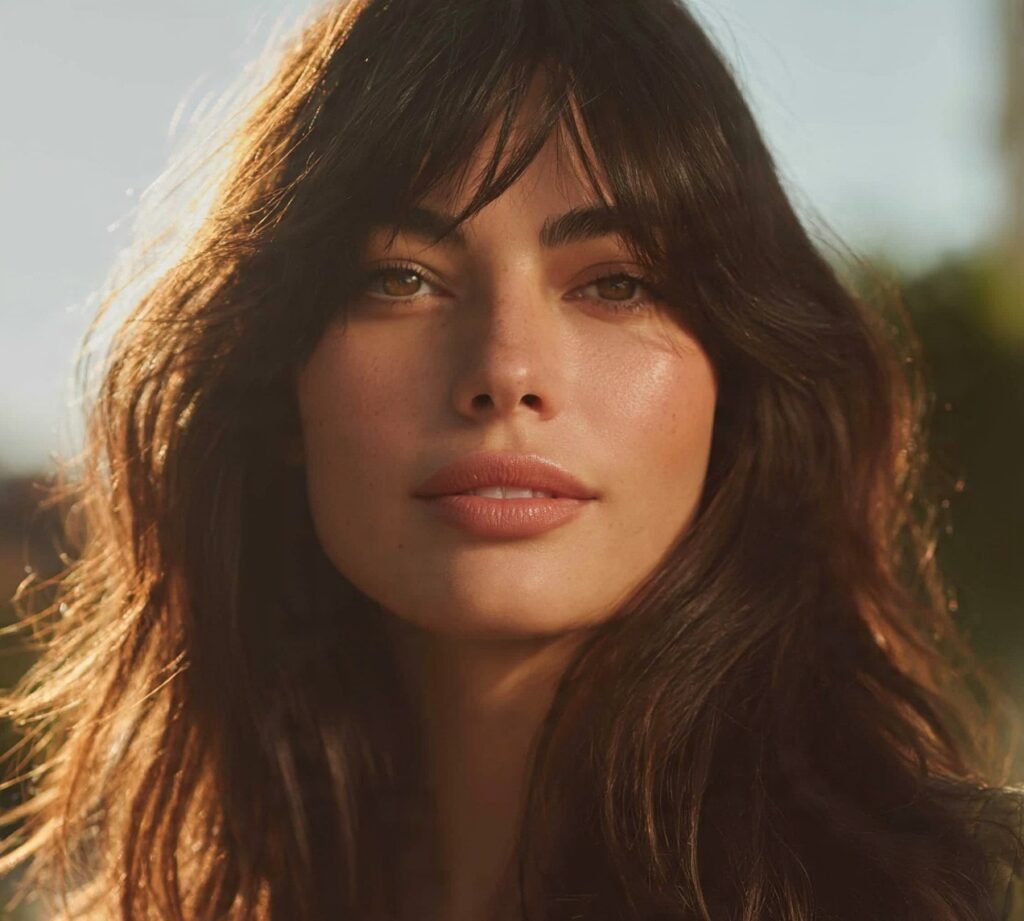
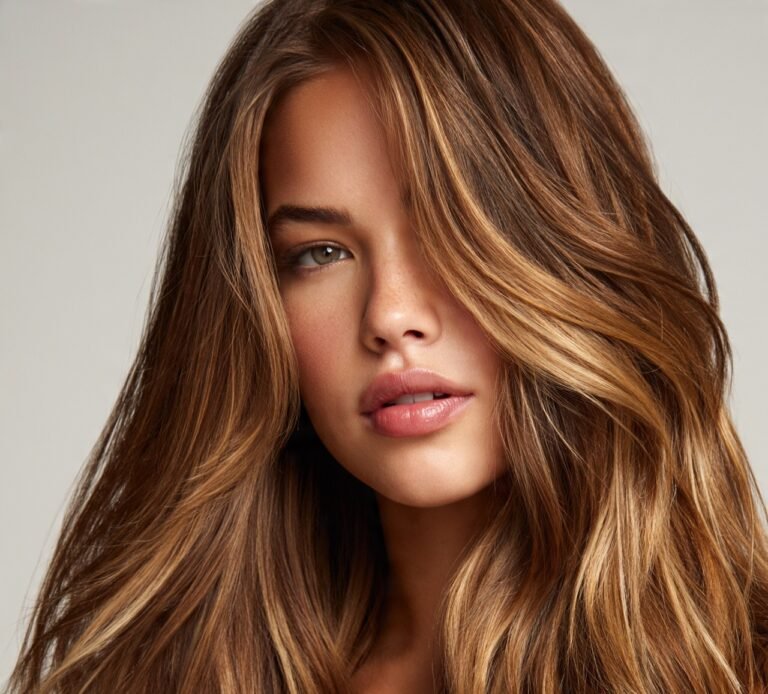
Curtain bangs part down the middle and sweep outward, framing the forehead and cheekbones while interrupting the long vertical line a bare forehead can create. This style works exceptionally well for long faces because the bangs visually shorten the upper portion while adding width near the temples. Straight to wavy hair handles this style most easily, though curly hair can achieve it with proper diffusing technique. Anyone wanting a flattering, low-commitment change should consider this option first. Using a round brush and blow-dryer to train the bangs outward, plus a light hairspray, keeps the shape soft and face-framing throughout the day.
2. Blunt Full Fringe
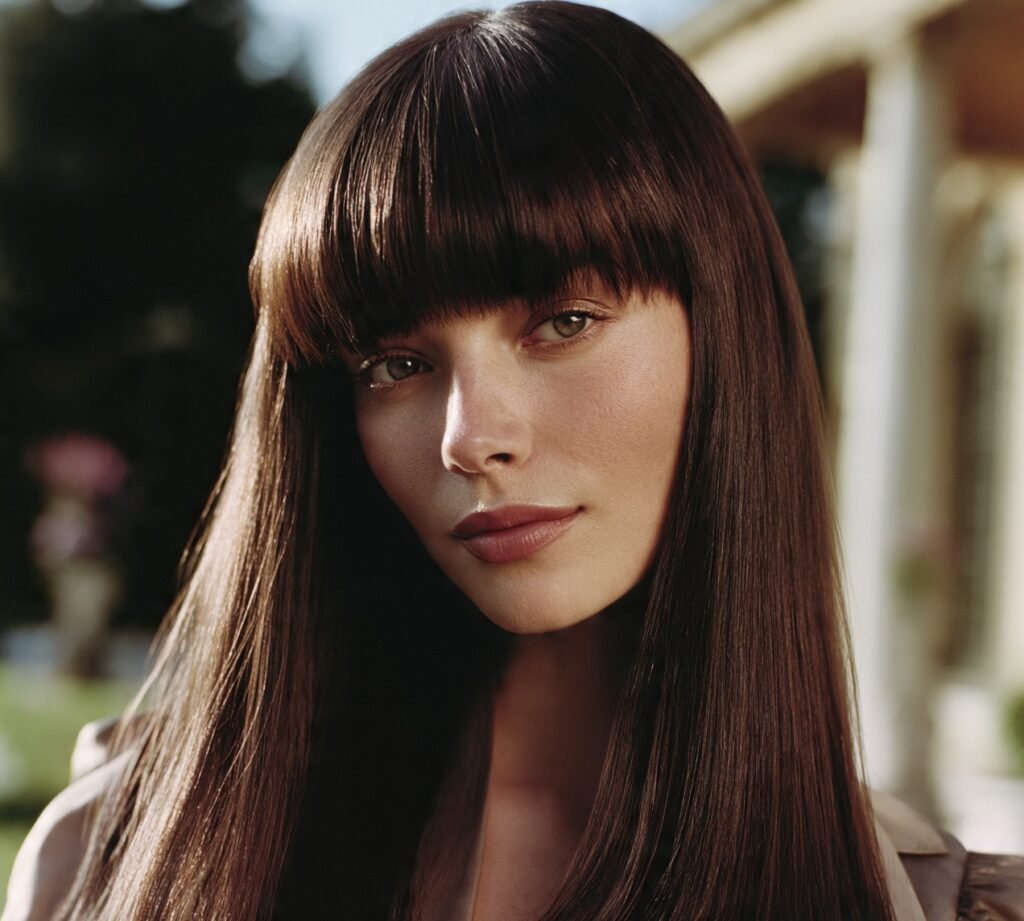
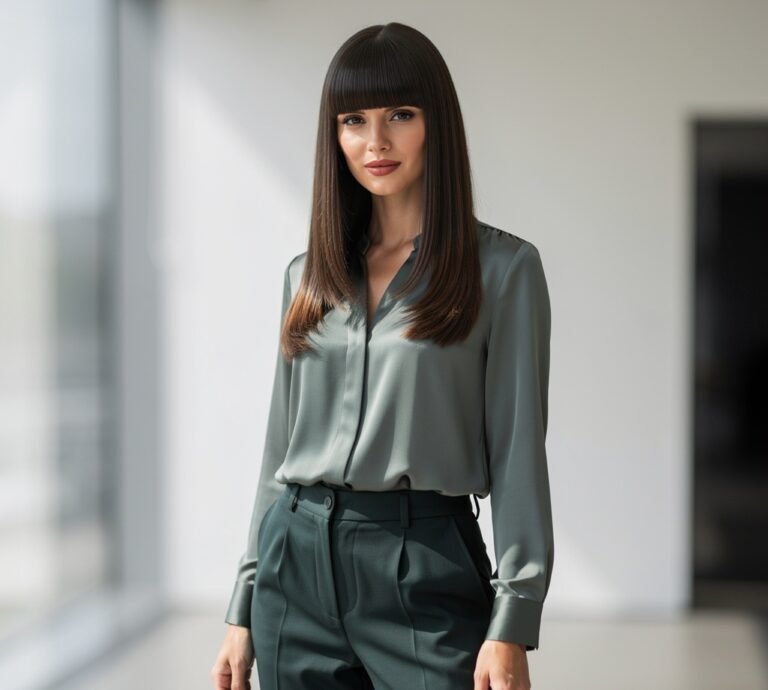
A full, blunt fringe cut straight across the forehead dramatically shortens the visual length of a long face by covering a significant portion of the upper face entirely. This style suits straight to wavy hair best, since curlier textures may need a slightly looser cut to avoid excessive shrinkage in length. People comfortable with bold, statement-making styles gravitate toward this option for its strong, immediate impact. Maintenance requires more frequent trims, roughly every three to four weeks, to keep the line crisp and prevent the fringe from growing into the eyes or losing its shortening effect.
3. Long Layers with Volume at the Sides

Layering that specifically builds volume around the cheeks and temples adds horizontal width exactly where a long face needs it most, balancing out the overall vertical proportion. This style suits thick to medium hair particularly well, since the density supports noticeable volume without extra products. Wavy and curly textures enhance this effect naturally through their built-in fullness. People wanting a flattering cut without bangs often choose this layering approach instead. Blow-drying with a round brush, directing volume outward at the cheek level, maximizes the width-adding effect this cut is designed to create.
4. Long Bob with Side-Swept Bangs
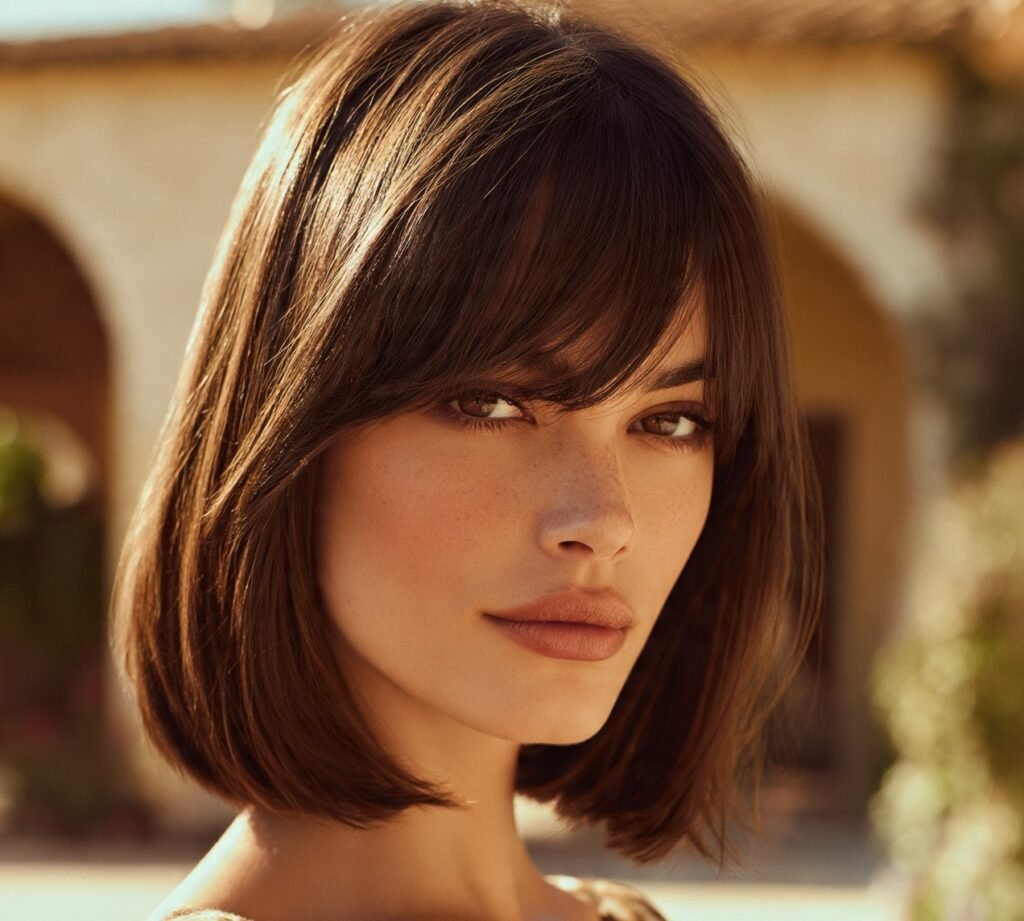
A long bob paired with side-swept bangs shortens overall length while the angled fringe adds a soft diagonal line that breaks up the vertical pull of a long face. This combination suits straight to wavy hair most easily, since the swept bangs need to hold their directional shape without excessive frizz. People wanting noticeable change without committing to full-length hair often choose this hybrid approach. Blow-drying the front section to one side while damp, then setting with a light hold spray, keeps the swept bangs in place and the shortening effect consistent throughout the day.
5. Soft Waves at Chin Level
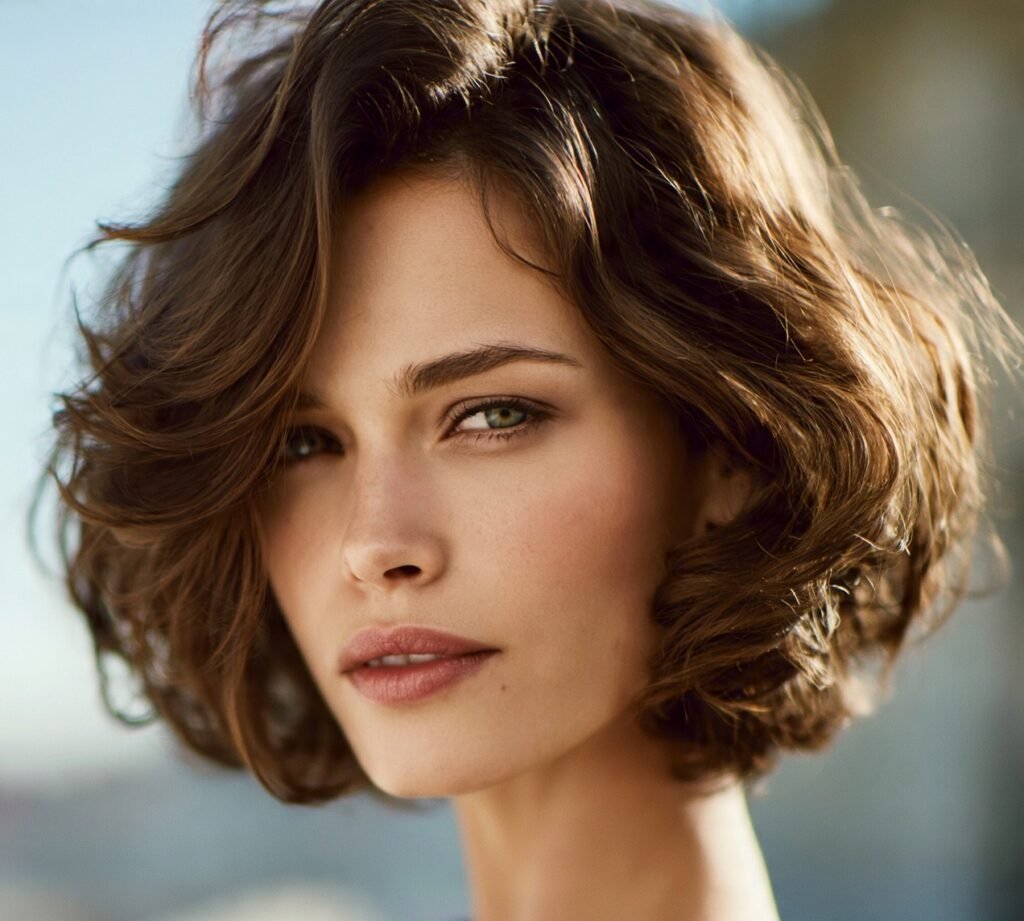
Waves that begin around chin level add width exactly at the jaw, a key area for balancing long face proportions since this width interrupts the eye’s downward travel. This style suits wavy or curly hair most naturally, though straight hair can achieve similar texture using a curling wand and styling spray. Every hair density benefits from this technique, since the waves themselves create the necessary width regardless of thickness. A texturizing salt spray applied to damp hair before waving enhances grip, while scrunching upward toward the chin maximizes the width-adding effect at the most important point.
6. Shoulder-Length Cut with Layers
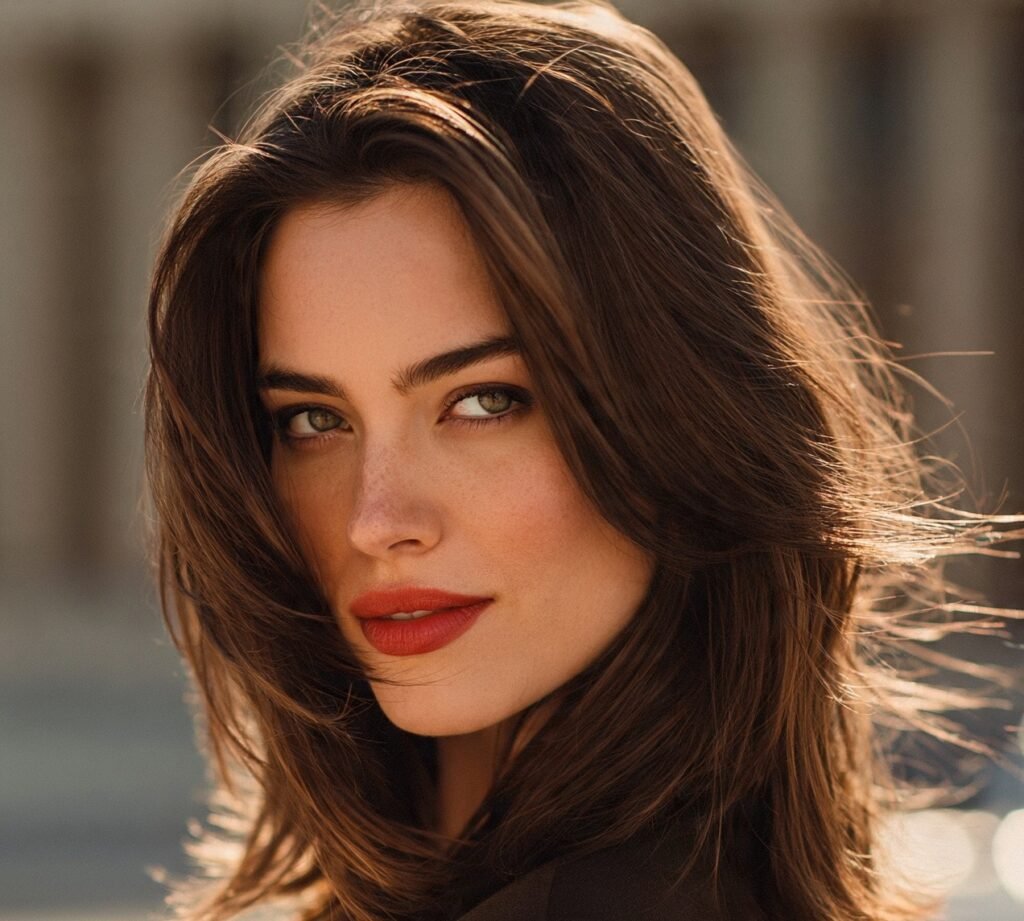
Cutting hair to shoulder length immediately shortens the overall vertical line, while added layering near the ends introduces width and movement that further balances a long face shape. This length suits nearly every hair type, from straight to curly, making it one of the most universally flattering options for long faces specifically. People wanting a moderate, manageable change often choose this length over more dramatic options. Styling with a round brush to flip ends outward at the jaw, rather than straight down, reinforces the width this cut is specifically designed to add.
To see more options for work hairstyles for long hair CLICK HERE
7. Long Hair with a Center Part and Waves
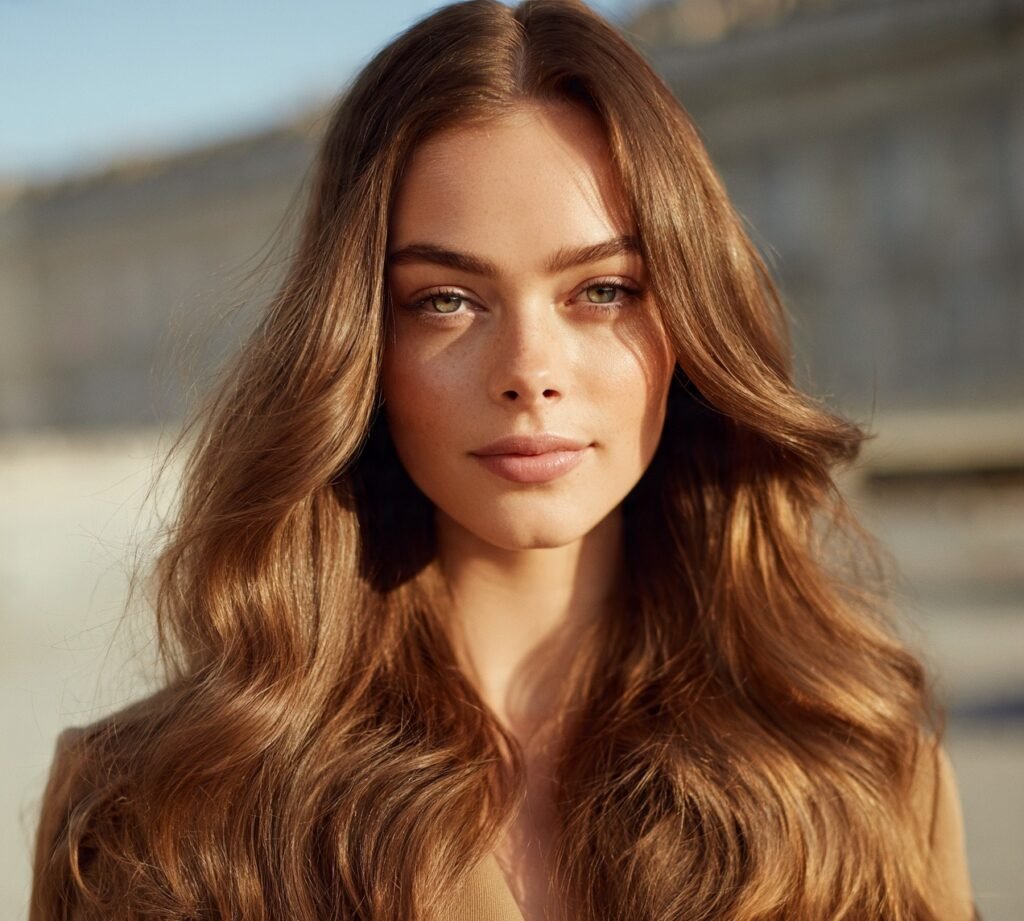
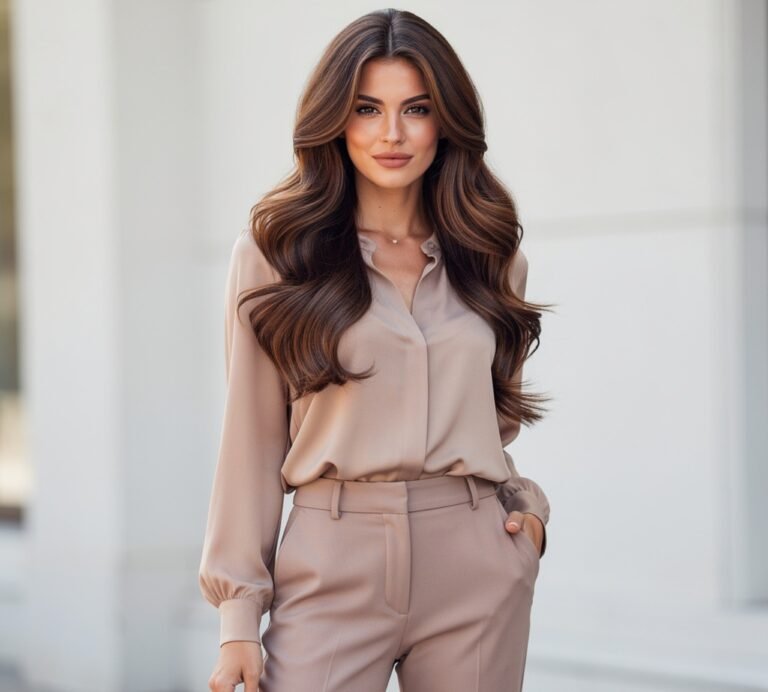
Pairing a center part with loose waves creates symmetry up top while the waves themselves add width through the mid-lengths and ends, offsetting the length-emphasizing effect a straight center part alone can sometimes create. This style suits wavy or straight hair willing to be curled, working well across most face shapes when waves are properly distributed. People wanting a romantic, soft aesthetic favor this combination specifically. A curling wand used in alternating directions throughout sections, then loosely brushed out, creates natural-looking waves that add width without looking overly structured.
8. Wolf Cut
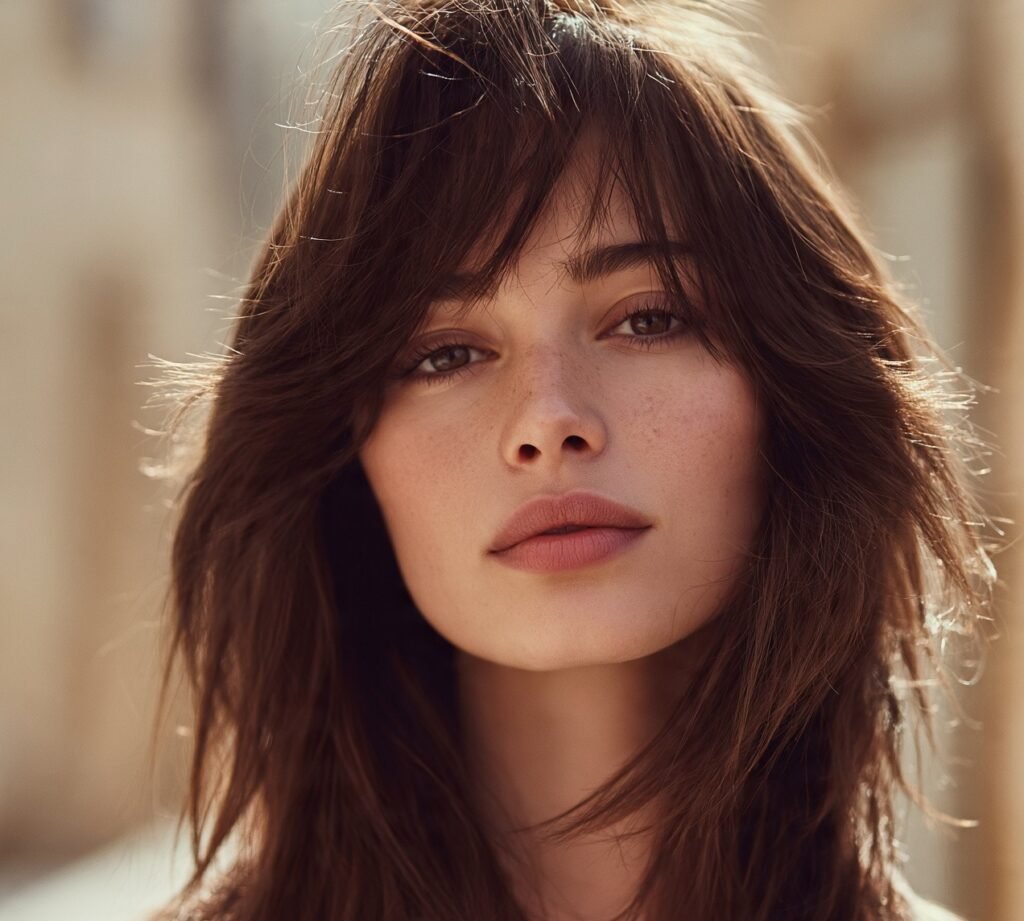
The wolf cut combines shorter, voluminous layers near the crown with longer length cascading down, and the heavy crown volume specifically counters the visual stretch a long face can otherwise experience. This hybrid style suits thick or curly hair exceptionally well, since the layering reduces bulk while emphasizing natural texture and bounce near the top. People with an active, low-fuss lifestyle love this cut because the volume requires little daily effort to maintain. A light mousse applied to damp hair before air-drying enhances natural waves and keeps the voluminous crown looking full throughout the day.
9. Lob with Waves and Side Part
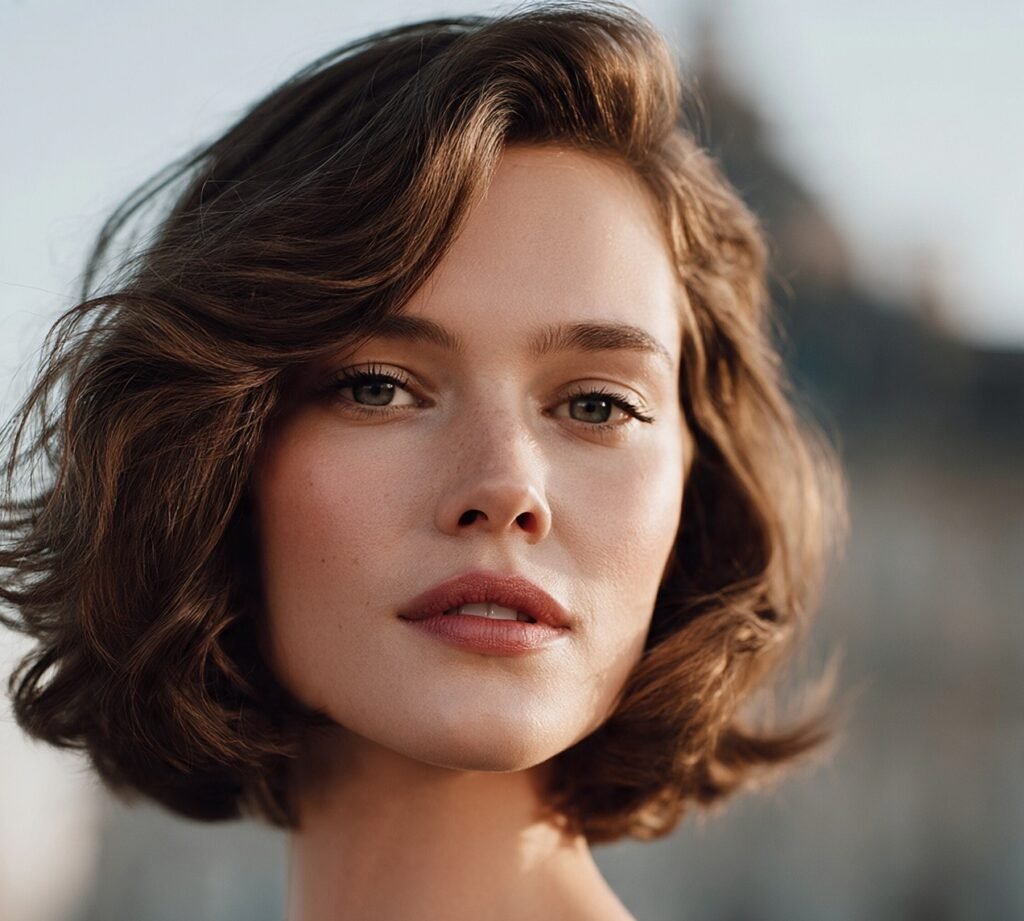
A lob cut paired with loose waves and a side part combines three width-adding elements at once, making it one of the most effective shorter options specifically for long face shapes. This style suits straight to wavy hair most easily, though curly hair can achieve a similar wavy effect naturally. People wanting a fresh, shorter change that still flatters elongated features favor this combination. Texturizing spray scrunched through damp or dry hair enhances the wave pattern, while the side part itself adds the asymmetrical width that breaks up a centered, lengthening line.
10. Long Hair with Voluminous Crown
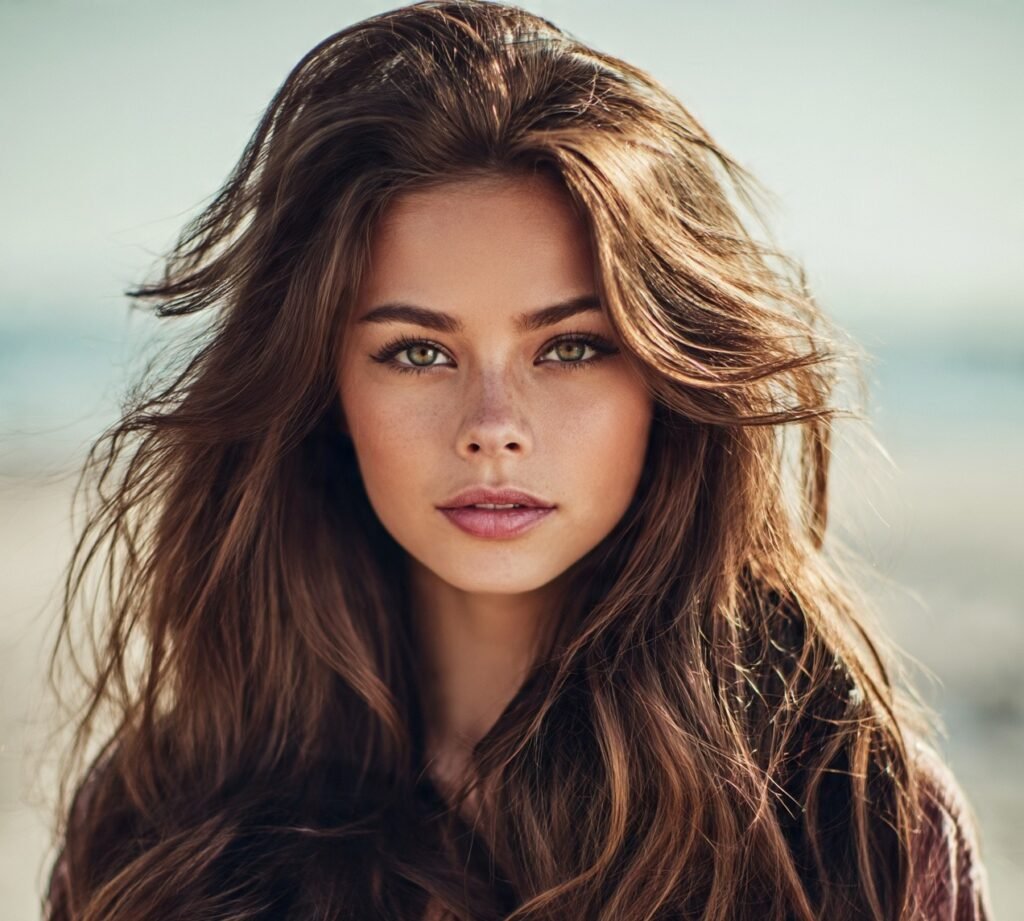
Adding deliberate volume specifically at the crown, rather than throughout the entire head, shortens the visual length of a long face by drawing the eye’s attention horizontally rather than vertically. This technique suits fine to medium hair particularly well, since backcombing or root-lifting products create noticeable lift without excess product buildup. People wanting a subtle adjustment to an existing long style often add this technique rather than cutting anything. A volumizing mousse applied at the roots, combined with blow-drying upside down briefly, creates lasting lift that counters length effectively.
11. Long Hair with Blunt Bangs and Layers
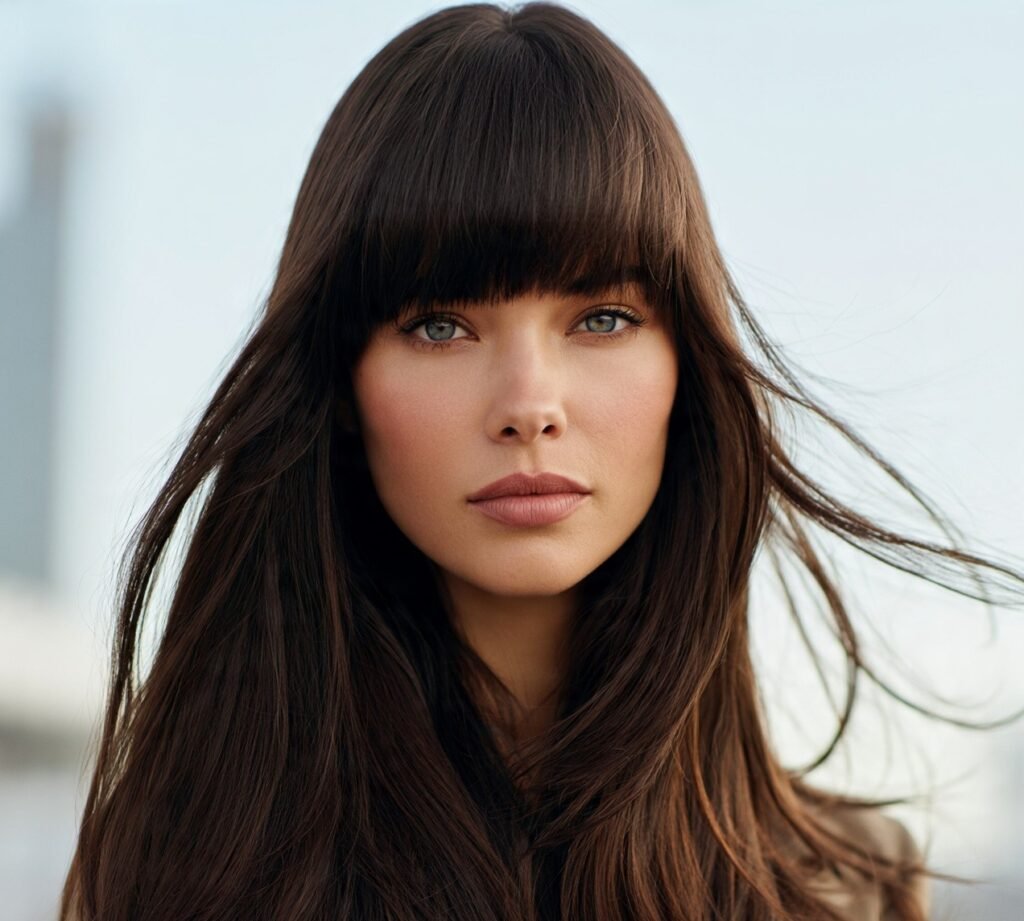
Combining blunt, straight-across bangs with layers throughout the rest of the length creates a strong horizontal line up top while the layers add width and movement below, working together to balance a long face shape. This style suits straight to wavy hair best, since both the bangs and layers need consistent texture to read as intentional rather than uneven. People wanting maximum shortening effect alongside added body throughout the length favor this combination. Regular trims on the bangs every three to four weeks keep the shortening line crisp and effective.
12. Long Hair, Deep Side Part with Volume
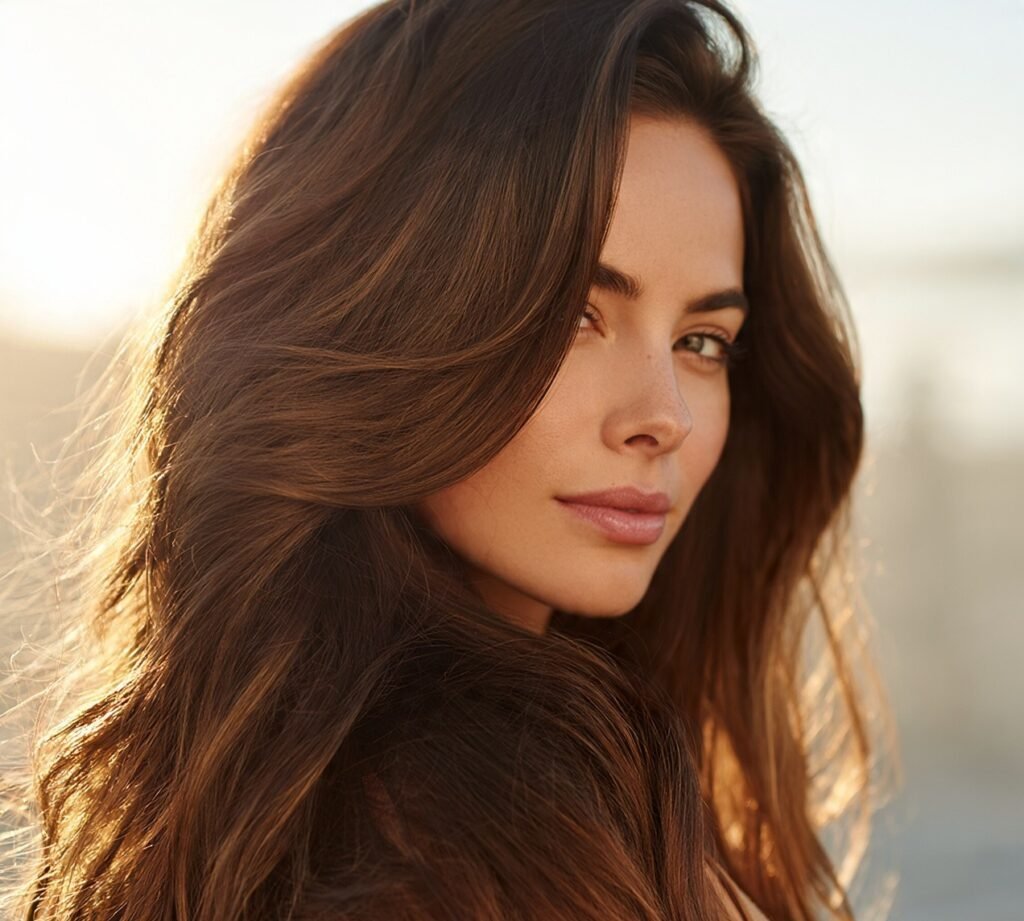
A deep side part shifts the visual weight to one side, breaking the straight vertical line a center part can create, while added volume at the part itself introduces width near the crown. This style suits straight to wavy hair of any density, making it one of the more universally adaptable options for long faces. People wanting an easy adjustment without cutting or adding bangs often switch to this deeper part alone. Clipping the heavier side back briefly while blow-drying helps train the deep part to hold its shape and volume longer throughout the day.
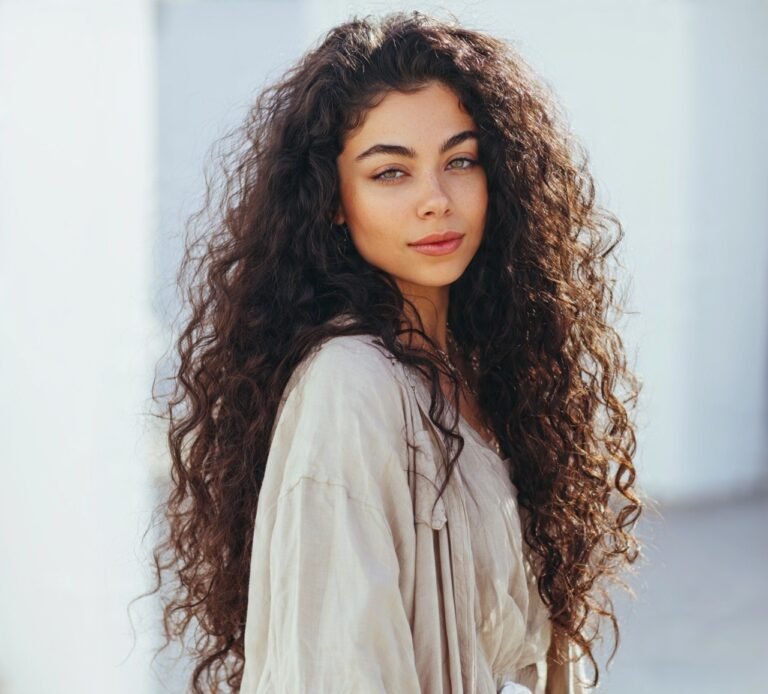
13. Long Curly Hair, Worn Natural and Full
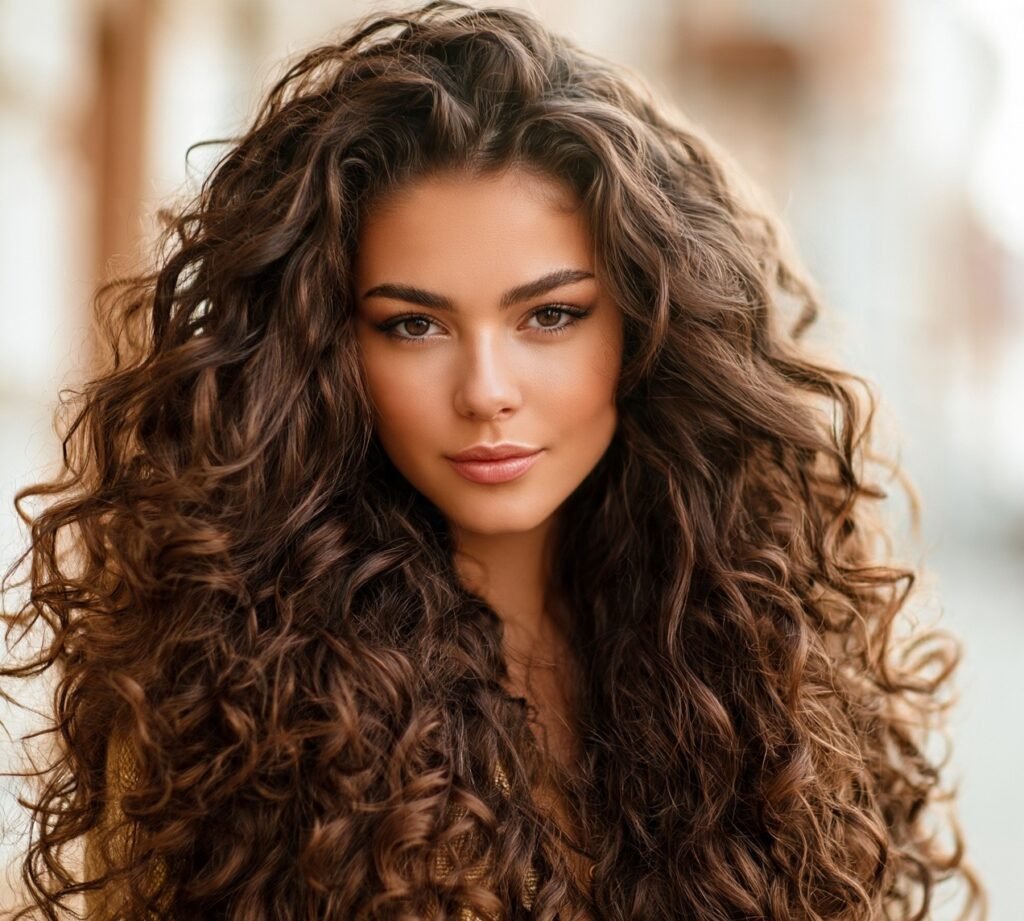
Embracing natural curl pattern at full volume creates inherent width throughout the entire head, making this one of the most effective natural options for balancing a long face without any cutting or bangs involved. This style obviously suits curly and coily hair types best, allowing the natural spring and shape to define a wide, balanced silhouette. People who value low manipulation and natural texture favor this approach strongly. A curl-defining cream applied to damp hair, combined with diffusing for extra volume at the roots, maximizes the width-adding benefit curls naturally provide.
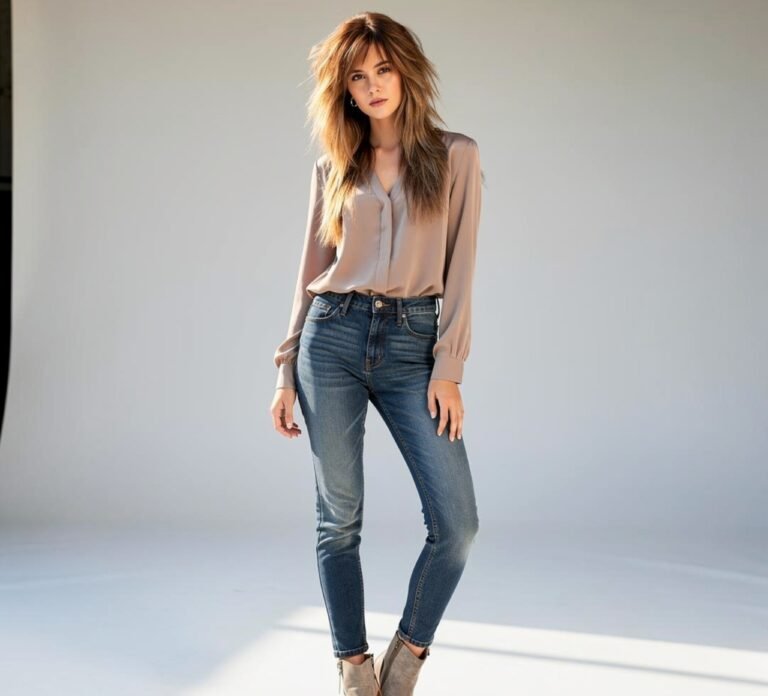
14. Long Shag with Fringe
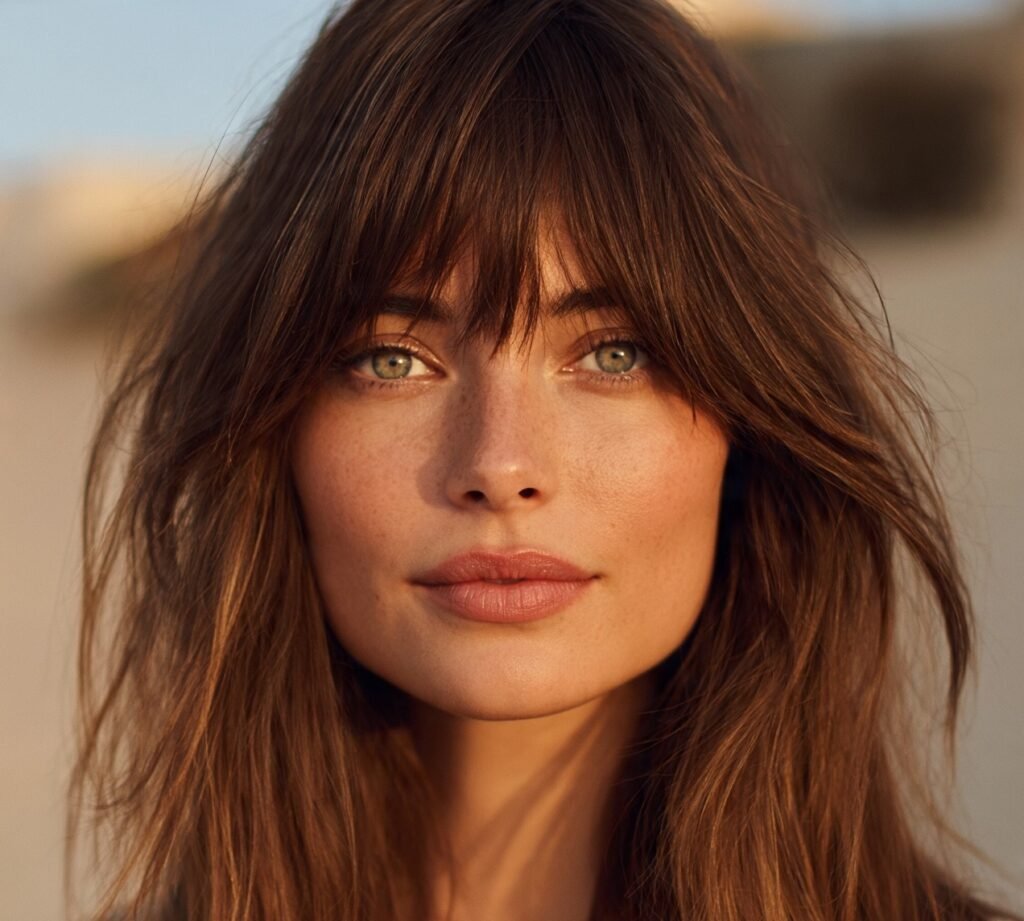
The shag cut blends choppy layers, textured ends, and wispy bangs into a deliberately undone silhouette, with the layering specifically built to add width throughout while the fringe shortens the forehead. This style suits fine to medium hair types best, since the heavy layering adds volume and prevents flatness that can otherwise emphasize length. People drawn to an edgy, textured aesthetic gravitate toward this cut for its strong width-and-shortening combination. Texturizing paste worked through dry ends, plus occasional diffusing, enhances the natural texture this cut relies on for its balancing effect.
How to Choose the Right Hairstyle for a Long Face
Choosing the right hairstyle for a long face starts with understanding which elements add width versus which elements emphasize length further. Bangs, whether full, curtain, or heavily side-swept, shorten the visual length of the upper face by covering or breaking up forehead space. Volume at the crown, cheeks, or jaw adds horizontal width that balances vertical proportion, while waves and curls throughout the length introduce natural fullness that straight, sleek styles often lack. Avoiding completely flat, center-parted, straight styles without bangs or volume helps prevent emphasizing length unintentionally.
Your hair’s natural texture also matters significantly when narrowing down options. Naturally wavy or curly hair already provides built-in width, meaning fewer styling adjustments are needed to achieve a balanced look. Straight hair benefits more from intentional bangs, layering, or curling to introduce the width and shortening effect a long face specifically benefits from. Thinking honestly about how much daily styling effort you’re willing to commit helps determine whether a low-maintenance cut or a more involved styling routine fits your routine better.
Best Hair Types and Styling Approaches for Long Faces
Fine hair benefits most from volume-focused techniques like root lifting, layering near the crown, or curtain bangs, since these add width without requiring heavy cutting. Thick hair handles bolder choices well, including full blunt fringes, heavy side bangs, or a wolf cut, since the density supports dramatic shortening and width-adding lines without looking sparse. Curly and wavy textures naturally suit long face shapes particularly well, since the inherent volume throughout the length already provides much of the balancing width other hair types need to create intentionally.
Across all hair types, the consistent principle remains adding width at the temples, cheeks, or jawline while shortening the upper face through bangs or volume. Avoiding very long, completely straight, center-parted styles without any interrupting element helps prevent the elongating effect a long face shape is naturally prone to. Working with your existing texture rather than against it makes achieving these balancing techniques considerably easier and more sustainable long-term.
Styling and Maintenance Tips for Long Face Hairstyles
Maintaining the width-adding and shortening effects these styles rely on requires consistent attention to both the cut and the daily styling routine. Bangs specifically need trims every three to four weeks to stay at the optimal length for shortening the forehead, since growing-out bangs lose their effectiveness quickly. Volumizing products applied at the roots before blow-drying help maintain crown height throughout the day, particularly important for fine or thin hair types prone to falling flat.
For wavy and curly styles, a curl-defining cream or texturizing spray applied to damp hair locks in the width-adding pattern before it dries. Deep conditioning weekly keeps hair healthy enough to hold curl, wave, or volume techniques effectively, since dry, damaged hair often falls flat regardless of product used. Regular trims every six to ten weeks throughout the length also prevent splits from undermining the overall shape these styles depend on.
How to Ask Your Hairstylist for This Look
Walking into a salon with a clear, well-communicated vision dramatically improves your chances of leaving with a style that truly balances your features. Save a few reference photos directly from this article or your Pinterest board, since visual references communicate far more accurately than verbal descriptions alone, especially when explaining where bangs should fall or how much volume you want near the crown. Mention specifically that you have a long face shape and want width added near the cheeks or jaw.
Be specific about your styling routine too. Tell your stylist honestly how much time you spend on daily styling and whether you’re comfortable maintaining bangs, since this information helps them recommend cuts suited to your actual willingness to maintain the shortening or width-adding effect. Asking direct questions like “will this add width near my jaw” or “how will this style hold its shape day to day” ensures fewer surprises and a result that genuinely flatters your face.
Frequently Asked Questions
What hairstyles should I avoid with a long face?
Very long, completely straight hair worn with a center part and no bangs tends to emphasize length further, since nothing interrupts the vertical line from forehead to chin. Extremely high, tight ponytails or buns without any face-framing pieces can also stretch the face visually. Adding bangs, volume, or waves generally counters these elongating effects effectively.
Do bangs really help balance a long face?
Yes, bangs are one of the most effective tools for balancing a long face shape, since they shorten the visual length of the forehead and interrupt the eye’s vertical movement down the face. Curtain bangs, full blunt fringes, and heavy side-swept bangs all achieve this differently, so choosing the style depends on your desired level of change.
Can curly hair suit a long face without cutting it shorter?
Absolutely, naturally curly hair already provides significant width throughout the length, which works in favor of balancing a long face shape without requiring any cutting. Embracing full, voluminous curls rather than straightening them often produces a more flattering result, since straightening removes the natural width curls inherently bring to the overall silhouette.
What length is most flattering for a long face?
Shoulder length to chin-level styles, particularly when paired with waves or layers, tend to be especially flattering for long faces since the length itself shortens the overall vertical line while leaving room for width-adding waves or layers. However, longer hair can still flatter a long face when bangs, volume, or curls are incorporated thoughtfully.
How often do I need to trim bangs to maintain the shortening effect?
Bangs typically need trimming every three to four weeks to stay at the most effective length for shortening a long face. Once bangs grow past the eyebrows, their forehead-covering effect diminishes significantly, reducing how much they balance overall face proportions, so consistent trims matter more for this face shape than for others.
Does volume at the crown make a long face look longer?
No, volume specifically at the crown actually helps shorten a long face’s visual length by drawing attention horizontally rather than emphasizing the vertical pull from forehead to chin. The key is keeping that volume controlled and not overly tall, since excessive height could counteract the balancing effect this technique is intended to create.
Final Thoughts
Long face hairstyles work best when they intentionally add width near the cheeks or jaw while shortening the upper face through bangs, volume, or waves. The key to loving your next cut lies in matching the style honestly to your hair texture and daily styling routine, rather than choosing based on a photo alone. Save your favorites, bring clear references to your stylist, and walk into your next appointment feeling genuinely prepared and confident.