15 Short Curly Bob Hairstyles for a Chic and Modern Look
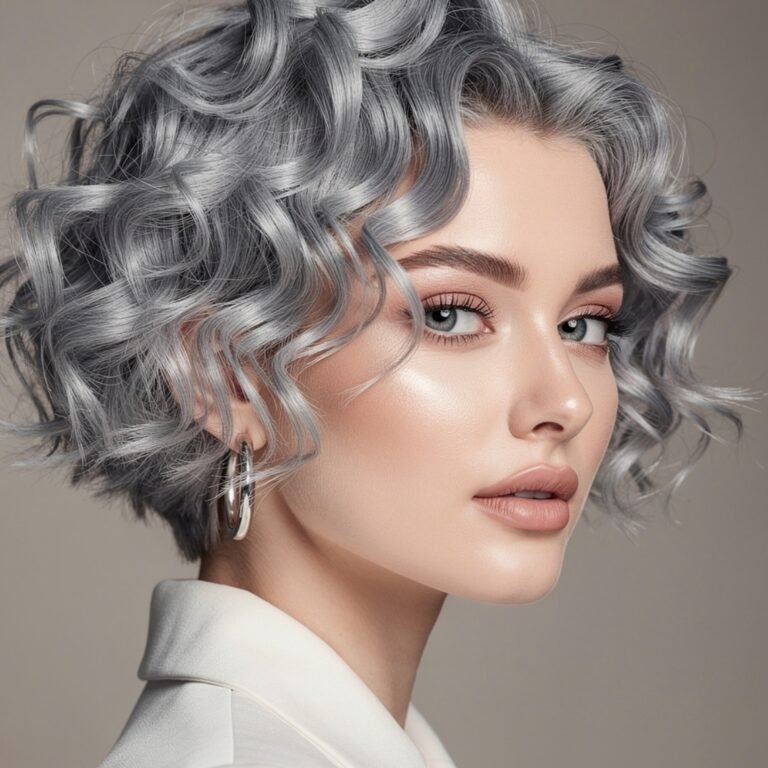
Short curly bob hairstyles are the perfect blend of elegance, volume, and effortless style, making them one of the most popular haircut choices for women with naturally curly hair. Whether you prefer a classic chin-length bob, a layered curly bob, an asymmetrical cut, or a textured French bob, this versatile hairstyle enhances your curls while remaining easy to style and maintain. It’s an ideal option for women who want a fresh, fashionable haircut that works for both everyday wear and special occasions.
15 Short Curly Bob Hairstyles
1. Classic Curly Bob at Chin Length
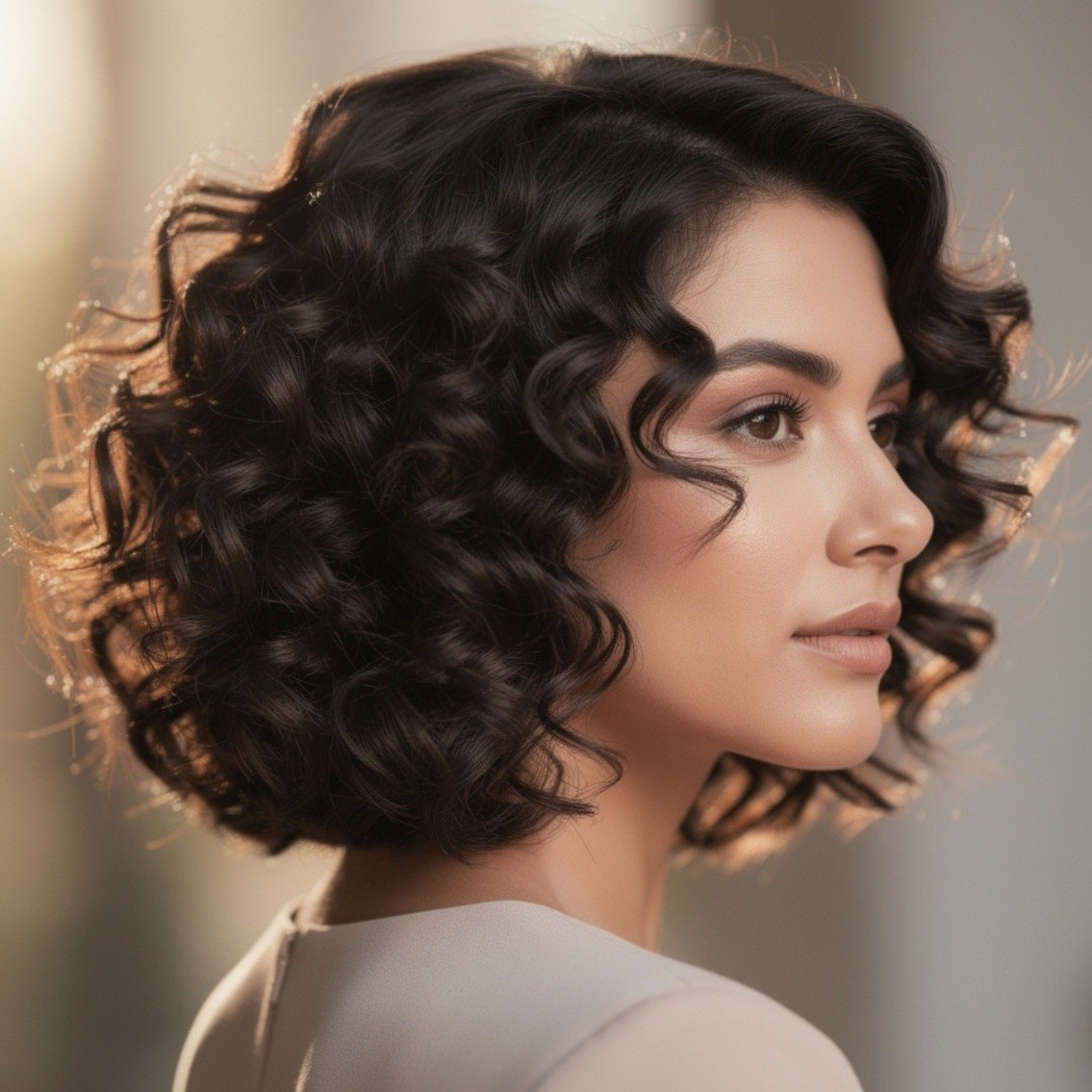
The classic chin-length curly bob is the foundational version from which every variation on this list derives, and its enduring popularity across decades of hairstyle trends reflects something genuinely true about its proportions the chin-length point is where curls achieve an almost ideal balance between visible length and expressive volume, long enough to frame the face completely and short enough to spring outward with impressive fullness. The cut itself involves removing enough length to bring the ends to approximately the chin when the curls are in their stretched state, which means the actual resting length of the finished bob will sit slightly above the chin for looser patterns and considerably above it for tighter coil textures that shrink significantly after washing and drying. Type 3a and 3b ringlet patterns execute the classic chin-length bob with the most predictable and photographically recognizable results, as their curl size and moderate shrinkage produce a finished length close to the intended chin point. Oval and heart face shapes suit the classic chin-length bob most naturally, as the curl volume at chin level draws attention to these face shapes’ most flattering features while the overall silhouette provides balanced framing from every angle.
2. Stacked Curly Bob
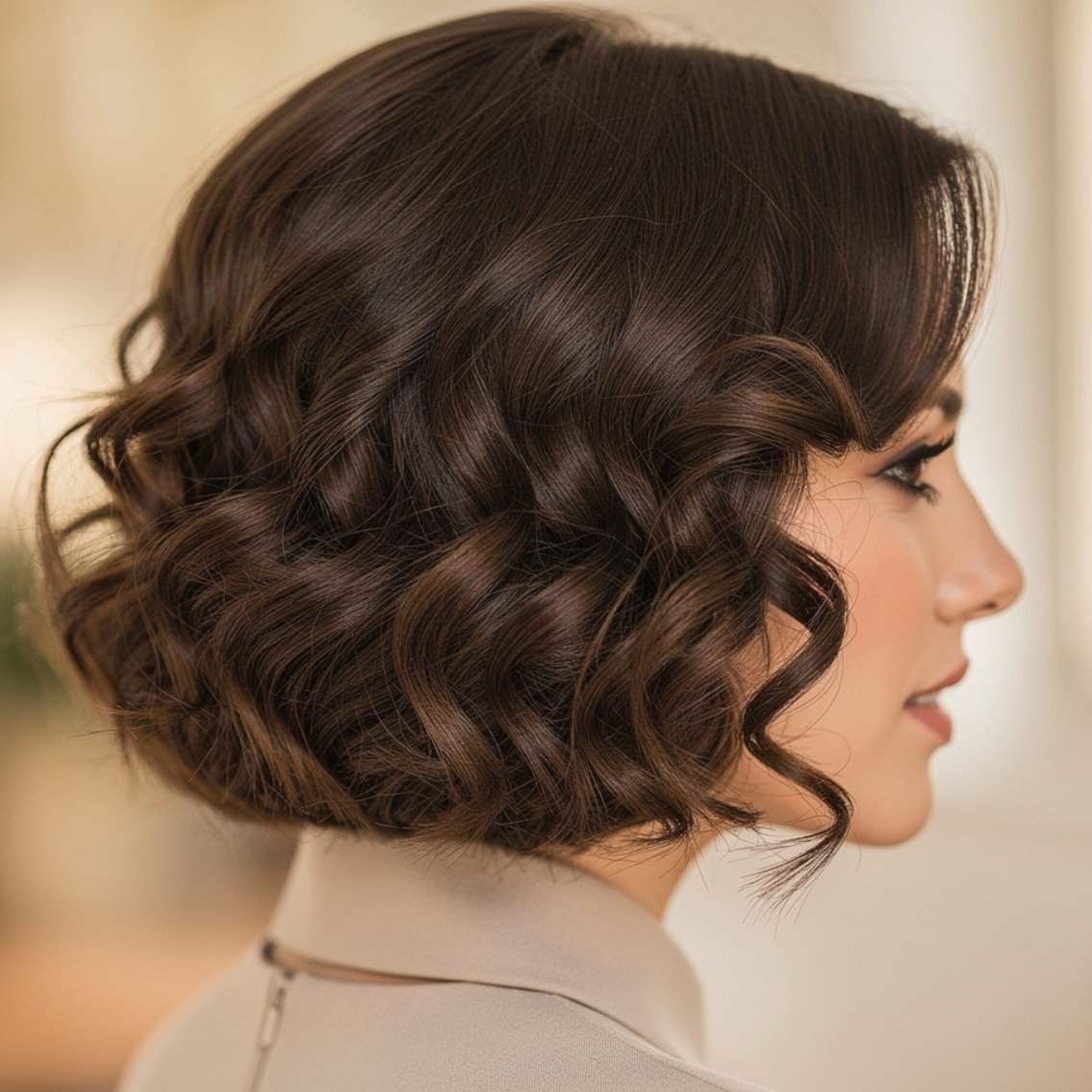
The stacked bob introduces internal layering that is cut shorter at the nape and gradually increases in length toward the front, creating a rounded, graduated silhouette that appears more voluminous and three-dimensional than a blunt single-length bob while requiring no additional styling effort to maintain its shape. In curly hair, the stacked effect is amplified considerably by the natural spring of the curl pattern each progressively longer layer springs outward at a slightly different angle than the one above it, creating a cascading, architectural shape that appears as though significant styling effort went into its construction when in reality it simply reflects the natural behavior of the layered curl. Type 3b through 4a curl patterns produce the most visually dramatic stacked bob silhouettes because their coil tension creates strong spring at each layer length, while looser wave patterns produce a softer, more blended version of the same graduated effect. Round and square face shapes benefit particularly from the stacked bob’s rounded volume at the back, which adds apparent width and fullness that counterbalances stronger facial geometry. This cut requires a stylist experienced specifically in cutting curly hair while dry, as wet cutting cannot accurately predict how each layer will position itself once the curl springs back to its natural resting state.
3. Asymmetric Curly Bob
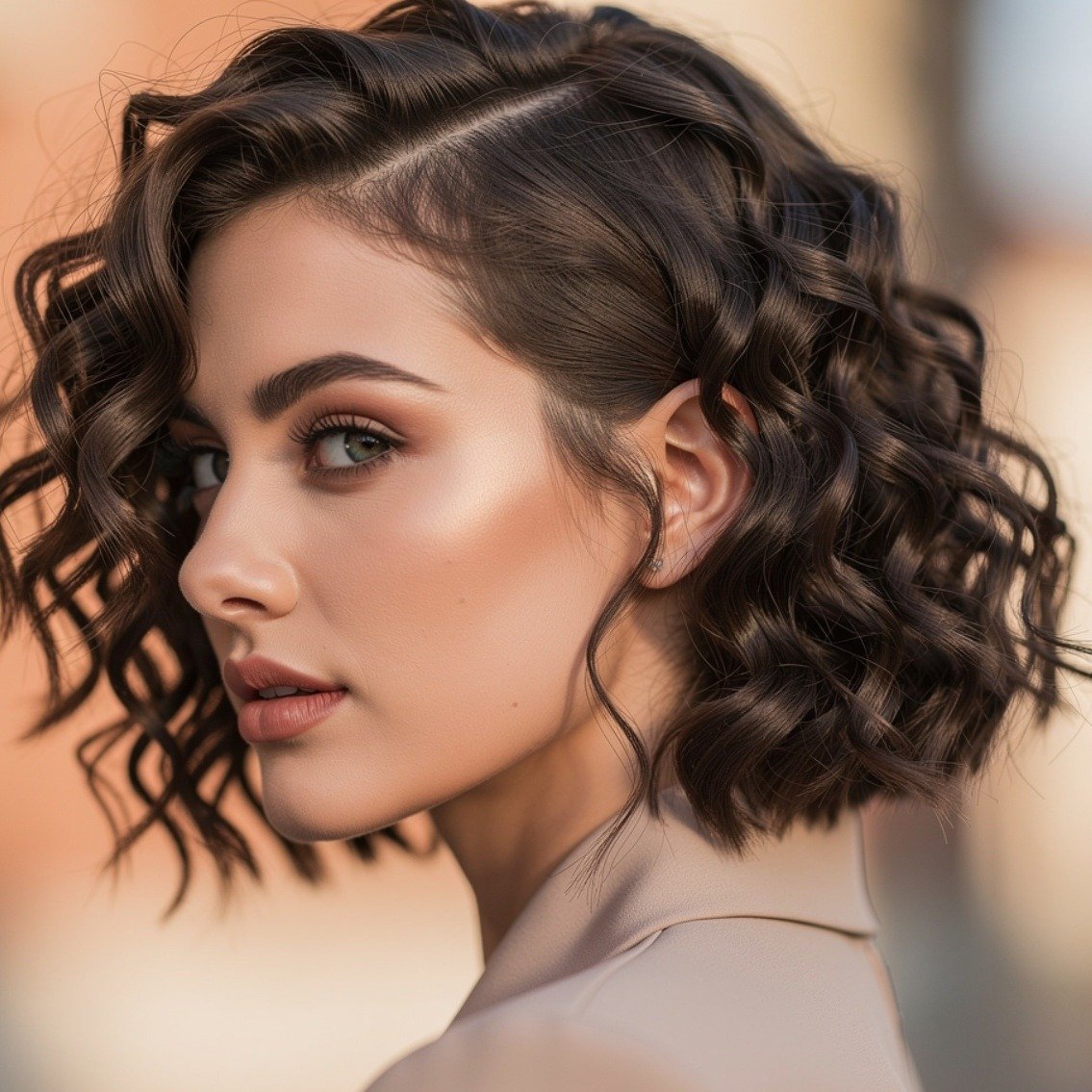
The asymmetric curly bob is cut deliberately longer on one side than the other, creating a diagonal line that travels from a shorter point near one ear to a longer point approaching the opposite jaw or collarbone, and the natural spring of curly texture amplifies the visual drama of this asymmetry in a way that straight-hair asymmetric bobs simply cannot replicate. On straight hair, the length difference between sides reads as a clean geometric line. On curly hair, the same difference produces a cascade of varying curl sizes and spring tensions that creates movement, visual complexity, and a sense of dynamic energy. Type 3a through 3c curl patterns execute asymmetric bobs with the most controlled results because their ringlet behavior is consistent enough to make the length difference readable rather than obscured by unpredictable volume distribution. Heart, oval, and diamond face shapes suit asymmetric bobs most naturally because the diagonal line introduces an angular visual element that counterbalances the softer, more curved features of these face structures. Discuss the asymmetry ratio specifically with your stylist. A subtle one-inch difference creates elegant softness, while a dramatic three-inch difference creates an unmistakably bold editorial statement.
4. Curly Bob With Undercut
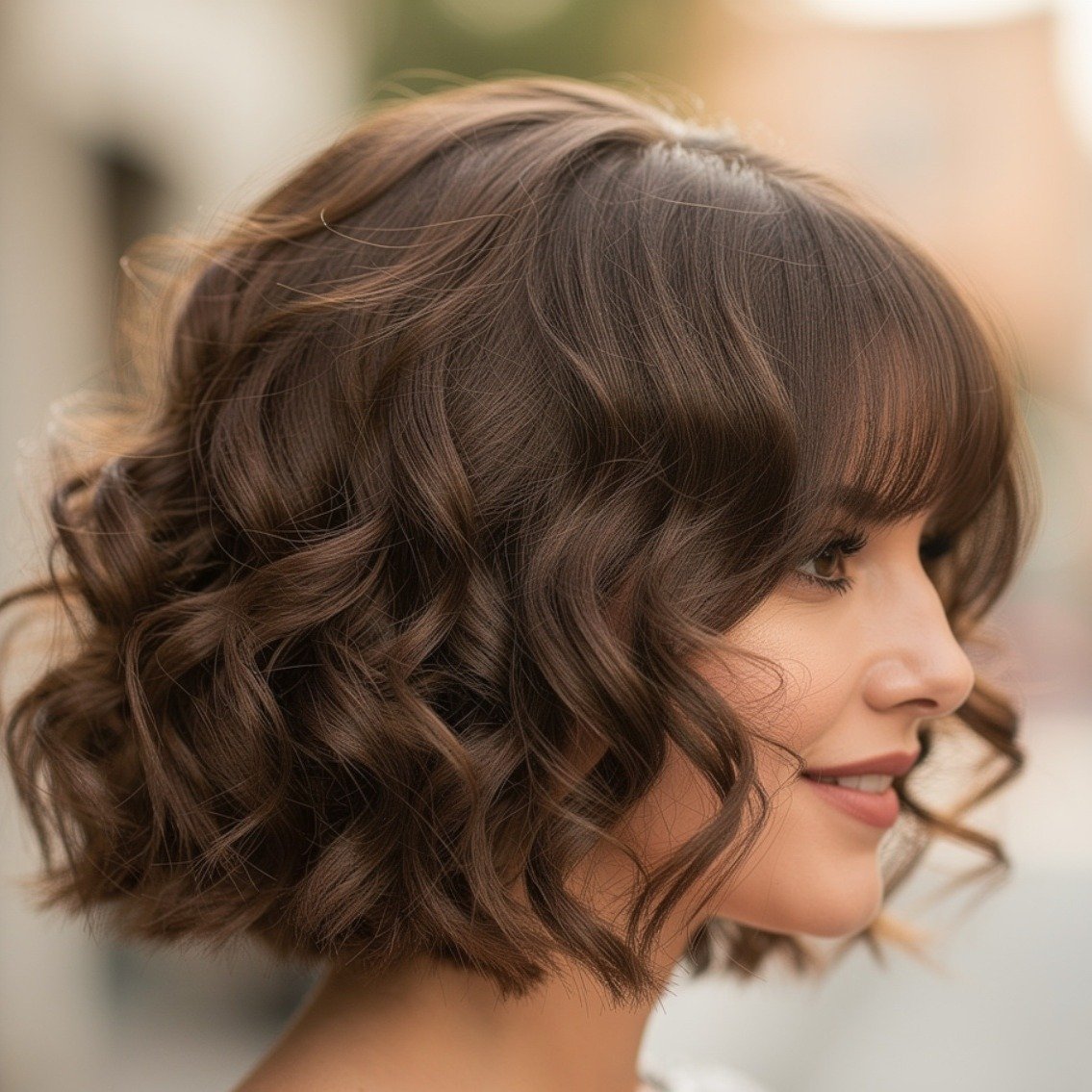
Combining a curly bob silhouette with a shaved or closely cropped undercut beneath the occipital bone creates a style of genuine structural contrast the voluminous curly bob above reads as lush and full, while the exposed or closely cut section beneath adds an unexpectedly bold, architectural element that is completely hidden when the bob curls fall naturally but revealed deliberately when the bob section is lifted or pinned. This element of concealed versus revealed adds a layer of personal expression to the style that most single-texture cuts cannot offer. The undercut section requires maintenance every three to four weeks to preserve the clean contrast line that defines it, while the bob section above can be refreshed on a standard four to six week trimming schedule. Type 3c through 4b curl patterns suit the curly bob with undercut most naturally because their density and definition create the maximum visual contrast against a shaved or closely cropped base. Square and oval face shapes carry this high-contrast style most confidently, and the overall aesthetic suits women who want their bob to communicate something deliberately unconventional alongside its foundational elegance.
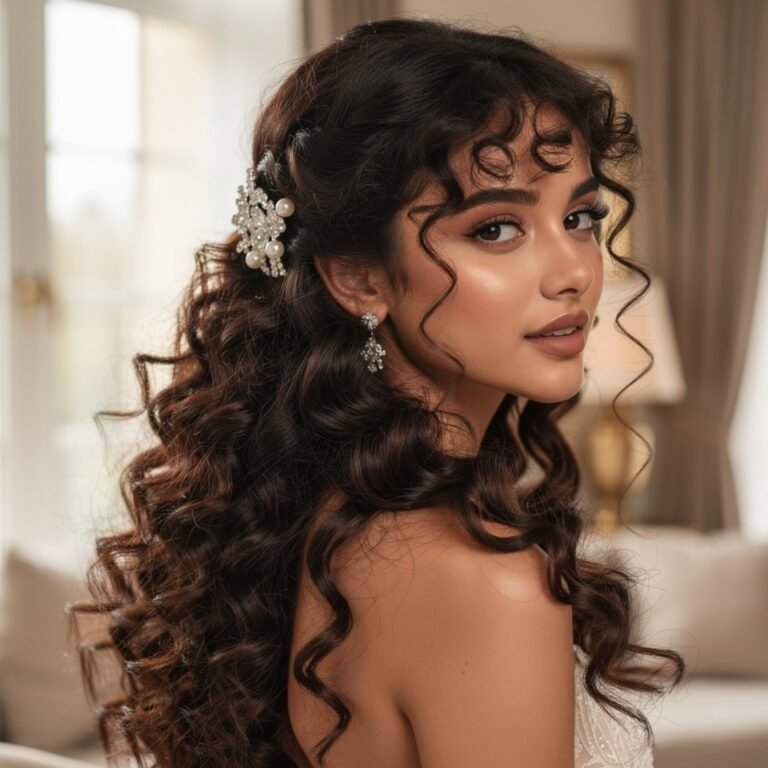
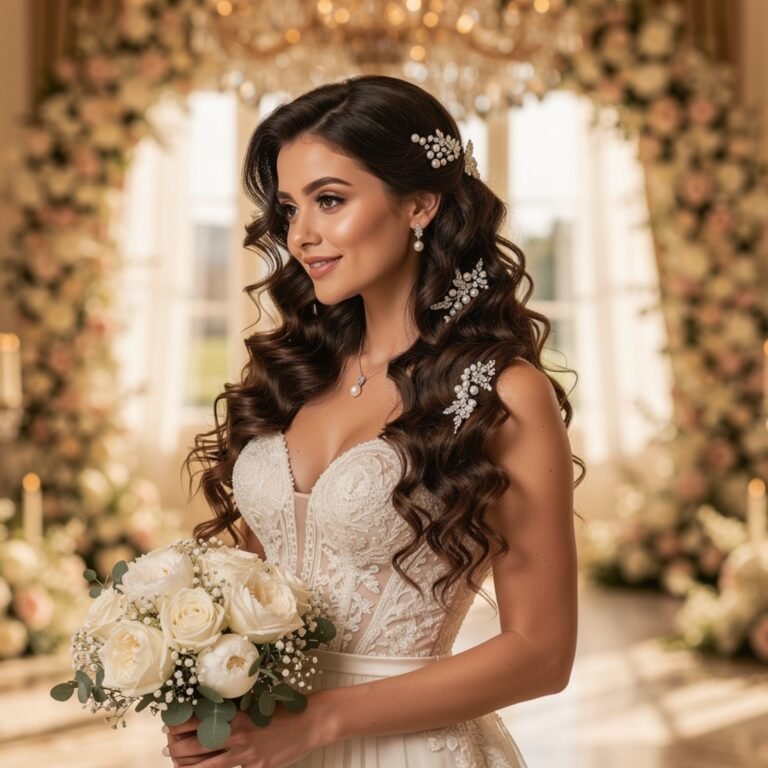
Curly wedding hairstyles – Find trendy curly hairstyles featuring curtain bangs, wispy fringe, and full bangs that beautifully frame the face.
5. Blunt Cut Curly Bob
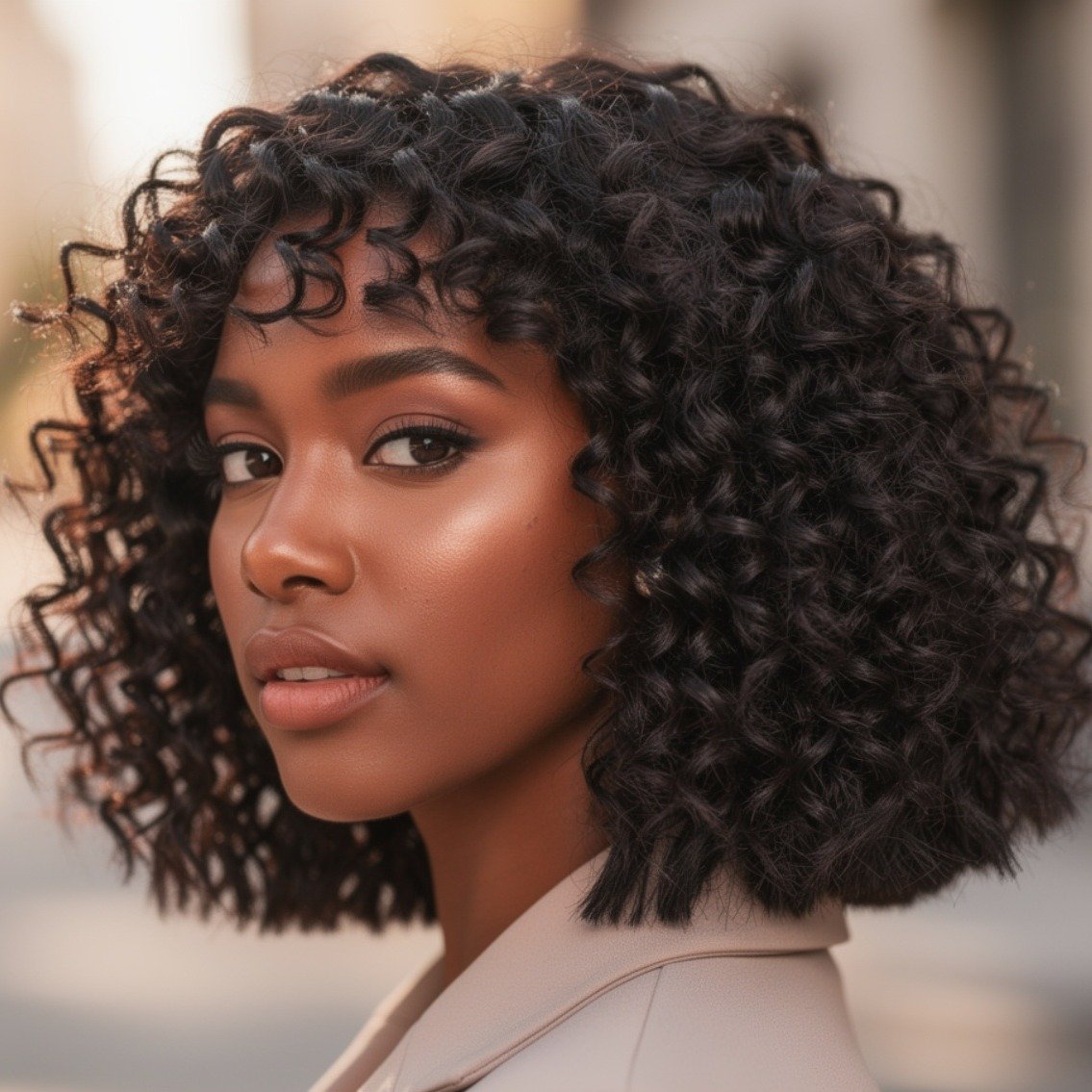
The blunt curly bob involves cutting all sections to a uniform length without graduation or layering, creating a dense, even perimeter that emphasizes the fullness and weight of the curl pattern in a way that layered cuts deliberately avoid. On straight hair, a blunt bob reads as precise and geometric. On curly hair, a blunt cut perimeter produces a completely different visual effect the density of curls at the same length creates a rounded, full silhouette that appears almost sculptural in its completeness, particularly on high-density type 4 textures where the even perimeter creates a perfectly rounded shape that holds through the entire wear period between washes. Type 4a through 4c coil patterns are the most natural candidates for blunt curly bobs because their shrinkage and density create the full, even roundness that makes the blunt cut’s design intention most legible. Round and oval face shapes suit the blunt curly bob most naturally, and the style pairs particularly beautifully with bold accessories a wide colorful headband, a statement earring, or a bright lip color that give the eye a focal point within the dense, uniform silhouette.
6. Layered Curly Bob for Volume
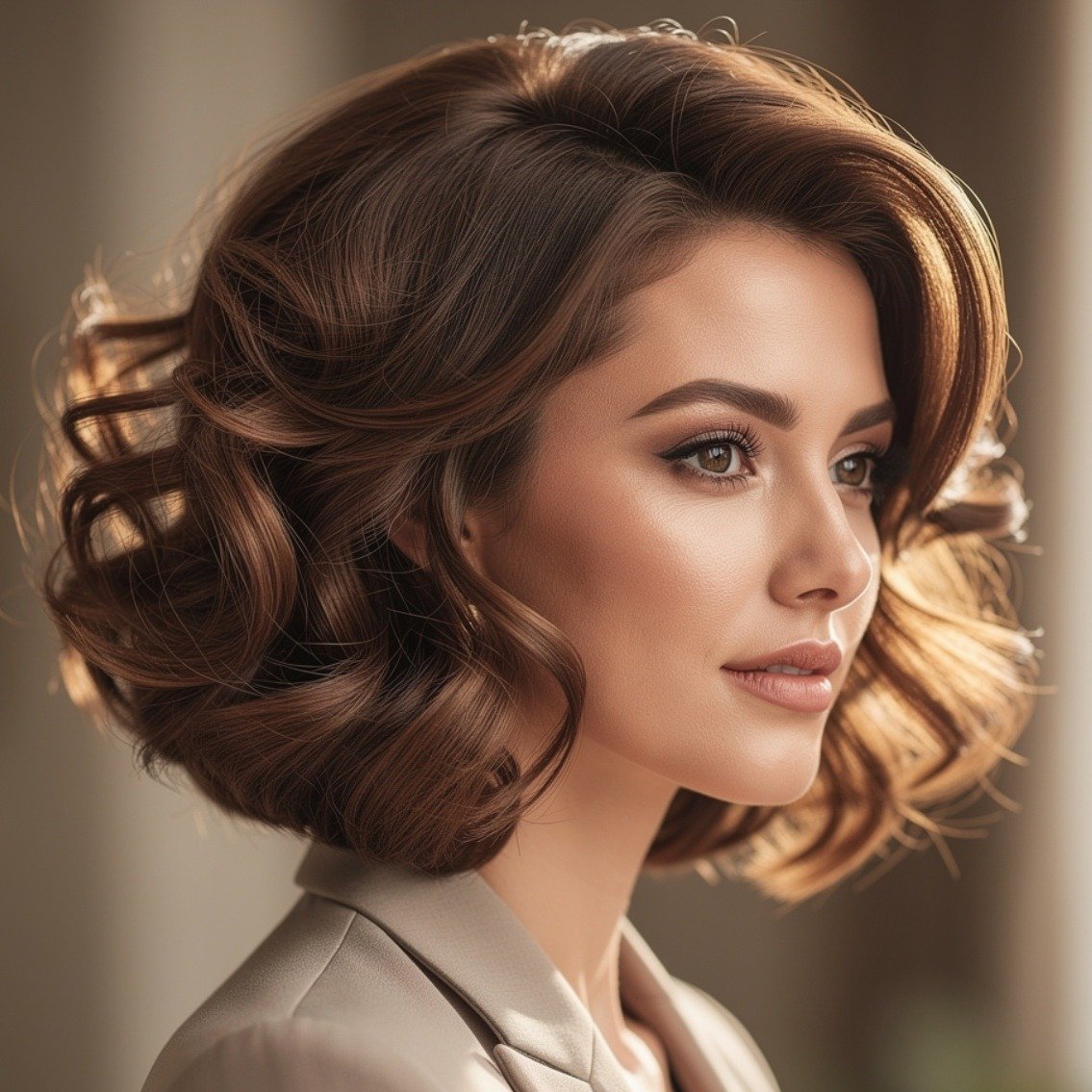
Where the blunt bob emphasizes density and evenness, the layered curly bob does the opposite — it removes internal weight through strategic length variation across different sections of the hair, allowing each layer to spring freely and creating a style that appears significantly more voluminous and dimensionally complex than the amount of hair present would suggest possible. Layers in a curly bob must be cut conservatively relative to straight-hair layering because excessive length removal from any single section can create disproportionate gaps in the curl distribution that appear as holes or thin spots once the hair dries and curls spring back to their natural tension. Type 3a through 3c curl patterns benefit most significantly from thoughtful layering because these textures have enough variety in individual ringlet size to make multi-length layering genuinely visible and impactful. Heart, long, and oval face shapes suit layered curly bobs most naturally, as the internal volume lift the layers create adds width at the crown and midpoint that balances the proportions of these face structures particularly well. Always request that your stylist demonstrate each proposed layer length on a dry curl section before cutting, as wet assessment is unreliable for predicting how layers will distribute once the curl springs back.
7. Curly Bob With Defined Ringlets
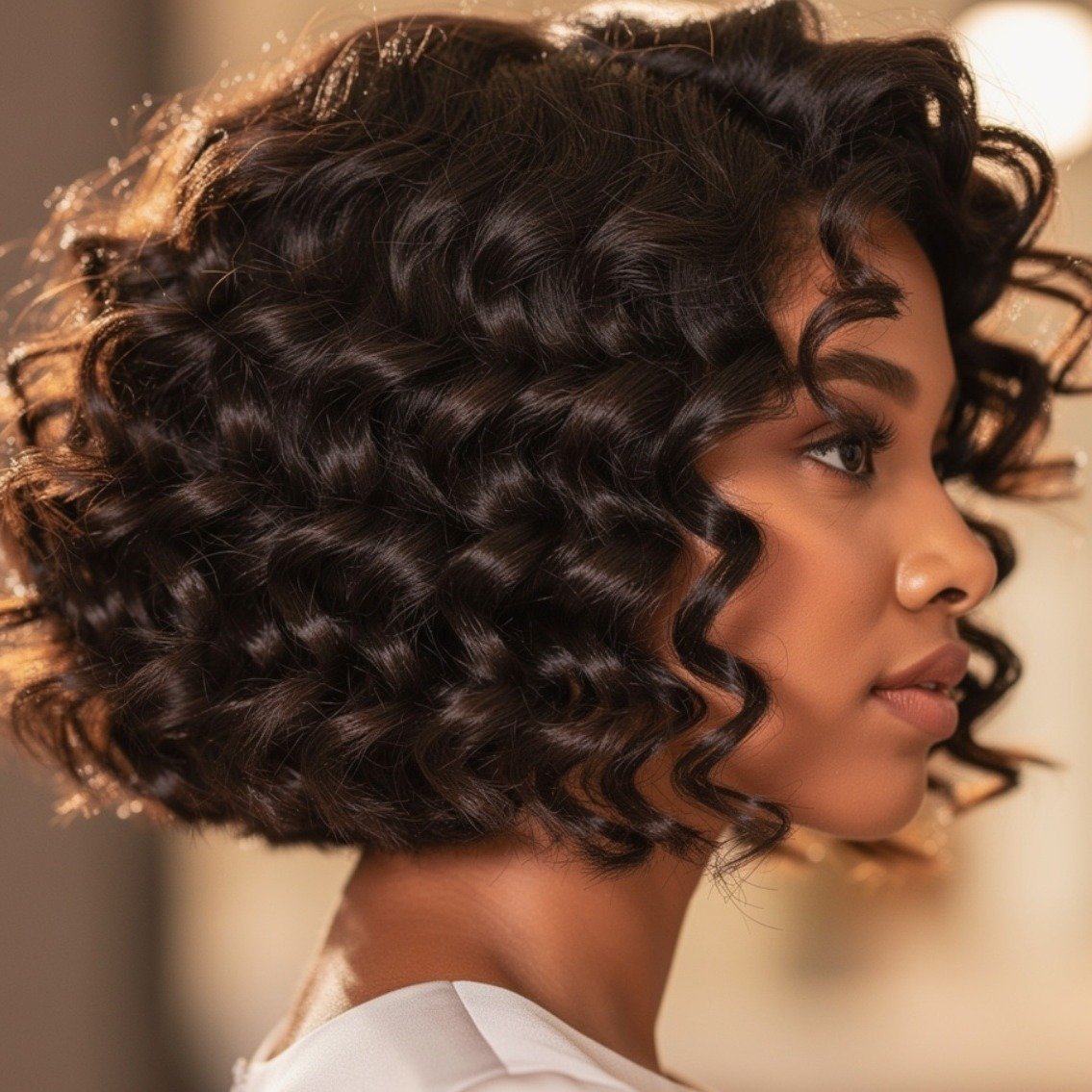
This version prioritizes curl definition above all other stylistic considerations every ringlet is encouraged to its maximum spiral clarity through careful product selection, deliberate application technique, and thorough diffuse drying, resulting in a bob where individual curl columns are visually distinct, glossy, and precisely shaped from root to end. The defined ringlet bob sits in deliberate contrast to the more casual, undefined curl texture that most everyday curly bob styling produces, and achieving it requires a consistent application technique of either the finger-coiling method, the denman brush pull-through, or the shingling technique applied section by section while the hair is saturated with product. Type 3a through 3c ringlet patterns respond most naturally to definition-focused bob styling because their curl architecture produces genuine ringlets at bob length rather than collapsing into waves or compressing into undifferentiated coil masses. Oval and heart face shapes carry the defined ringlet bob most beautifully, and the high shine and clarity of a well-executed defined ringlet style photographs extraordinarily well in both natural and studio lighting conditions.
8. Curly Bob for Type 4 Natural Hair
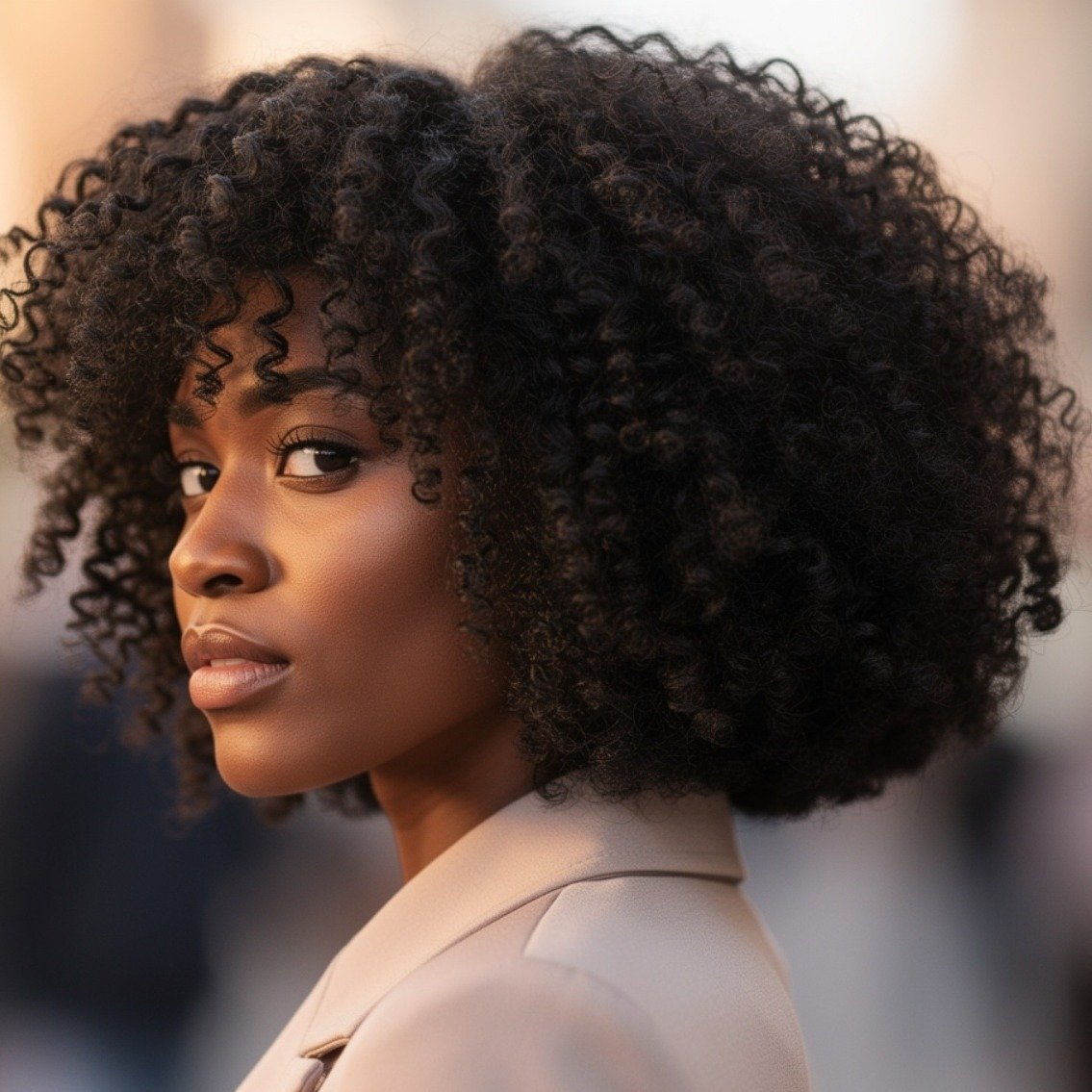
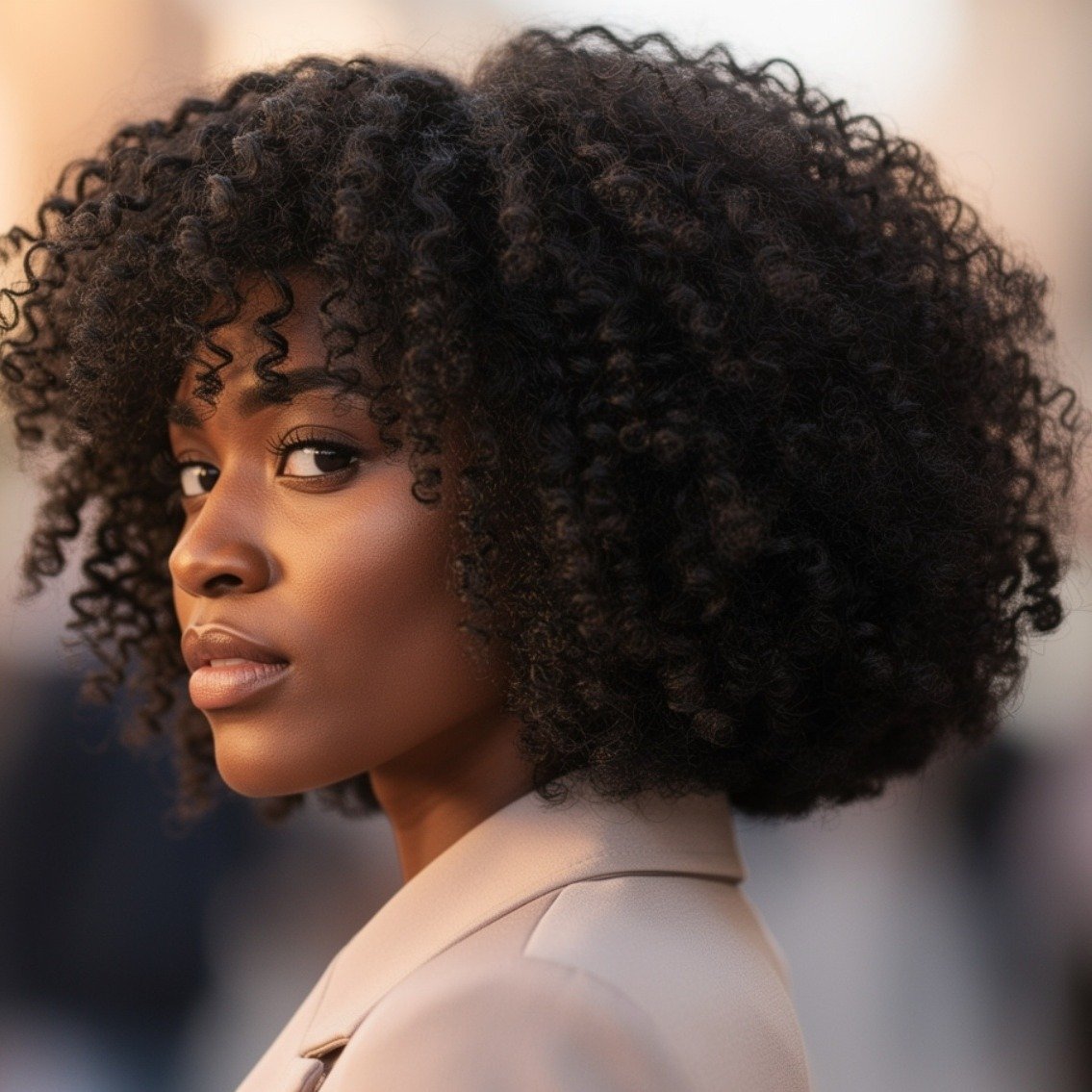
Type 4 coil patterns deserve a dedicated entry on this list because their relationship with the bob length differs fundamentally from that of looser curl patterns in ways that mainstream hairstyle resources almost never address. At bob length, type 4a through 4c coils shrink dramatically a cut intended to produce a chin-length bob on wet or stretched hair may produce a style that sits at or above the ear in its natural resting state, which is not a mistake or a failure but simply the authentic expression of a tightly coiled pattern at that length. Embracing this natural bob length rather than fighting it through stretching or manipulation produces a style of remarkable beauty and practicality a rounded, densely textured natural bob that holds its shape without product, dries quickly without heat tools, and represents one of the most genuinely low-manipulation curl styles available at any length. Moisturizing with a water-based cream daily followed by sealing with a light oil keeps the coils supple and defined, and the shrinkage that produces the actual length can be embraced as the style’s most distinctive characteristic rather than viewed as a problem requiring correction.
9. Curly Lob Long Bob Variation
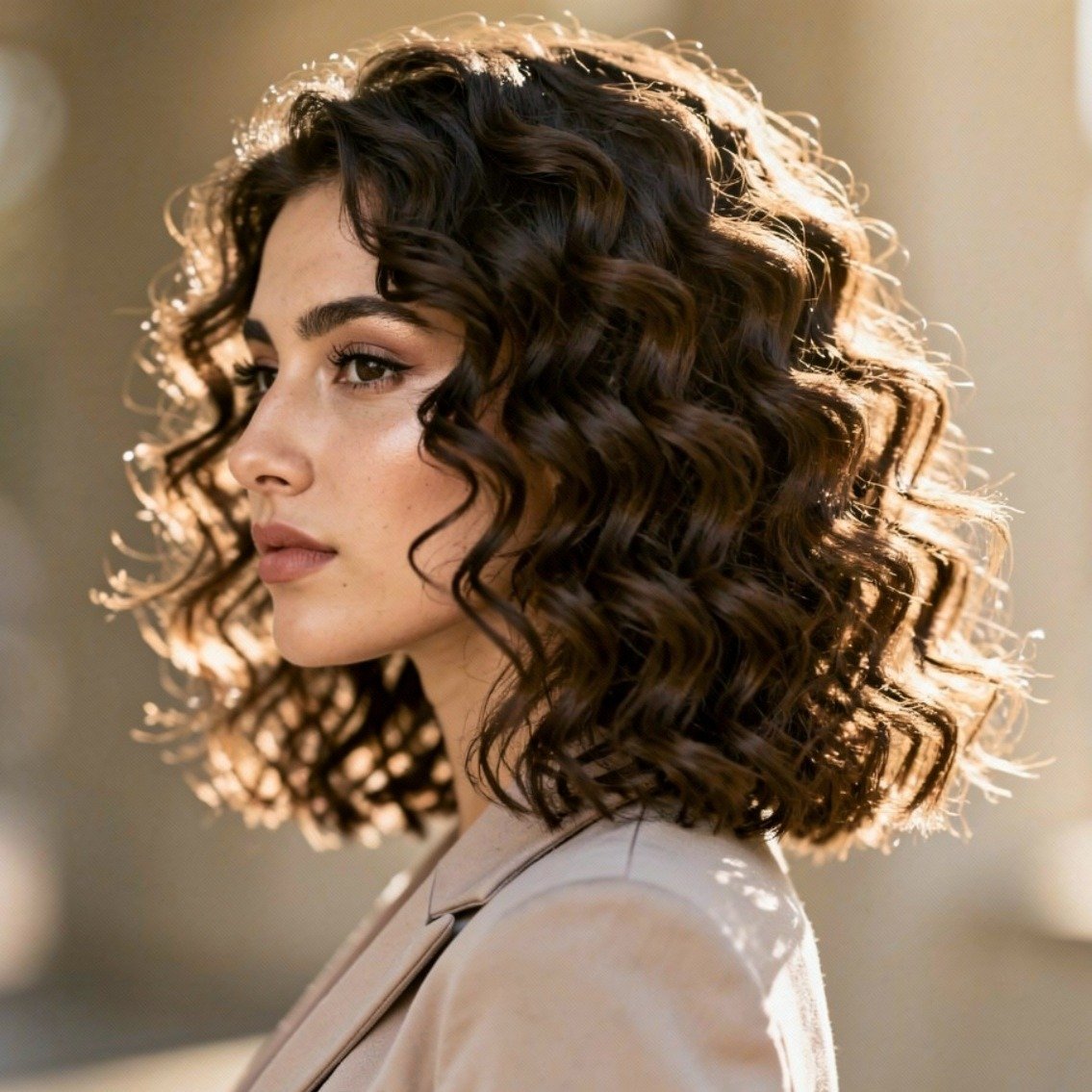
The curly lob, a long bob that sits between the collarbone and the chin rather than strictly at or above the chin, extends the bob concept into slightly greater length territory while retaining the essential proportion and character that distinguishes a bob from simply medium-length curly hair. At lob length, curls have enough length to develop into full spirals or substantial wave formations before reaching the ends, creating visible curl pattern throughout the full length of the hair rather than only at the top where curls typically begin. This suits type 2c through 3b curl patterns particularly well because these textures need slightly more length than a strict chin-length bob provides to develop their full curl expression at shorter lengths, looser patterns can wave without fully forming, while at lob length they have adequate room to complete their natural curl cycle. All face shapes suit the curly lob in some variation, and its position between short and medium length makes it an excellent transitional cut for those either growing out a shorter bob or beginning to take length off longer curly hair for the first time.
10. Curly Bob With Color
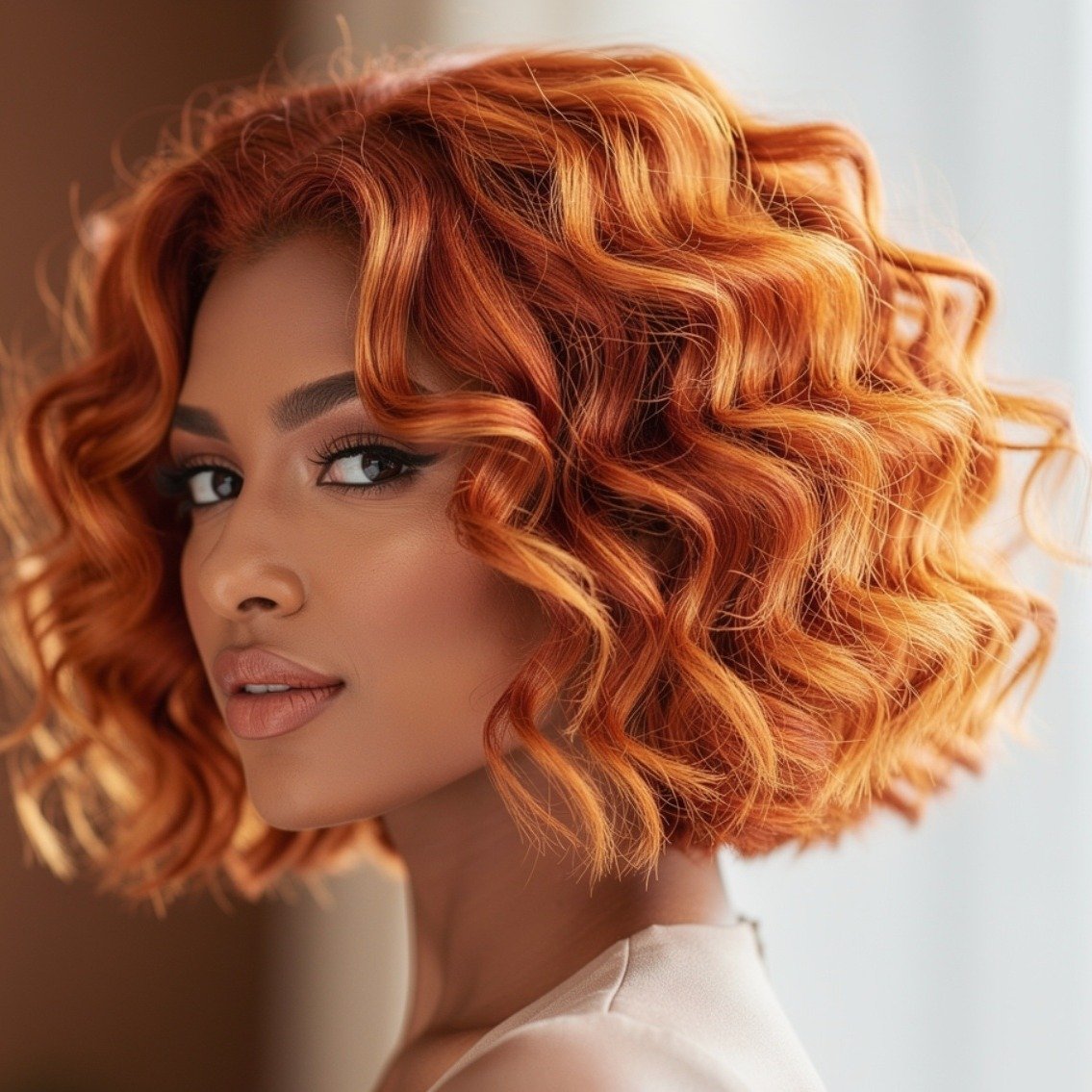
Color transforms any curly bob into something entirely personal and visually multidimensional, and the specific way that color interacts with curly texture at bob length creates effects that longer curly hair or straight bob cuts cannot replicate with the same visual impact. Each curl in a colored bob catches light at a continuously changing angle as the hair moves, creating a living, dynamic shimmer that static straight color appears flat beside. Balayage or money piece highlighting on a curly bob produces sun-kissed dimension that makes the bob appear fuller and more layered than the cut alone achieves. A bold all-over color deep burgundy, warm copper, or bright auburn on a short curly bob creates a concentrated burst of color that is far more impactful at bob length than it would appear diluted across longer hair. Type 3a through 4a textures suit color on curly bobs most beautifully because their surface area is large enough for the color to express its full dimension through the curl’s movement. Choose a conditioning color treatment over a harsh bleach process whenever possible to preserve the moisture and elasticity that curly textures depend on for definition and spring.
11. Textured Messy Curly Bob
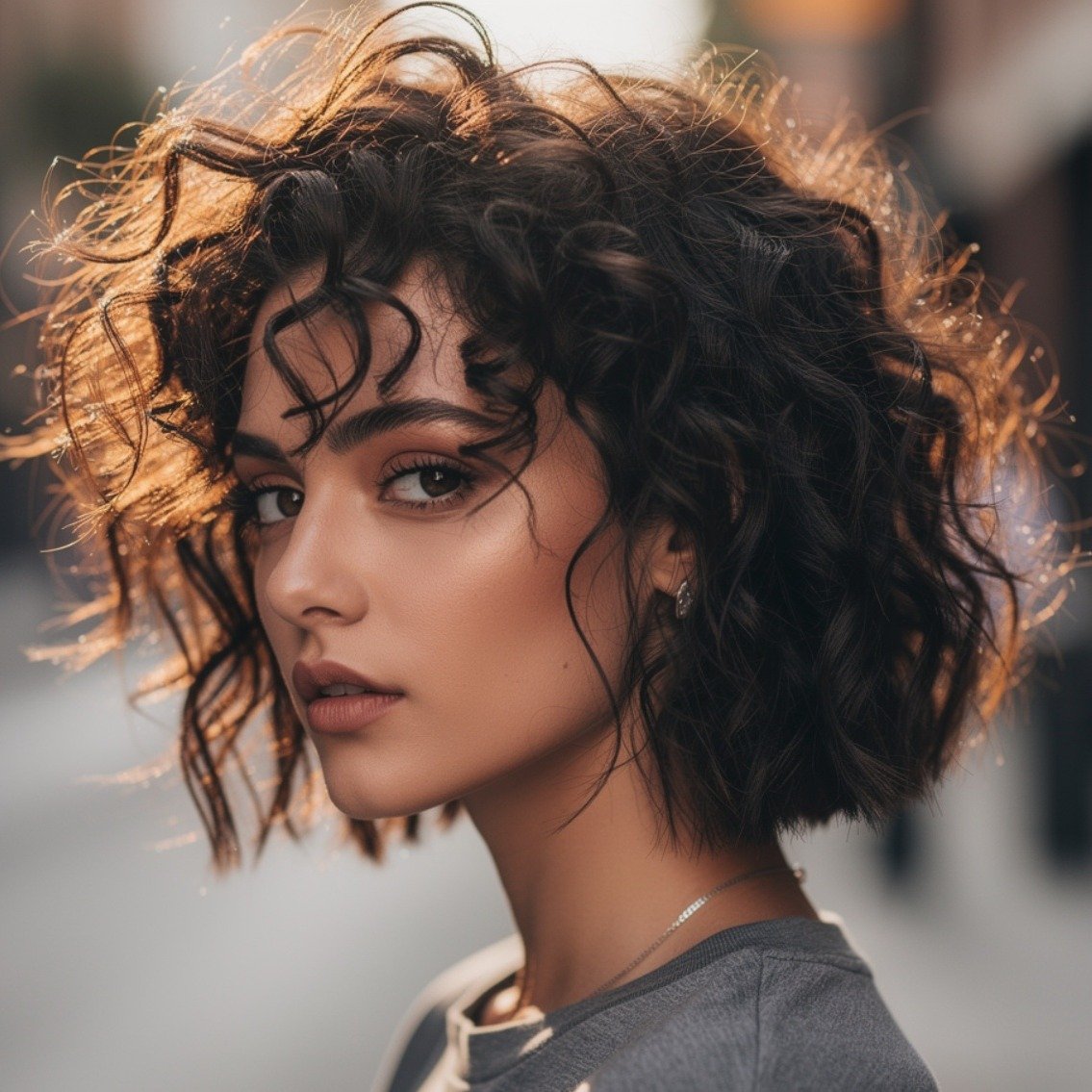
The textured messy curly bob rejects precision and symmetry as organizing principles and instead embraces a deliberately undone, lived-in aesthetic where the curl’s natural inclination toward asymmetry, varied spring tension, and unpredictable volume distribution becomes the defining visual character of the style rather than something to be corrected. Layers are cut at multiple lengths throughout the bob section without following a geometric pattern, individual curls emerge at different heights and angles, and the overall silhouette varies naturally from day to day depending on how the curls dry. This approach suits type 3a through 3c curl patterns most naturally because their variety in individual ringlet size across different head sections creates enough natural texture variation to make the messy aesthetic appear intentional rather than simply unstyled. All face shapes can wear a textured messy curly bob with appropriate length calibration, and the daily styling routine is genuinely minimal a light curl cream scrunched into damp hair followed by air drying produces different but consistently interesting results each time.
12. Curly Bob With Fringe
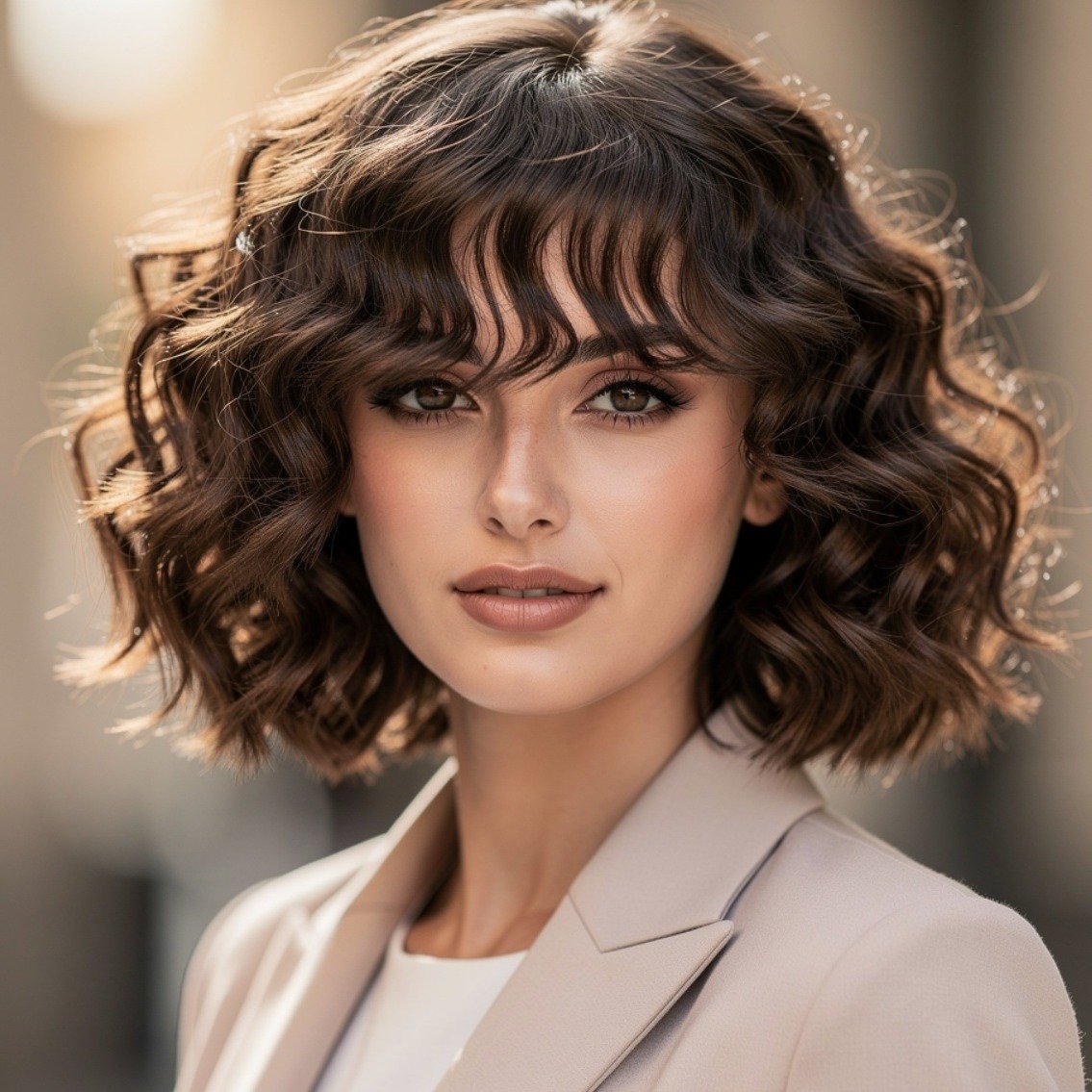
Adding a fringe to a short curly bob introduces a face-framing focal point that changes the entire visual character of the cut, shifting the primary point of interest from the bob’s overall silhouette to the interaction between the fringe and the face. Curly fringes behave completely differently from straight ones they bounce, spring upward or outward depending on the curl pattern, and frame the face in a softer, more organic way that straight fringes achieve only through deliberate heat styling. At bob length, a curly fringe creates a complete, enclosed aesthetic where every element of the cut relates to every other the fringe echoes the curl texture of the bob, and the bob’s overall length provides a visual base that gives the fringe a context it lacks on longer hairstyles where the fringe can appear somewhat disconnected from the rest of the hair. Type 2c and 3a curl patterns suit the curly bob with fringe most naturally because their ringlet or wave size is large enough to create a visible fringe shape without the curls either clumping together into dense obscurity or springing so far upward that no downward-falling fringe remains. Long, oval, and heart face shapes suit this combination particularly well.
13. Wash and Go Curly Bob
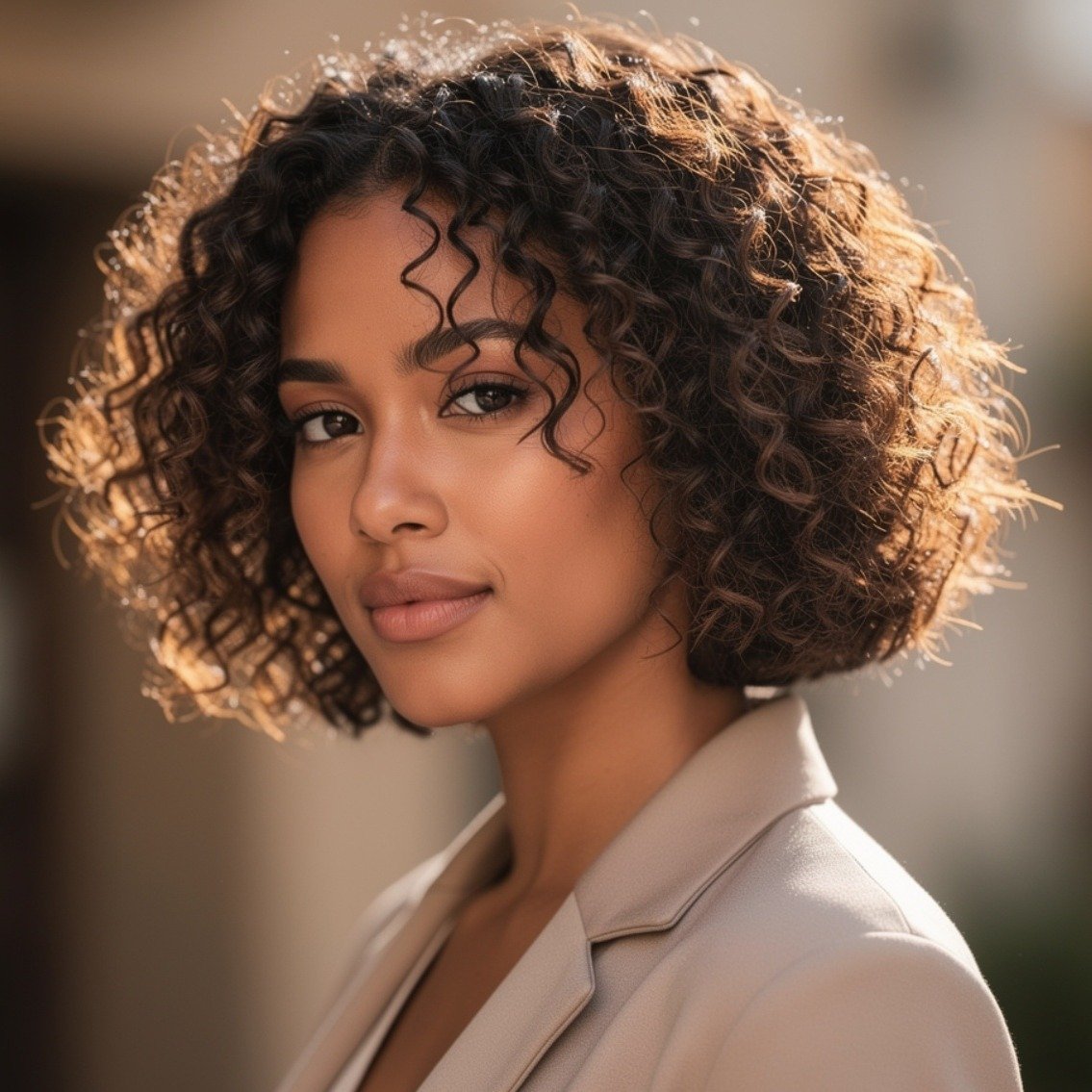
The wash and go curly bob celebrates the genuine minimum washing with a moisturizing shampoo, conditioning thoroughly, applying a single leave-in or curl cream to completely saturated hair, and allowing the bob to air dry or diffuse with zero additional manipulation, product layering, or structural technique. The resulting style looks different on every person who wears it because it reflects their specific curl pattern, density, and product response with complete authenticity rather than imposing an external styling template. What makes this a deliberate hairstyle choice rather than simply unfinished hair is the consistent quality of the preparation thorough conditioning, generous product application to wet hair, and complete drying before touching the curls produces a wash and go bob of remarkable beauty and genuine daily practicality. Type 3b through 4b textures suit the wash and go bob most naturally because their coil definition is strong enough to produce a clearly shaped style without requiring any additional technique to encourage definition. All face shapes can wear a wash and go curly bob, and the style’s radical simplicity represents a philosophical position about natural texture that an increasing number of curly-haired women find deeply appealing.
14. Curly Bob for Fine Hair
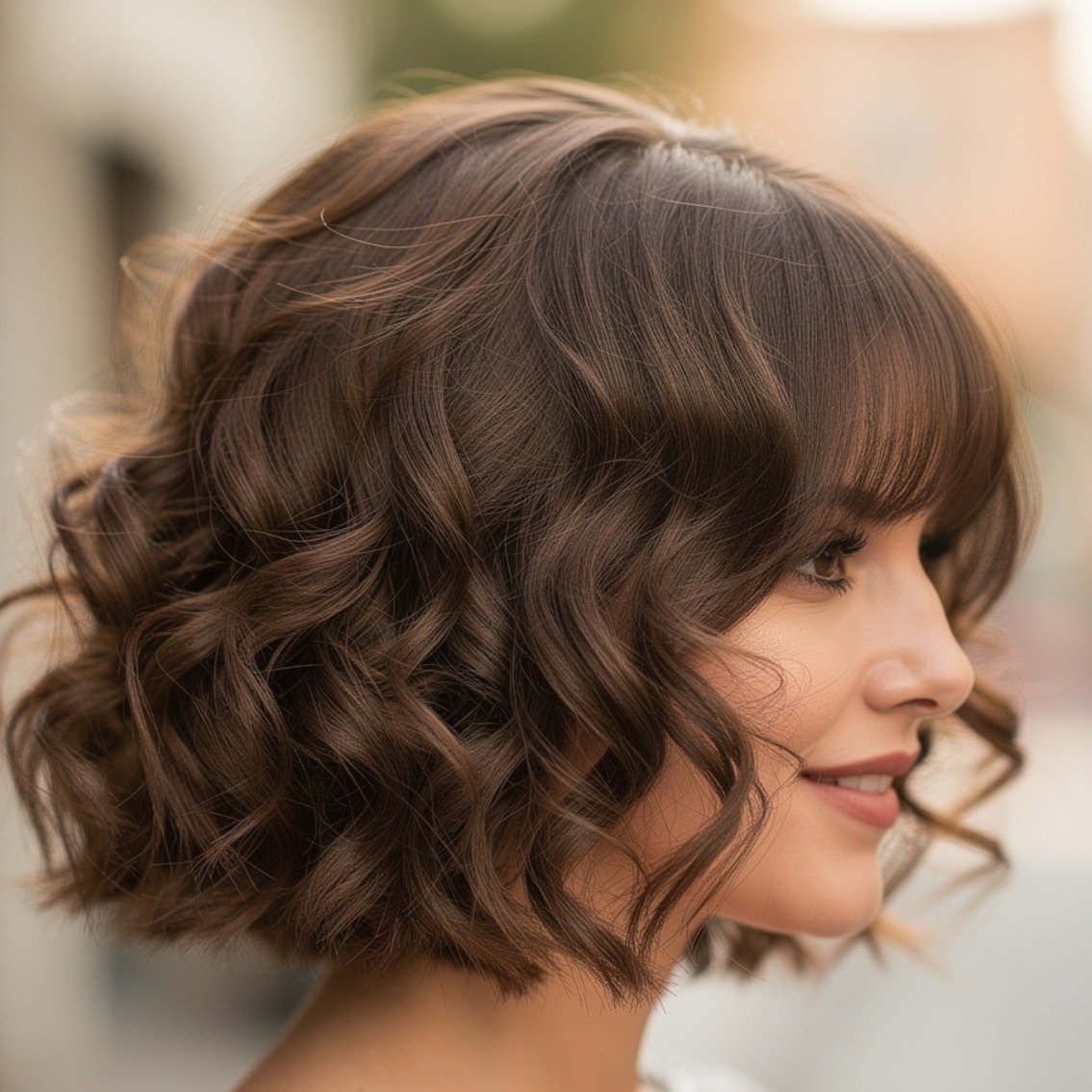
Fine curly hair presents a specific set of challenges at bob length that differ significantly from those faced by medium or high-density textures, and most curly bob guidance fails to address them because it assumes a degree of density that fine hair simply does not possess. At bob length, fine curly hair can appear thin at the perimeter, lose definition quickly between washes, and struggle to maintain the volume that makes curly bobs visually impressive on denser textures. The solutions are available but require deliberate product and technique choices: volumizing leave-in conditioners rather than heavy creams, diffusing on low heat with a finger-diffuser that lifts the roots rather than compressing them, and avoiding heavy oils or butters that weigh fine curls downward and eliminate their natural spring. A strategic cut matters enormously for fine curly hair at bob length — moderate internal layering removes weight that drags fine curls flat while preserving enough density at the perimeter to prevent the bob from appearing sparse. Type 2c and 3a fine curl patterns execute bob styling most successfully when product weight is calibrated carefully to the hair’s specific carrying capacity.
15. Protective Style Curly Bob
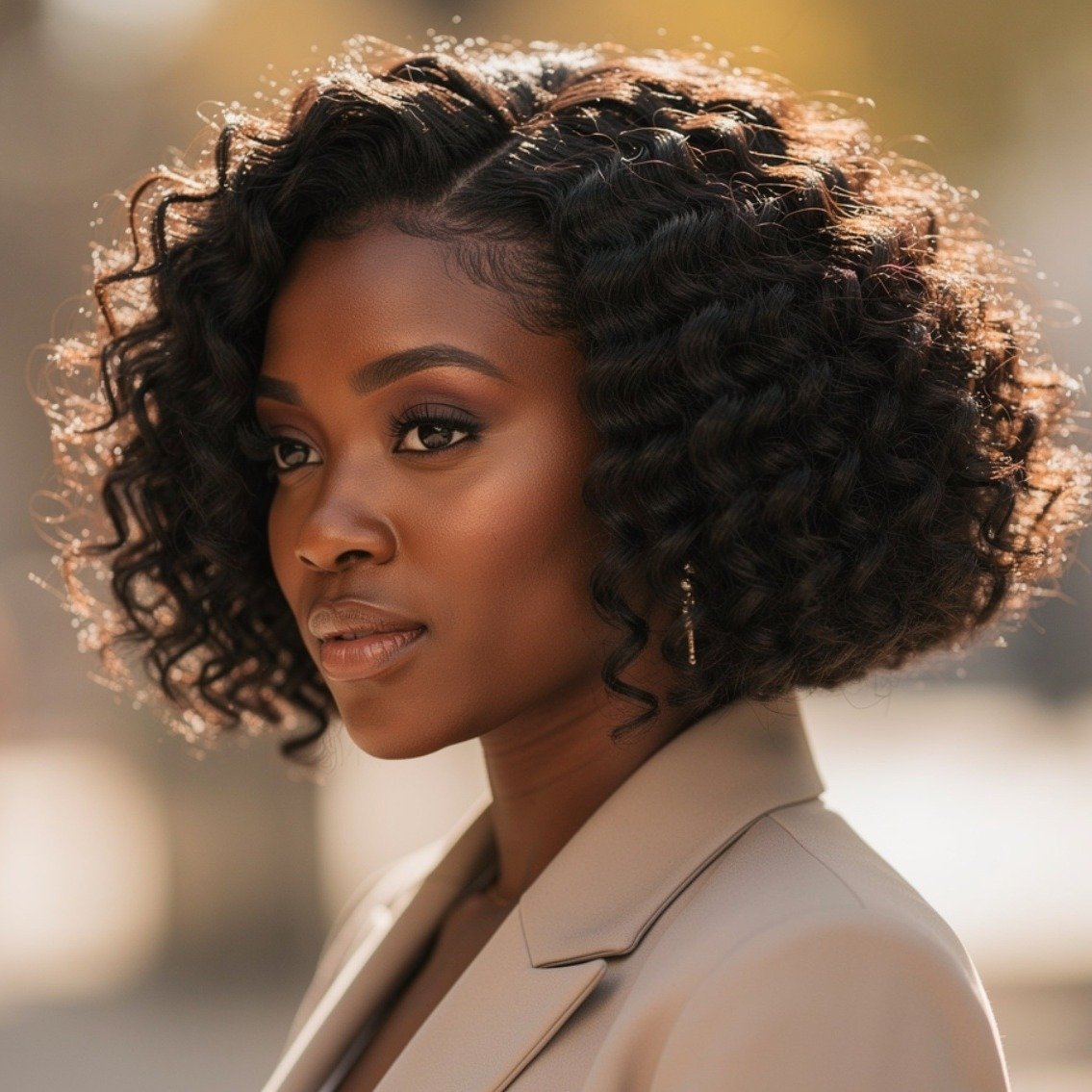
A curly bob achieved through protective styling whether a crochet bob using curly extensions, a sew-in bob installation, or a wig styled into a curly bob silhouette deserves prominent inclusion on this list because it offers access to the curly bob aesthetic to anyone whose natural curl pattern, current growth stage, or hair health situation makes a traditional cut impractical at a given moment. Protective style curly bobs can be extraordinarily convincing when the extension texture is matched carefully to the wearer’s natural curl pattern and the installation is done by an experienced stylist who understands how to blend hairlines and adjust parting to create a natural, seamless appearance. Type 4 coil patterns during transitioning periods, individuals growing out a different hairstyle, or anyone whose hair is in a recovery phase from damage or breakage can access the full visual impact of a short curly bob through protective styling without compromising the health goals of the underlying natural hair. The styling, maintenance, and accessory guidance throughout this article applies equally to a protective style curly bob and to a naturally cut one.
How to Choose the Right Short Curly Bob
Choosing the right short curly bob begins with understanding how your specific curl pattern will behave at the proposed length, which requires more than simply looking at reference photos of other people’s bobs and assuming the result will be comparable. The most critical variable is shrinkage how much your curl pattern contracts from its wet stretched length to its dry natural length. Type 2 wave patterns shrink minimally, meaning a chin-length wet cut produces approximately a chin-length dry result. Type 4 coil patterns can shrink by fifty percent or more, meaning a cut intended to produce a chin-length bob may dry at ear level. Before booking a cutting appointment, stretch a single wet section of your hair to the proposed length and observe what happens as it dries this single test gives more useful information than any reference photo. Beyond shrinkage, consider the density of your hair: high-density textures suit blunt or minimally layered bobs that celebrate the fullness of the texture, while fine or low-density textures benefit from strategic layering and volume-building techniques that maximize the appearance of fullness without the structural support of natural density.
Best Face Shapes for Short Curly Bob Hairstyles
Oval face shapes have the widest compatibility with short curly bob variations because balanced facial proportions harmonize with every length and silhouette variation from a strict chin-length classic bob to a longer curly lob. Round face shapes are most flattered by curly bobs that add height at the crown and avoid excessive width at the jaw level a stacked bob with crown volume, a bob worn with defined ringlets that create vertical rather than horizontal visual lines, or a bob with a slight asymmetry that introduces diagonal emphasis all suit round face shapes particularly well. Square face shapes benefit from curly bobs with softness and curve at the perimeter a textured messy bob, a layered bob with rounded volume, or a blunt bob on a type 4 texture all introduce rounded organic elements that counterbalance angular jawlines and foreheads. Heart face shapes suit curly bobs that add fullness at the jaw and chin level, making chin-length bobs and lobs the most flattering length choices for this face structure. Long and oblong face shapes are balanced most effectively by curly bobs with maximum width a blunt bob with dense volume at the sides, a stacked bob where the stacking occurs at ear level rather than nape level, or a bob with a fringe that reduces the visible vertical length of the face.
Styling and Maintenance Tips for Short Curly Bobs
The single most impactful improvement available to anyone wearing a short curly bob is transitioning to dry cutting requesting that your stylist cut the bob while the hair is completely dry and in its natural curl state rather than while wet. Wet cutting on curly hair produces results that are consistently unpredictable at short lengths because the stylist cannot accurately assess how each section will position itself once the curl springs back to its natural tension, leading to length inconsistencies and shape problems that only become apparent after drying. A stylist who specializes in natural and curly hair and cuts dry as standard practice will produce a significantly more accurate and consistent bob than one who cuts wet regardless of their general skill level. For daily maintenance, apply your chosen curl cream or leave-in to completely saturated hair after washing and distribute it evenly through every section before diffusing product applied to partially dry hair distributes unevenly and produces inconsistent definition. Trim the bob every six to eight weeks to maintain the perimeter shape that makes it read as a deliberate bob rather than simply short grown-out hair, and invest in a silk or satin pillowcase to minimize overnight friction that generates frizz in the shorter sections where the hair contacts the pillow most directly.
How to Ask Your Hairstylist for This Look
Communicating a short curly bob request requires considerably more precision than most haircut conversations typically involve, and the additional preparation time this demands is genuinely worthwhile given that a short curly bob cut incorrectly is more difficult to recover from than a mistake on longer hair. Begin by finding a stylist whose portfolio includes work on curl patterns similar to yours not curly hair in general, but your specific pattern type, as the cutting techniques required differ significantly across the curl pattern spectrum. Bring at least two reference photos showing the bob style you want from the front and the back, and include one additional photo that shows the texture of the hair in the reference image clearly so your stylist understands the curl pattern they are working toward rather than simply the silhouette. Communicate your shrinkage level explicitly describe what happens when your hair dries after washing in terms of how much it contracts so your stylist can cut to the correct wet length to achieve your desired dry result. Specify whether you want the bob cut while dry or wet, request dry cutting if possible, and ask your stylist to check the length at multiple points during the cut rather than only at the end when corrections are more difficult to make without removing additional length. Discuss the maintenance schedule your lifestyle realistically supports and let the stylist know your typical daily styling time so they can recommend a bob variation whose upkeep aligns with your actual routine.
FAQ: Short Curly Bob Hairstyles
Q: Will a short curly bob make my hair look bigger or smaller?
It depends almost entirely on the specific variation you choose and your curl pattern’s natural density. High-density curl patterns at bob length typically appear larger and fuller than the same hair at longer lengths because the weight that pulls curls downward on long hair is removed, allowing the curl to spring outward fully. Lower-density and looser wave patterns at bob length can appear smaller than at medium length because there is less hair visible in total. The stacked bob and layered bob variations add internal volume that counteracts any apparent reduction in fullness, making them the most reliable choices for anyone concerned about the volume impact of cutting to bob length.
Q: How do I prevent my curly bob from getting frizzy throughout the day?
Frizz prevention for a short curly bob depends on thorough product saturation of wet hair before drying, complete drying before any manipulation or touching of the curls, and overnight protection using a satin bonnet or silk pillowcase. At bob length, the hair contacts the neck and collar throughout the day, and this friction generates frizz in the ends and perimeter that longer hair avoids by hanging freely below the collar line. Tucking a lightweight satin collar or scarf inside garment necklines on high-friction days reduces this contact-based frizz significantly.
Q: Can I achieve a curly bob without cutting my hair?
Curly hair naturally shrinks at shorter lengths, and a twist-out or braid-out on medium-length curly hair can produce a shrunken bob-length result without any cutting. This approach works particularly well on type 4 coil patterns where shrinkage is significant enough to convert several inches of actual hair length into a convincing bob-length appearance. The result is temporary and returns to its actual length when the hair is washed and allowed to revert, making it an excellent way to preview the bob aesthetic before committing to a permanent cut.
Q: How often does a short curly bob need trimming to stay looking good?
Most short curly bobs need a shape refresh every six to eight weeks to maintain the perimeter definition and internal layering that make the style read as a deliberate bob rather than grown-out short hair. The perimeter of a curly bob grows out faster in appearance than the same growth on longer styles because the bob’s silhouette depends on a specific length relationship between sections even a centimeter of growth can shift the proportions enough to alter the shape significantly. More precision-dependent variations like the asymmetric bob or the stacked bob may require attention closer to every four to six weeks.
Q: What products work best for a short curly bob?
The most universally effective product routine for a short curly bob begins with a sulfate-free moisturizing shampoo, followed by a deep conditioner left on for a minimum of five minutes, followed by a leave-in conditioner applied to completely saturated hair, and finished with a curl cream or light hold gel also applied while the hair is still fully wet. At bob length, lighter product weights tend to outperform heavier butters or thick creams because the shorter length means less hair to distribute product through, making heavy products more likely to build up and weigh the bob’s volume downward. A finishing shine serum applied as the final step adds luminosity that photographs beautifully and signals healthy, well-maintained curl texture.
Q: Is a short curly bob suitable for all ages?
Absolutely, and it is worth noting that the short curly bob is one of the most age-transcendent hairstyles available across the entire curly hair landscape. It suits teenagers discovering their natural texture for the first time as effectively as it suits women in their fifties, sixties, and beyond whose curl patterns have evolved with age. Mature curly hair that has loosened slightly over time often finds its most flattering expression at bob length where the reduced weight allows whatever curl pattern remains to express itself with maximum fullness and definition. The specific variation of the bob the level of layering, the use of color, the silhouette height can be adjusted to suit individual preferences at any age without changing the fundamental appeal of the style.
Conclusion
The short curly bob is one of the most versatile, practical, and genuinely beautiful hairstyle choices available across the full spectrum of curl patterns, face shapes, and lifestyle requirements, and the fifteen variations above demonstrate that no two curly bobs need to look remotely alike even when they share the same foundational length concept. Whether you are drawn to the precise elegance of a defined ringlet bob, the bold structural drama of an undercut variation, the cultural depth of a type 4 natural bob, or the effortless daily practicality of a wash and go approach, there is a short curly bob on this list that is specifically suited to your texture, your face, and your life. Find a stylist who cuts curly hair dry, communicate your curl pattern and shrinkage level with the specificity this article has equipped you to provide, and give yourself permission to make the cut that most curly-haired women who have made it will tell you they wish they had made considerably sooner.